Bloomberg's G650ER Logs Two Pacific Legs Totaling 6,706 Miles Among 153 Tracked Private Flights
Why It MattersTracked private-jet data shows how a handful of long-range aircraft account for outsized emissions on any given day, concentrating environmental scrutiny on ultra-long-range flights rather than on overall flight counts.
What happened
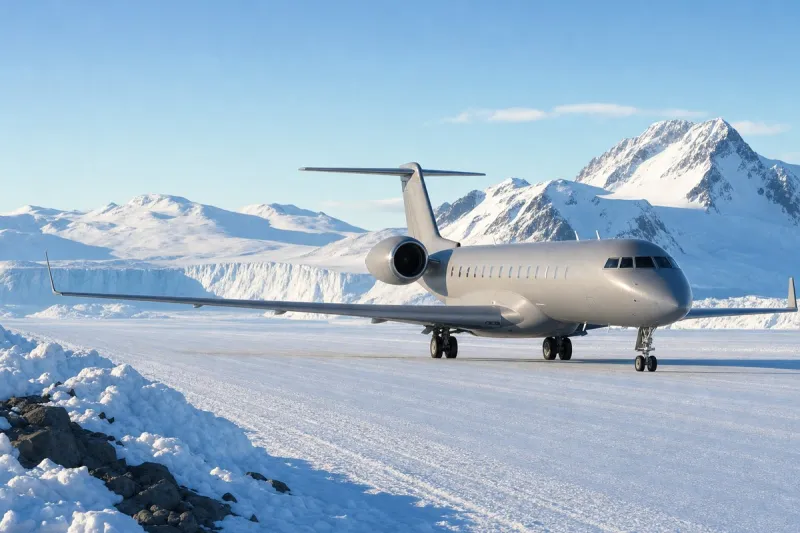
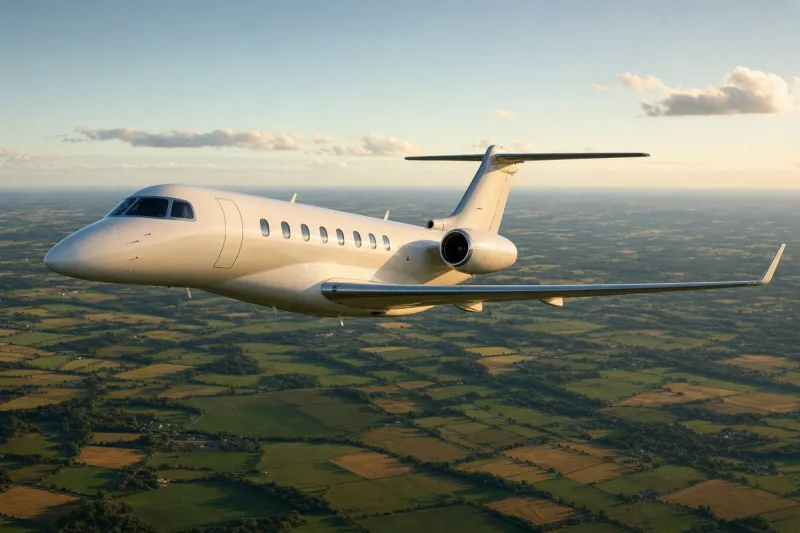
Michael Bloomberg's Gulfstream G650ER, tail N47EG, flew two Pacific legs that together spanned 6,706 miles and 14 hours 53 minutes of airborne time. With 2 flights, his fleet was the top mover by flight count.

Across the day, 153 tracked private flights covered 147,577 miles over 316.2 hours and produced 1,276.4 tonnes of carbon dioxide in total.
The largest single emitter was Evan Spiegel, whose Gulfstream G650ER burned 86.1 tonnes on a 10-hour-49-minute leg from Alta to Los Angeles. The flight marks the first tracked visit by Spiegel's aircraft to Los Angeles since at least October 2026.
Van Nuys Airport (KVNY) was the busiest destination by arrivals, with 4 landings. Among them, Jan Koum's Gulfstream G650ER, tail N143, flew 5,429 miles from Farnborough Airport to Van Nuys in 10 hours 6 minutes.
A Global 7500 operated by the Davis fleet logged 18 flights in the past 30 days, with Hanscom as its most common arrival point. Its Tokyo departure followed a previous leg from Seoul on November 12. T-Mobile's Gulfstream G650ER, tail N625TM, was airborne over the Atlantic after departing King County International Airport - Boeing Field for Cologne Bonn Airport, a flight of 8 hours 23 minutes.
Industry impact & what to watch
The day's numbers show how unevenly emissions fall across private flying. Spiegel's single leg alone burned 86.1 tonnes of the 1,276.4 tonnes tracked, and the longest legs on the list belong to large-cabin, ultra-long-range types such as the G650ER. In this segment, emissions follow flight duration and aircraft class far more closely than they follow the number of flights flown.
Public flight tracking has become a routine source of pressure on high-profile owners, because tail numbers, routes and durations can be matched to individuals within hours. That visibility feeds the wider debate over sustainability reporting and offset claims in business aviation, where operators and owners increasingly face questions that the aircraft's own flight data can answer.
The next signal is whether the Davis Global 7500's recent pattern, 18 flights in 30 days centred on Hanscom, continues into the coming weeks.