Five US Airports Operate Intersecting Runways as a Space Compromise, Complicating Takeoffs and Landings
Why It MattersIntersecting runways show that airfield geometry, not just runway count, sets throughput at land-constrained hubs, so wind direction, sequencing discipline and runway assignment shape capacity more than headline infrastructure numbers.
What happened
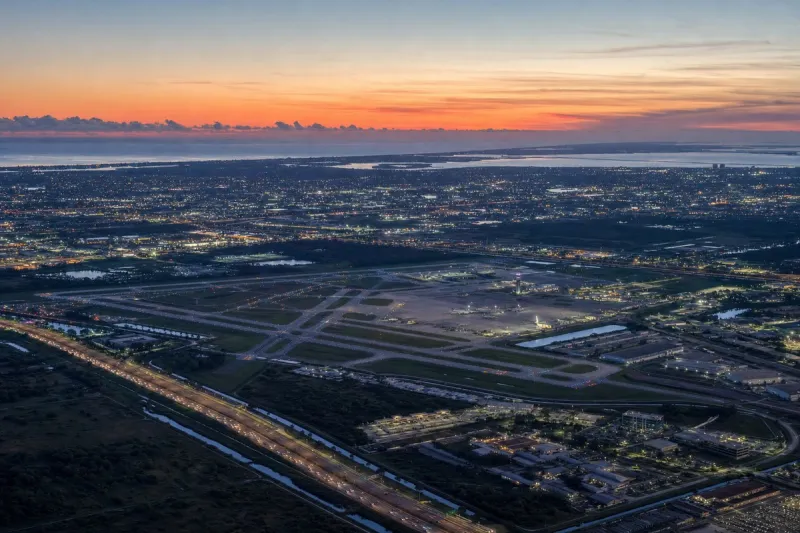
Five major US airports operate with intersecting runways: LaGuardia, Chicago Midway, Detroit Metropolitan Wayne County, San Francisco International and Boston Logan. Such layouts are a compromise for airports that need more capacity but lack land. By contrast, Denver International uses a pinwheel arrangement of parallel runway sets in different directions that operate largely independently, with no intersections, but it requires far more space. Intersecting runways can lower capacity because they need extra spacing between arrivals and departures.
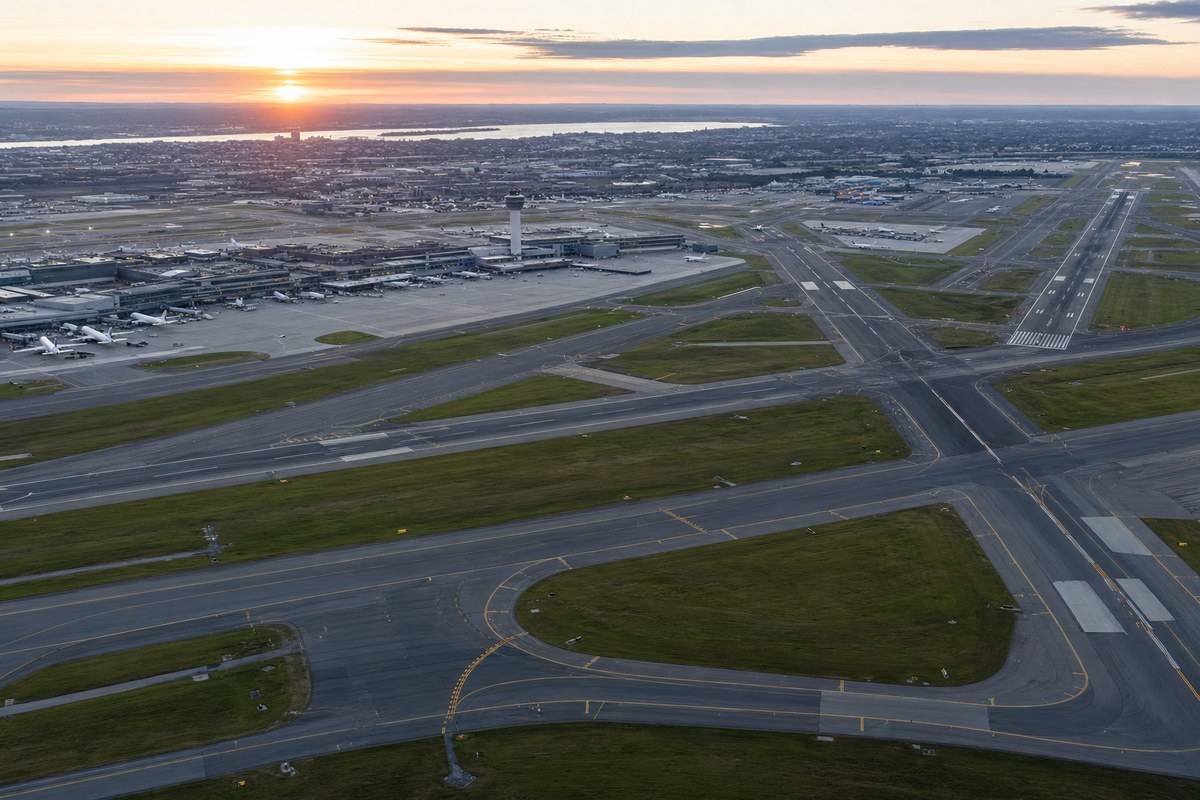
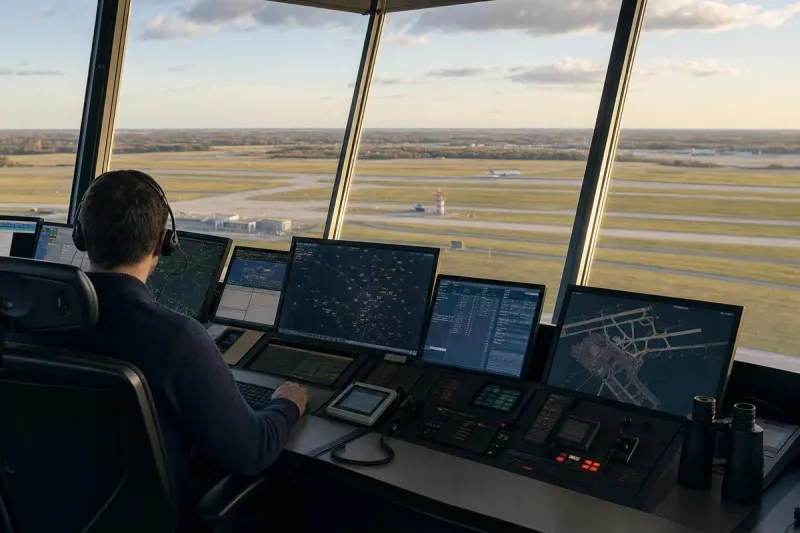
LaGuardia originally opened with four runways, two of which have closed. The remaining runways, 4/22 and 13/31, are each 7,002 feet (2,134 meters) long and intersect at the northwestern part of the airfield. Controllers typically use one runway for departures and one for arrivals and must sequence aircraft carefully. LGA is one of three slot-restricted US airports, alongside JFK and Washington National, and is hemmed in by residential neighborhoods and water.
Chicago Midway has four runways: 4L/22R, 4R/22L, 13L/31R and 13R/31L. Runway 13R/31L intersects both 4L/22R and 4R/22L, and 13L/31R also intersects both, creating four intersections. Runway 13R/31L is significantly shorter and used mainly by light aircraft, and it can be confused with a taxiway. Over 90% of Midway's commercial operations come from Southwest Airlines. The airport is landlocked and not at capacity.
Detroit Metropolitan has six runways: four north-south (3L/21R, 3R/21L, 4L/22R, 4R/22L) and two east-west (9L/27R, 9R/27L), with four intersection points. Only 4L/22R does not intersect another runway. The airport rarely uses the east-west runways, which serve mainly when strong crosswinds affect the north-south runways. Delta Air Lines holds over 70% market share at DTW, which handles well over 300,000 aircraft movements annually and has 147 gates.
San Francisco International has four runways in two perpendicular parallel pairs, creating four intersection points. It requires intense coordination, with departures and arrivals staggered. The FAA recently prohibited SFO from continuing side-by-side landings, requiring offset approaches, which significantly reduced arrival capacity and adds to delays from weather or congestion. United Airlines holds over 50% market share and connects San Francisco to over 120 destinations.
Boston Logan has six runways (4L/22R, 4R/22L, 9/27, 14/32, 15L/33R, 15R/33L) and six intersections. Runway 15L/33R, at 2,557 feet (779 meters), is used only by light aircraft. Airliner runways are assigned by wind, most often 4L/22R and 4R/22L. Because only a few runways are typically used at once, usually in the same direction, the intersections do not significantly complicate operations, unlike at LGA and SFO.
Industry impact & what to watch
Runway count alone says little about how much traffic an airport can move. The same set of five airports spans very different outcomes: Boston Logan has six intersections yet runs mostly parallel, same-direction operations that keep the crossings largely out of play, while LaGuardia and San Francisco feel the geometry directly in sequencing and spacing. The usable capacity of an intersecting layout depends on which runways the wind and the traffic mix actually put into service on a given day.
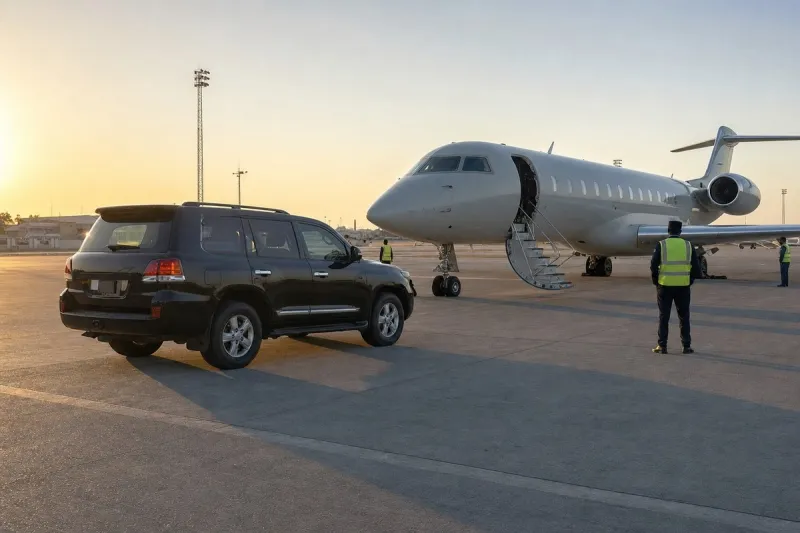
For business aviation, this matters most where a constrained airport also serves general and light traffic. Short runways used mainly by light aircraft, as at Midway and Logan, sit inside the same crossing geometry as airliner runways, so the mix of operations affects how controllers sequence everyone. Slot-restricted and land-locked fields have little room to relax these limits, and the contrast with Denver's pinwheel shows the trade is space for independence, which most of these airports cannot buy.
The San Francisco case is the clearest live example of the constraint tightening: the FAA's requirement for offset approaches in place of side-by-side landings cut arrival capacity, and weather or congestion delays compound from there. The next signal worth tracking is any further FAA change to approach procedures at the intersecting-runway airports.