Airbus A340: History, Variants, and Charter Role of the Long-Range Four-Engine Widebody
Why It MattersThe A340's continued charter and VIP use shows how retired four-engine widebodies retain niche demand for range and cabin space despite twinjets dominating airline long-haul fleets.
The Airbus A340 is a long-range, wide-body, four-engine passenger jet built for intercontinental and ultra-long-haul flights, designed to span oceans and polar routes, and it served as a backbone of long-haul travel from the 1990s through the 2010s. Airbus launched the A330 and A340 programmes jointly in June 1987 to share wings, cockpit systems and manufacturing techniques, and the A340 made its first flight from Toulouse on 25 October 1991. Lufthansa introduced the A340-200 into commercial service on 15 March 1993, flying Frankfurt to New York and Frankfurt to Asia routes, and Air France soon followed with the A340-300, replacing Boeing 747s on transatlantic services; in June 1993 an A340-200 flew non-stop between Europe and New Zealand.
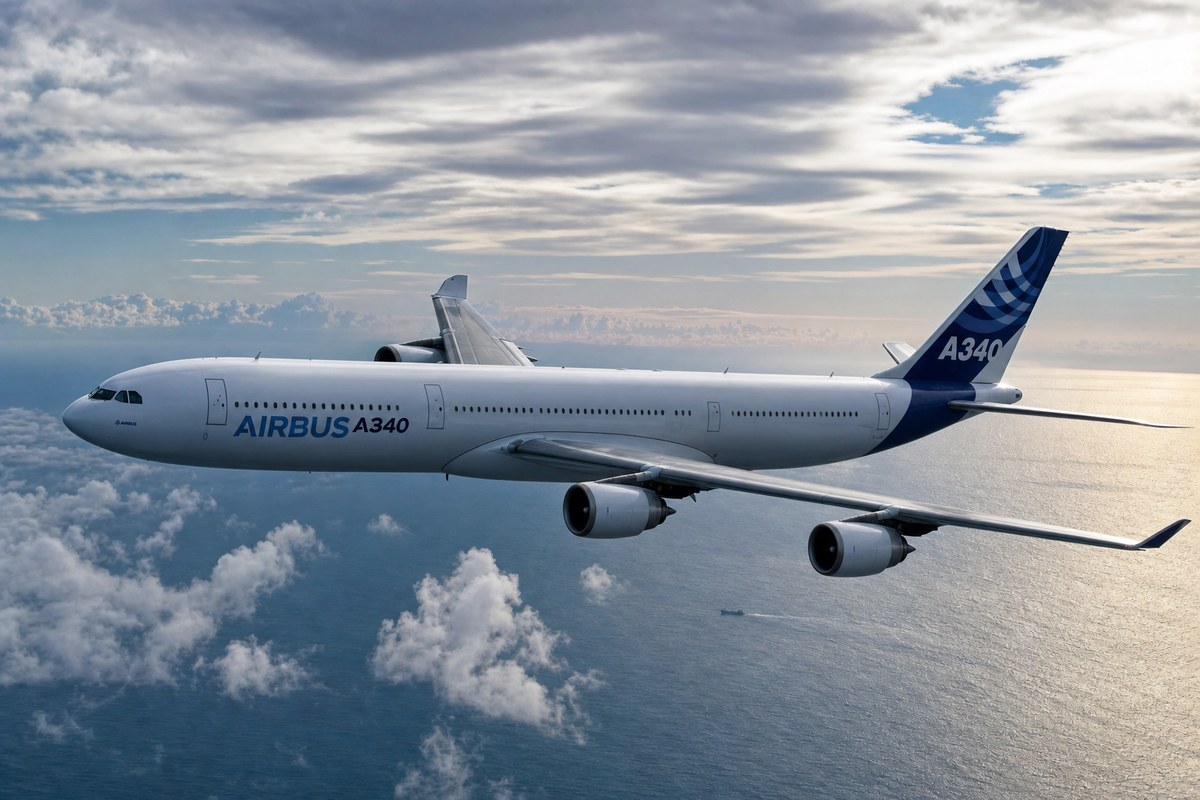
The family comprises four main variants. The A340-200, the smallest and rarest with around 28 built, offered a range of about 15,000 km and seated roughly 210 to 250 passengers. The A340-300, the baseline and most-produced version with around 218 deliveries, carried up to 295 passengers over about 12,400 km. The A340-500, an ultra-long-range variant powered by four Rolls-Royce Trent 500 engines, could fly 9,000 nautical miles non-stop, connecting Singapore to Newark, and seated 270 to 313 passengers; Singapore Airlines operated the world's longest non-stop commercial flights with it, between Singapore and Newark and Singapore and Los Angeles, until around 2013. The A340-600, at roughly 75.36 metres, was the longest passenger aircraft in the world until 2010, powered by four Rolls-Royce Trent 556 engines, carrying up to 379 passengers over 13,900 km to compete with the Boeing 747-200 and 747-300.
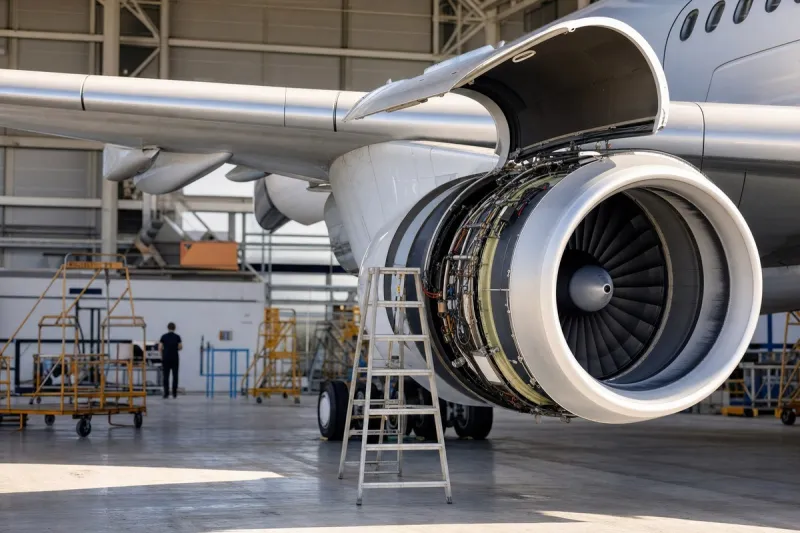
The four-engine layout gave the A340 propulsion redundancy and let it bypass many twin-engine operational restrictions, but more fuel-efficient twinjets such as the Boeing 777, Boeing 787 and Airbus A350 eventually replaced it in most airline fleets as ETOPS rules relaxed. Production ended in 2011 after around 377 deliveries across all variants. Today several A340 frames have been converted to VIP or governmental configurations, and the type remains available through charter platforms such as Jettly for corporate executives, sports teams, large groups and government delegations seeking range and cabin space.