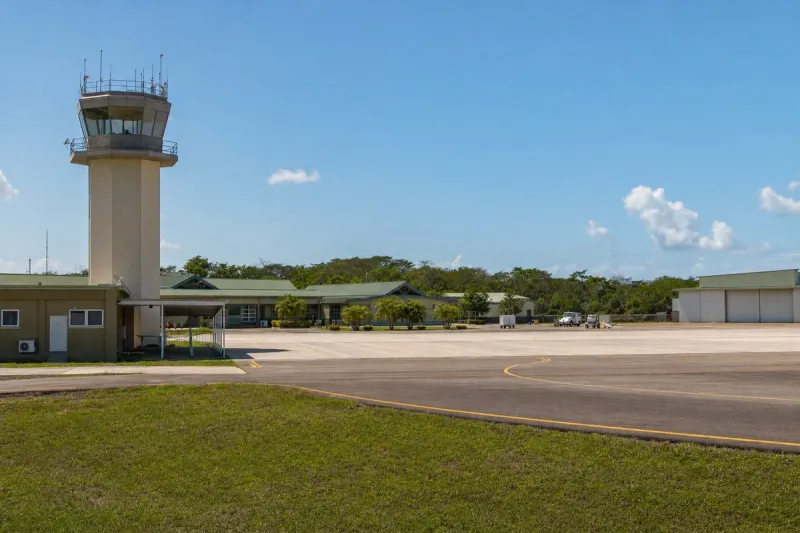
Cerulean Aviation Names Art McPherson General Manager of Greenville-Spartanburg FBO
Why It MattersFBO general managers carry the day-to-day service standard at a single-airport franchise, so a hire made as capital projects expand ramp and hangar capacity shows where operator management weight sits during build-outs.
What happened
Cerulean Aviation has named Art McPherson general manager of its fixed-base operation (FBO) at Greenville-Spartanburg International Airport (KGSP) in South Carolina. McPherson brings approximately 30 years of aviation management experience to the role. He previously served as general manager of Premier FBO in Kentucky, according to company officials.

Kevin Howell, president and CEO of the Greenville-Spartanburg Airport District, said that as Cerulean Aviation marks a decade at KGSP, the focus remains on providing an exceptional customer experience and supporting the aviation community. He added that McPherson's experience and leadership will help sustain that standard.
Cerulean Aviation currently supports 35 hangar-based aircraft: 20 jets, 10 turboprops, four piston aircraft and one helicopter. It performs more than 9,000 aircraft-towing operations annually.
The leadership change comes as the airport advances several general aviation capital projects. These include a taxilane widening and apron reconstruction project, and plans to build a new 45,000-square-foot hangar to meet regional demand.
Industry impact & what to watch
An FBO's general manager is the person who turns a lease and a set of facilities into a service reputation. At a single-location operator, that role shapes ramp handling, hangar allocation and customer relationships more directly than any corporate policy does. Appointing a manager with about three decades of experience, drawn from a comparable FBO in Kentucky, is a continuity move: it keeps the existing service model in place rather than resetting it.
The timing matters because the airport is adding capacity. Apron reconstruction and taxilane widening change how aircraft move and park on the field, and a 45,000-square-foot hangar adds storage in a market where the airport district itself cites regional demand. FBOs in that position are typically judged on how well they absorb growth in towing, hangar occupancy and based-aircraft mix without degrading the customer experience.
The next concrete markers are the delivery of the apron and taxilane work and the progress of the new hangar, since both determine how much additional activity Cerulean Aviation's team will be handling under McPherson.