FAA Expands Tri-Cities, TN Class D and E Airspace, Removes Northeast Surface Extension
Why It MattersTighter controlled-airspace boundaries around a regional airport keep IFR departures and approaches contained, a routine adjustment that mainly affects aircraft operating near Tri-Cities rather than the wider business aviation market.
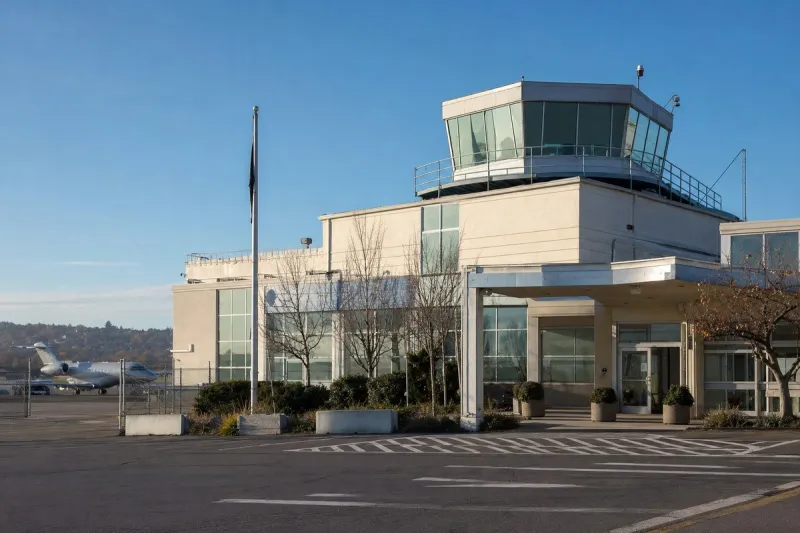
The Federal Aviation Administration issued a final rule, scheduled for publication in the Federal Register on 2026-11-24, amending 14 CFR Part 71 to modify Class D and Class E airspace at Tri-Cities Airport in Tennessee. A review found the lateral dimensions needed to increase to contain current Instrument Flight Rules operations, specifically departure procedures and three instrument approach procedures: ILS/LOC RWY 5, RNAV (GPS) RWY 5, and RNAV (GPS) RWY 9.
The Class D and Class E surface area airspace grows by 0.4 miles to a 4.7-mile radius of the airport, plus 1 mile each side of the 042° bearing extending from the 4.7-mile radius to 5.3 miles northeast of the airport. The Class D airspace extends up to and including 4,000 feet MSL. The separate Class E surface area extension to the northeast is removed, as it is no longer needed. The Class E transitional airspace beginning at 700 feet above the surface gains a 1.7-mile extension, 4.2 miles wide, on its western side, within 2.1 miles each side of the 270° bearing from the airport.
The rule also updates the airport name in the Class D and two Class E legal descriptions and replaces the outdated "Airport/Facility Directory" reference with "Chart Supplement." The amendments modify FAA Order JO 7400.11M, dated July 30, 2026, and effective September 15, 2026.
Two comments were received on the proposal. One identified a typographical error in a URL. The other raised concern about expanding controlled airspace; the FAA responded that the 1.7-mile extension adds to the existing 9.3-mile Class E radius to support IFR operations and lies over a ridgeline on Bays Mountain rather than a valley, so no impact on VFR operations in valley areas is expected. The FAA determined the rule is not a significant regulatory action, expects at most de minimis costs, and does not expect significant environmental impacts.