NASA Takes Official Ownership of X-59 Quiet Supersonic Research Aircraft From Lockheed Martin
Why It MattersMoving the X-59 into NASA hands closes out the build phase and shifts focus to community-response data that regulators could use to revisit bans on supersonic flight over land.
On Nov. 18, NASA officially took ownership of the X-59 quiet supersonic research aircraft from contractor Lockheed Martin Skunk Works. NASA had selected Lockheed Martin to collaborate on the design of the X-59 and to lead vehicle building and testing for the agency's Quesst mission. While flight testing continued at NASA's Armstrong Flight Research Center in Edwards, California, Lockheed Martin had retained official ownership as it worked toward completing an aircraft acceptance review with NASA, a key step in contract closeout.
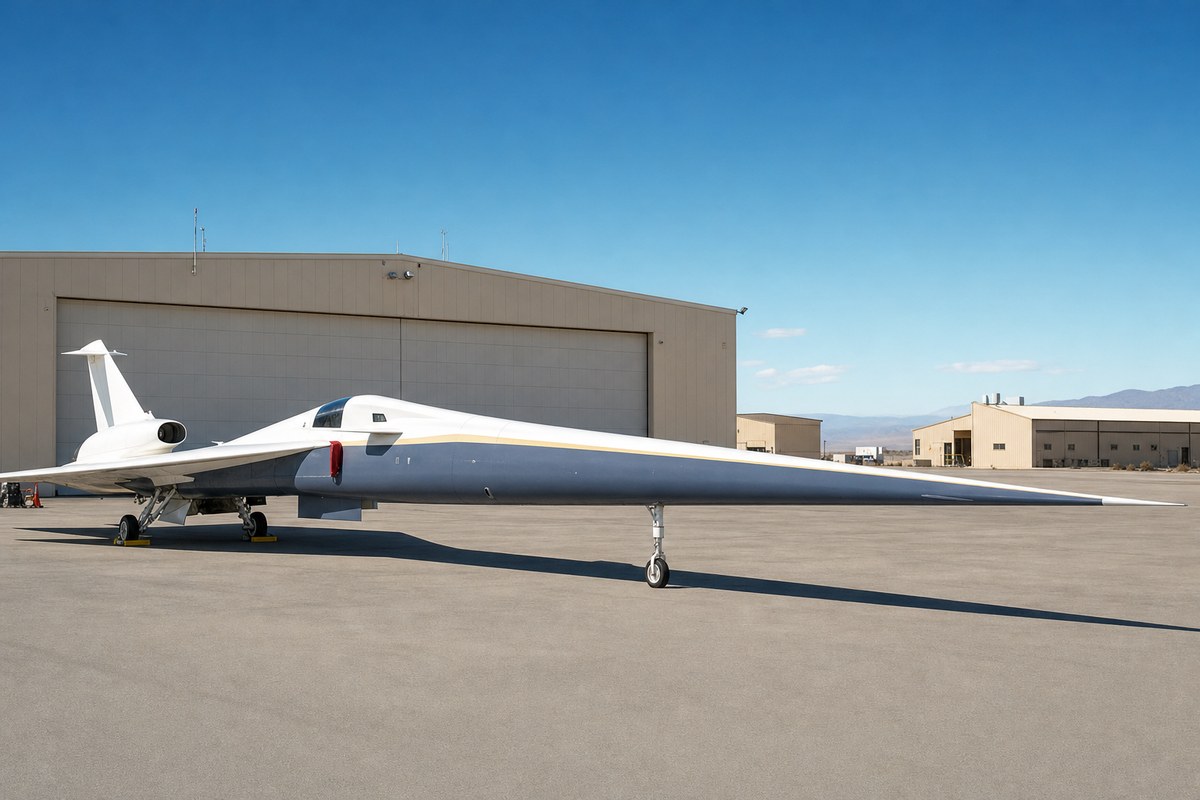
The X-59 is designed to fly faster than the speed of sound while reducing the loud sonic boom to a quieter "sonic thump." Under Quesst, which is supported through NASA's Aeronautics Research Mission Directorate, NASA will survey how people respond when the aircraft flies overhead and share those reactions with national and international regulators. The data is intended to inform new data-driven acceptable noise thresholds for supersonic commercial flight over land.
"To someone outside the flight test, this might seem like a subtle change," said Cathy Bahm, Low Boom Flight Demonstrator project manager. She said it marks another big moment for the X-59, showing how far the project has come and how much closer NASA is to providing data that could help make commercial supersonic flight over land a reality. The X-59 is part of NASA's commitment to use X-planes and other experimental aircraft to advance U.S. leadership in aviation, and NASA's newly announced X-70 will join it in the agency's growing X-plane portfolio.