Aircraft-grade titanium fastener market projected to grow 4–6% annually through 2035
Why It MattersConcentrated production, long qualification cycles and rising defense and electronics demand mean fastener supply chains will diversify only gradually despite strong commercial aerospace backlogs.
Global demand for aircraft-grade titanium fasteners is projected to grow between 4% and 6% annually through 2035, with a consumption index reaching approximately 160 against a 2025 baseline, according to IndexBox. The sector is entering 2026 with stronger demand alongside more measured purchasing behavior, and supply chains are expanding beyond their traditional strongholds in North America, Europe, and Japan.
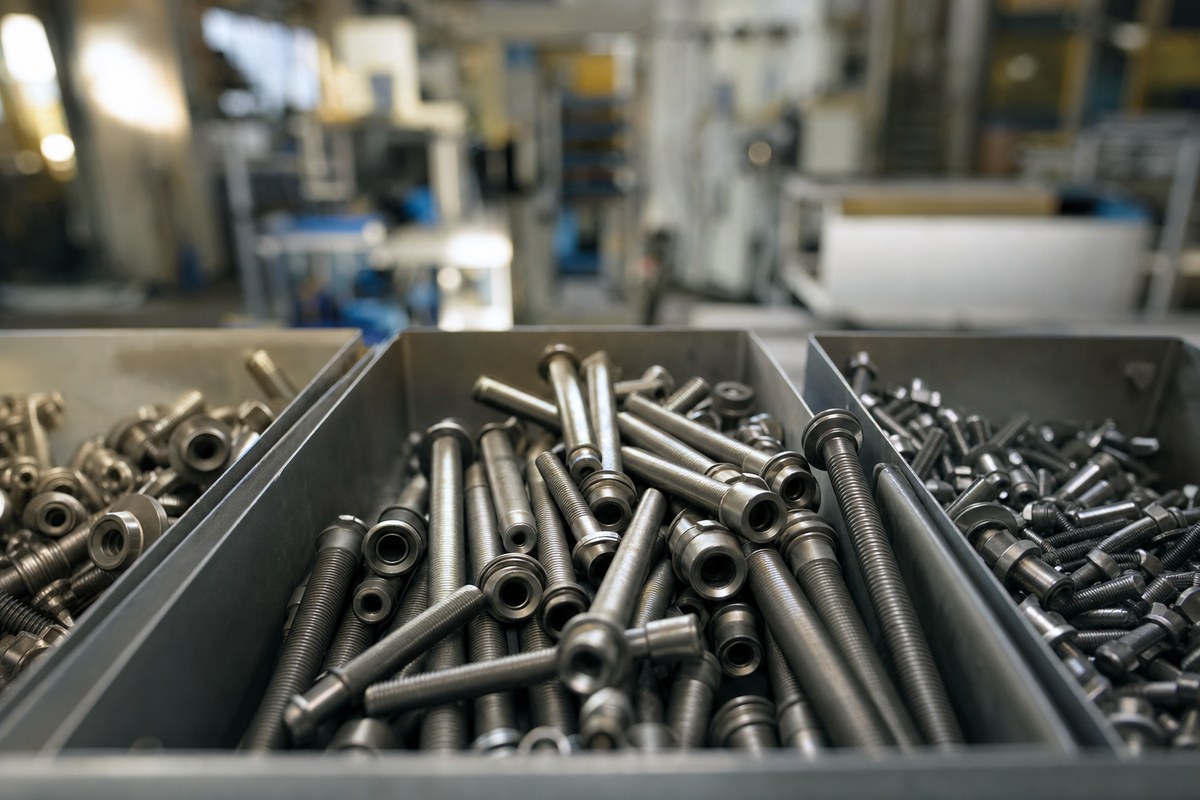
Commercial aerospace is the primary demand driver, supported by record aircraft production backlogs. Premium alloys Ti-6Al-4V and Ti-6Al-2Sn-4Zr-2Mo account for roughly 55% to 65% of volume and an even larger share of market value, IndexBox noted. Defense modernization programs are also significant, with titanium fasteners increasingly used in military aircraft, helicopters, and autonomous systems as countries expand procurement. Electronics and semiconductor equipment manufacturing are emerging as faster-growing end markets, driven by cleanroom manufacturing, automation, and precision assembly requirements.
More than 70% of global production is concentrated in fewer than a dozen integrated manufacturing sites, making lead times, certification requirements, and trade policies critical variables alongside price. Grand View Research characterizes the US aerospace fasteners market as highly concentrated, with high barriers to entry due to regulatory approval processes, capital requirements, and technical standards, leading buyers to favor long-term, validation-driven contracts over spot purchases. IndexBox indicated that additive manufacturing and near-net-shape production methods could reduce material scrap and accelerate output by 30% to 50% once certification hurdles are cleared, with regional diversification of manufacturing capacity expected to proceed gradually.