SNECMA C.450 Coléoptère: France's Wingless VTOL Prototype That Crashed in 1959
Why It MattersThe Coléoptère's failure underscored the structural and control limits of annular-wing tail-sitter VTOL designs, steering later vertical-flight development toward rotary and vectored-thrust configurations instead.
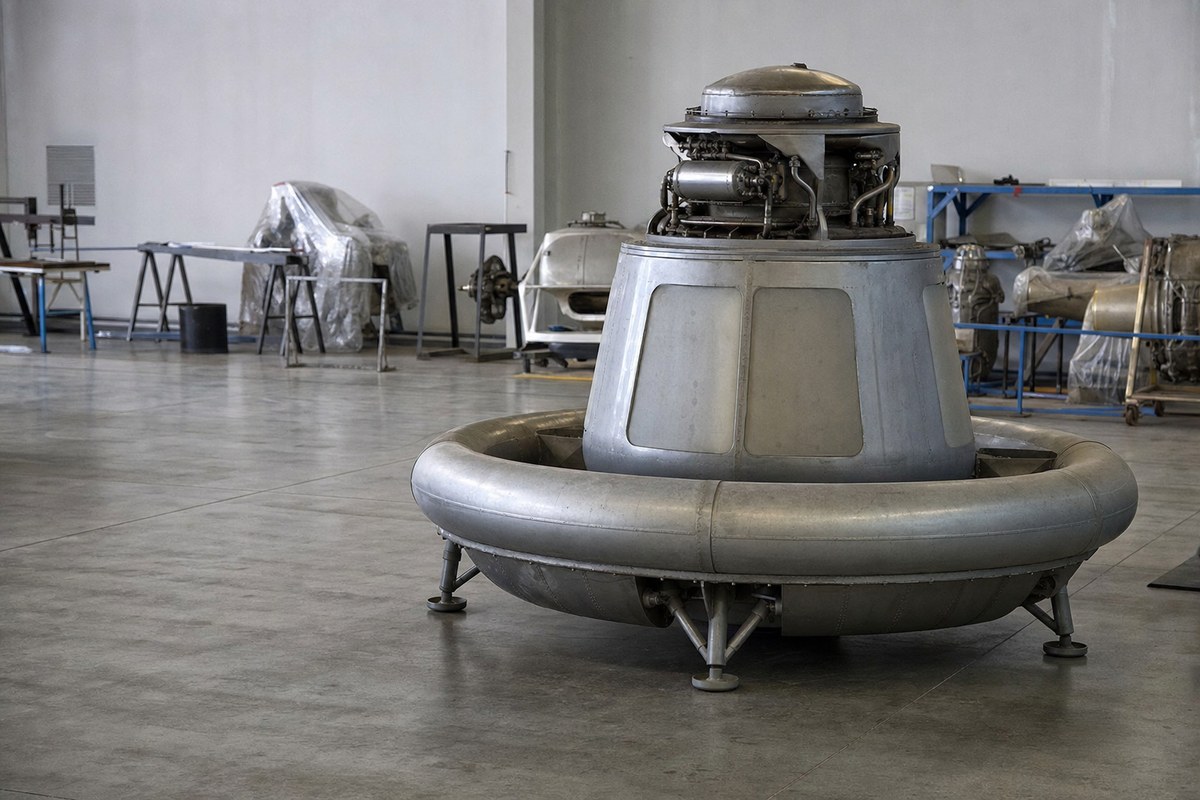
In the 1950s, French engine maker SNECMA, now Safran Aircraft Engines, developed the C.450 Coléoptère, a wingless vertical take-off and landing prototype based on designs by Austrian engineer Helmut von Zborowski. Rather than conventional wings, it used a ring-shaped annular wing 10.5 feet in diameter around the lower fuselage, powered by an axial-flow turbojet, and it stood upright on its tail for take-off and landing, with exhaust vanes and four small ring-mounted fins controlling thrust and flight, retractable nose fins aiding the tilt to landing mode, and a swiveling cockpit seat keeping the pilot upright.
Real-world testing began in April 1959, and problems surfaced quickly: the aircraft spun while hovering, pilots struggled to see the ground from their upward-facing position, and the lack of wings meant no glide capability if the engine failed.
On July 25, 1959, during a test of the transition from vertical to horizontal flight, the Coléoptère tilted too far and the pilot lost control; the pilot ejected safely but the aircraft was destroyed. Funding for a second prototype was never secured, and the program was cancelled.