Veteran Pilot: Memorize Emergency Procedures, Chair-Fly Them and Declare Early — 'If There Is a Doubt, There Is No Doubt'
Why It MattersThe argument shows safety culture in general aviation still rests on individual discipline, with training habits and willingness to divert early mattering as much as the sophistication of cockpit technology.
A pilot with more than 50 years of flying experience, including Air Force fighters and civilian aircraft, argues in a column that two principles from his Air Force career remain essential for surviving aircraft emergencies: memorized boldface emergency procedures and the adage "If there is a doubt, there is no doubt."
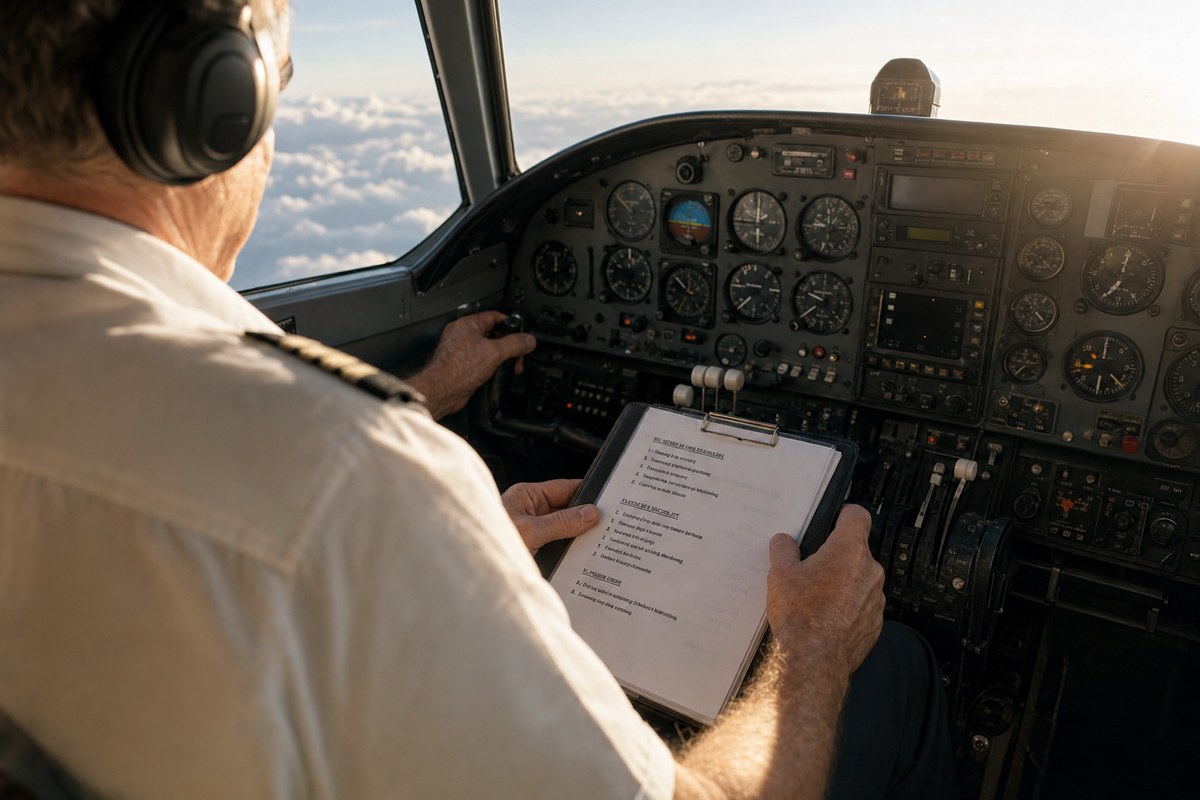
Boldface procedures are emergency actions committed to memory and executed immediately, printed in bold because there is no time to search a checklist when seconds matter. They cover situations such as an engine fire, flight control malfunction, cockpit smoke or rapid depressurization. The Air Force drilled them repeatedly because human performance deteriorates under extreme stress: heart rates rise, fine motor skills decline and decision making becomes harder. The author says experience alone does not carry a pilot through an emergency. Despite GPS, synthetic vision, traffic awareness systems, weather displays and advanced autopilots, engines still fail, electrical systems still malfunction and weather still surprises pilots. Familiarity can breed complacency, so reviewing emergency procedures is not only for students.
He recommends chair flying, a no-cost technique in which a pilot sits in a chair and mentally walks through scenarios such as an engine failure shortly after takeoff, a radio failure in instrument conditions or a complete electrical failure during a night flight, touching every switch in the mind or in the real aircraft.
On hesitation, the author says many pilots are reluctant to declare an emergency for fear of inconveniencing controllers, appearing inexperienced or overreacting. Controllers would rather help early than after time, fuel and options are lost. He states that the FAA grants pilots broad authority during emergencies, and that a declaration is a recognition that conditions have changed, not an admission of failure. A review of aviation accidents shows a recurring theme of pilots delaying a diversion to a safer airport. He urges student, private and professional pilots alike to memorize critical procedures, chair-fly them regularly and use available resources without hesitation. The column first appeared in the September Issue 974 of the FLYING print edition.