Private Jet Pet Rules: Owner Approval, Harness Requirements and International Permits for Dogs and Cats
Why It MattersBecause each leased tail carries its owner's own cabin rules, pet policy becomes an aircraft-by-aircraft attribute of charter supply that operators and brokers must disclose before booking.
Travelers who charter private jets with dogs or cats must clear aircraft-owner approval and destination biosecurity permits before flying, according to a charter-industry guide on pet travel aboard Part 135 aircraft. Most Part 135 charter aircraft are managed jets owned by individuals or corporations and leased onto an operator's certificate, so each tail carries owner-specific cabin rules. The guide estimates that roughly 75% to 85% of North American Part 135 aircraft accept domesticated dogs and cats in the main cabin with no upfront pet surcharge, typically holding a refundable credit-card authorization of $500 to $2,500. Recently refurbished cabins may prohibit pets or charge a mandatory post-flight detailing fee of $350 to $750. Charterers are advised to declare breed, weight and number of animals.
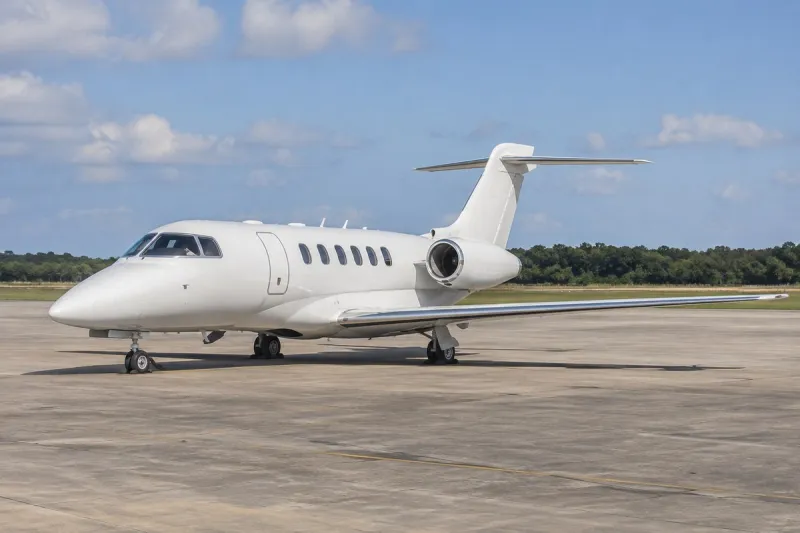
Unlike Part 121 airlines, which require under-seat soft carriers, Part 135 on-demand rules allow large dogs to travel uncrated in the cabin. During taxi, takeoff, landing and moderate turbulence, crews require dogs above 20 pounds to wear a padded harness tethered to an unoccupied seat belt or floor tie-down. Very Light Jets and narrow Light Jets have center aisles of roughly 14 to 17 inches; for four adults and two 80-pound dogs on a three-hour flight, the guide suggests stepping up to a flat-floor Midsize Citation Latitude, modeled at $27,587 one-way from Teterboro to Miami. Per-seat public charter flights under 14 CFR Part 380 often limit passengers to one dog each or require buying an adjacent seat for dogs over 30 to 35 pounds, whereas a whole-aircraft Part 135 charter gives exclusive cabin control. A private citizen who charters an entire aircraft cannot publicly advertise and resell individual seats for profit; the guide recommends an established Part 295/380 pet-charter specialist or a single joint charter agreement among known co-charterers.
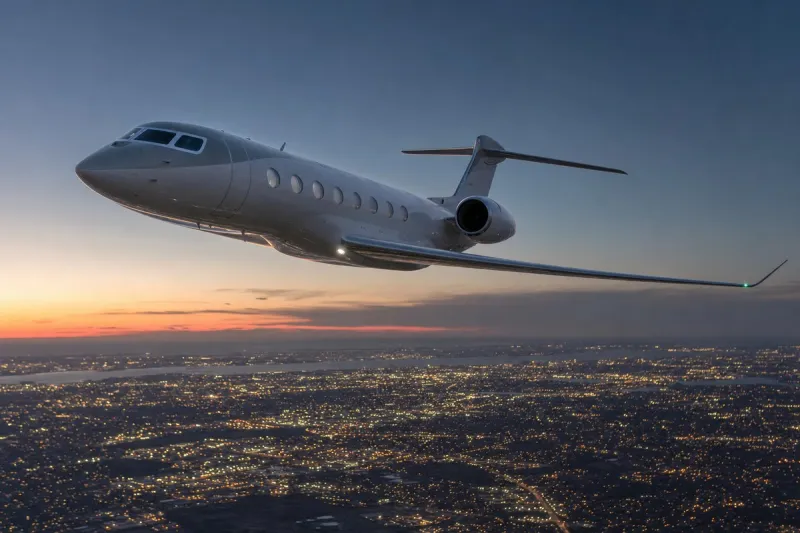
Landing at a private FBO does not exempt pets from national quarantine laws, and an unpermitted animal can be refused entry and returned at the owner's expense. The United Kingdom requires Pet Travel Scheme-approved FBOs, an ISO 15-digit microchip, rabies vaccination, a Great Britain animal health certificate and, for dogs, tapeworm treatment 24 to 120 hours before arrival. The European Union requires designated entry airports, a USDA-endorsed EU health certificate issued within 10 days of arrival, and a microchip placed before the rabies vaccination. Business-jet cabins are typically pressurized to 5,800 to 6,800 feet, versus 8,000 feet on older airliners. The guide advises against heavy sedatives, bringing washable blankets to protect leather seats, and confirming an auxiliary power unit for brachycephalic breeds such as French Bulldogs, English Bulldogs and Pugs on hot ramps. Shared transatlantic pet charters on Gulfstream G450 or Challenger 650 aircraft are cited at about $121,000 from Teterboro to Farnborough, or roughly $15,100 per person-and-dog pair across 8 passengers and 6 dogs.
Six-passenger Very Light Jets and seven-passenger Light Jets offer only 50 to 65 cubic feet of external baggage space, and loose luggage may not block emergency exits. For skis, snowboards, strollers or four or more golf bags, the guide recommends a Pilatus PC-12, a Challenger 350 (106 cubic feet of baggage space), or shipping gear ahead. International charters also incur eAPIS manifest filings with US Customs and Border Protection, airport-of-entry customs arrangements and foreign navigation, landing and departure taxes of $65 to $185 or more per passenger across Caribbean jurisdictions, in addition to the $23.40 per-passenger international air travel facilities tax. The IRS states in Publication 510 (December 2025) that the section 4261 tax on international flights beginning or ending in the United States is $23.40 per person for 2026, and the domestic segment tax is $5.30.