Local historian's new book traces Santa Monica Municipal Airport's history as the city plans its 2028 closure
Why It MattersThe airport's scheduled 2028 closure would remove a long-established business-aviation field from the Los Angeles basin, while AOPA and other advocates continue to lobby the city to keep it open.
Santa Monica historian Nina Fresco has self-published a book on the history of California's Santa Monica Municipal Airport, drawing on nearly 9,000 articles, photographs and other items she collected. Her interest began with a house built in 1903 and her service on the city's landmarks commission, where historical reports often left gaps. She concluded the airport's story was too large for a single chapter.
The airport grew from Clover Field, which began as a simple airstrip in a barley field. Donald Douglas relocated what would later become Douglas Aircraft Co. to Santa Monica in the early 1920s. As the company's airplanes grew larger, it needed more space and wanted the city to secure the Clover Field property. The city bought the land through a 1926 park bond that funded both an airport and a municipal golf course. The book's title comes from the 1924 flight of four Douglas World Cruisers, which left Clover Field on March 17 on the U.S. Army Air Service's attempt to circle the globe; two of the original aircraft completed the journey. Santa Monica officials objected when the Army named Seattle the official finish, and the Army added a Santa Monica stop before Seattle. A large crowd gathered when the aviators returned to Clover Field on September 23.
Douglas Aircraft's wartime expansion brought jobs and industry to the city. Through a separate project documenting Santa Monica's Mexican community, Fresco and three collaborators interviewed longtime residents, some of whom worked at Douglas, which she said offered training that let employees from immigrant families advance. Her research into Santa Monica's Black community found that discriminatory housing practices, zoning ordinances and real estate agreements confined many families to particular neighborhoods.
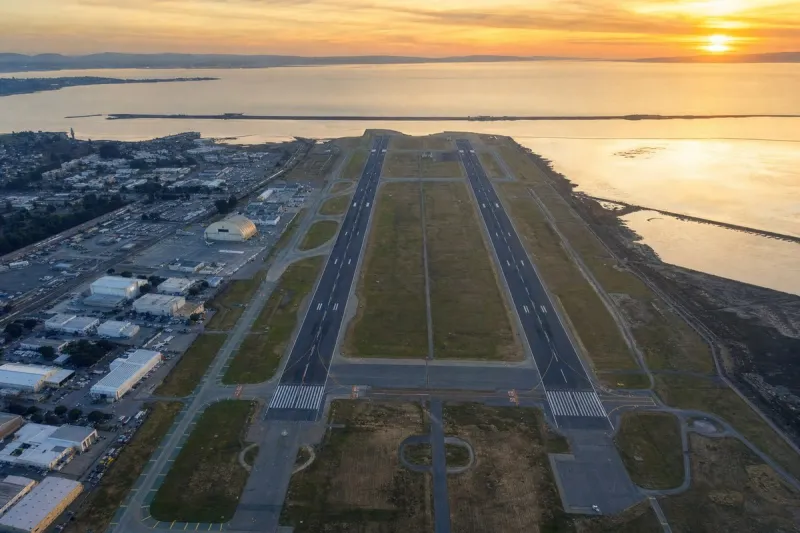
Using aerial photographs, city records and technical maps, Fresco illustrated how the airport's runways, buildings and property boundaries changed over time. She found some records, particularly on wartime land acquisitions, redacted or missing. She self-published to avoid time spent seeking an agent or publisher and to include all material she found.
Santa Monica plans to close the airport at the end of 2028 and convert the property into a park. AOPA and other aviation advocates still hope to persuade the city to keep it open. Fresco, a city planning commissioner and vice president of the Santa Monica Conservancy, takes no public position on the airport's future and advocates preserving its history.