Flight Instructor Outlines How Student Pilots Should Read METARs and TAFs Before a First Solo Flight
Why It MattersThe case shows flight schools relying on instructor-approved dispatch and layered weather sources, rather than a single briefing, to keep student solo decisions inside conservative limits at airports without automated weather reporting.
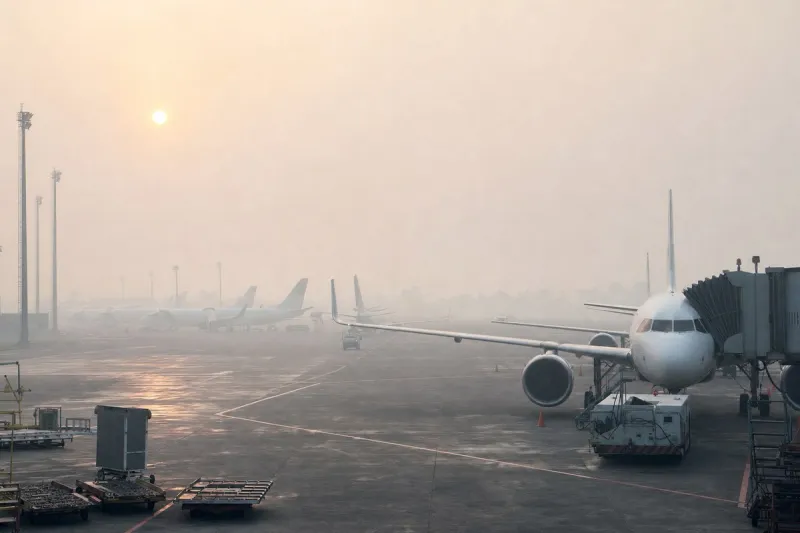
A learner pilot scheduled for his first solo flight arrived late to a flight school on a foggy morning. The instructor had not yet reached the airport, and the dispatcher, who is not a pilot but knows student pilots may not fly in fog, would not dispatch the aircraft. School policy requires the student's flight instructor to approve every dispatch; according to the chief instructor, the rule was introduced after a post-solo student tried to fly solo on an IFR day and was stopped by a CFI just before starting the engine.
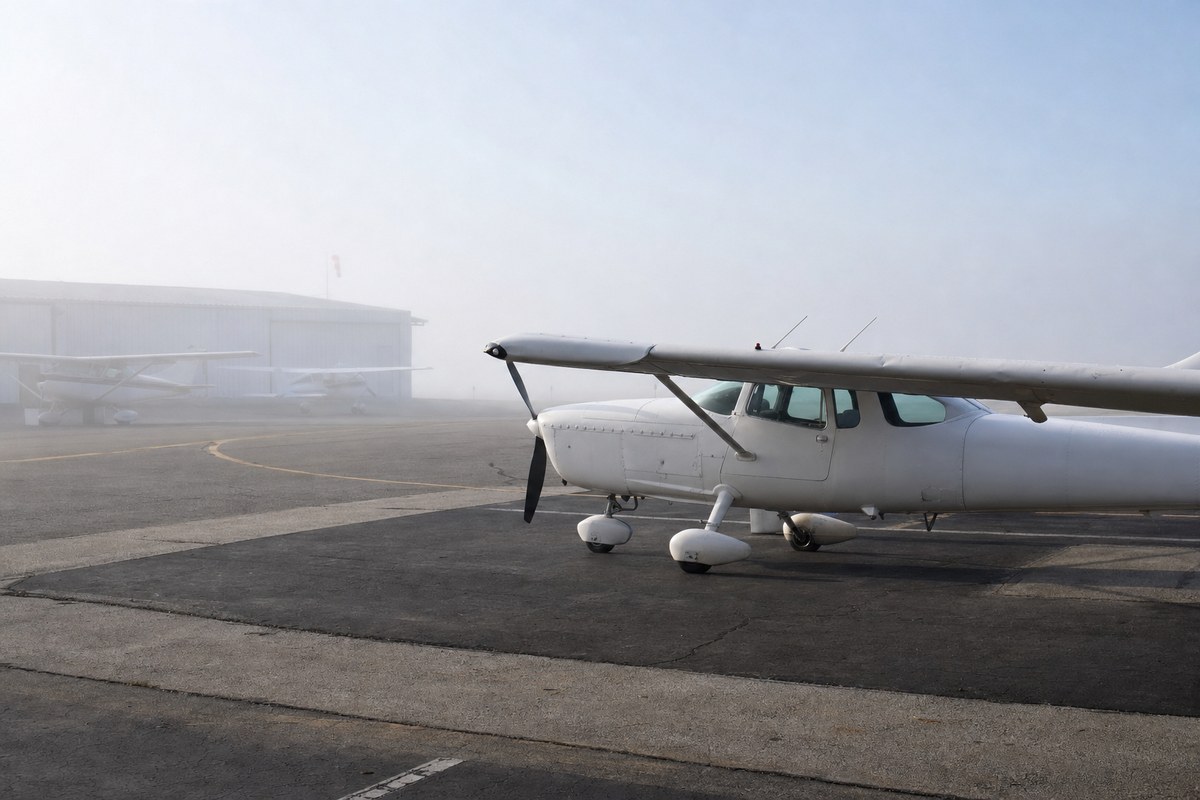
The airport has no automated weather reporting system, and its rotating beacon is described as unreliable, so students are taught to combine several sources of information gathered at different times when making a go/no-go decision. That takes more than pulling up a briefing, such as one from 1800WXBRIEF.com, and reading the color-coded METAR (Meteorological Aerodrome Report) against the TAF. A METAR, usually issued at the top of the hour unless conditions change significantly, describes conditions within 5 sm of the reporting station. Magenta indicates low IFR (ceiling below 500 feet and visibility below 1 sm), and red indicates IFR (ceiling 500 to 1,000 feet and visibility 1 to 3 sm). A student pilot whose field shows magenta or red should expect to stay on the ground. The TAF is a prediction, not a promise, and should be treated with skepticism; a forecast improvement to MVFR (ceiling 1,000 to 3,000 feet, visibility 3 to 5 miles) is not guaranteed.
A properly endorsed student pilot may legally fly in MVFR conditions unless the solo endorsement carries a limitation, such as a minimum ceiling of 4,000 feet for flight outside the pattern, or minimums of 5 sm visibility and a 5,000-foot ceiling for solo cross-country flights under school policy. Whether such a flight is good decision making depends on the TAF and on the pilot's options if weather deteriorates, and the advice is to plan at least two avenues of escape. When using PIREPs, pilots should consider the type of aircraft reporting.
By the fourth flight lesson, an instructor should teach a student to access and interpret a weather briefing and to recognize weather patterns and the direction weather is arriving from. En route, apps such as ForeFlight can be used for monitoring, but their imagery is not real time and can be several minutes old. Pilots can also listen to METARs and ATIS broadcasts for airports they are approaching, watch whether temperature and dew point are converging, and decide in advance when to divert or terminate.