Airlines Deploy Airbus A321XLR on Short Routes Despite Its Heavier 101.5-Tonne Maximum Takeoff Weight
Why It MattersMixed short- and long-haul scheduling shows narrowbody fleet decisions at these airlines turn on rotation flexibility, demand and slot access as much as on the range an aircraft was built to cover.
What happened
Several airlines are flying the Airbus A321XLR, the longest-range commercial narrowbody, on routes well short of its 4,700-nautical-mile (8,700 km) range, including some flights lasting under an hour.
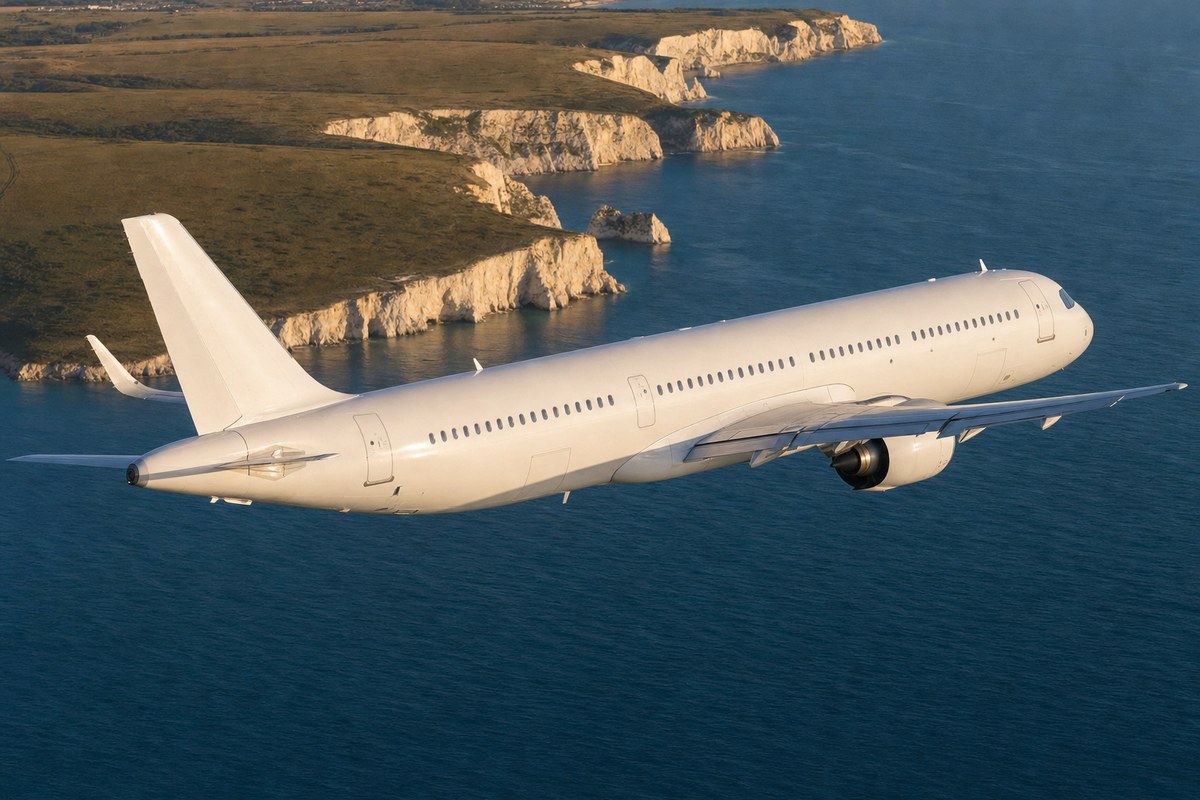
Airbus lists the XLR's maximum takeoff weight at 222,667 pounds (101.50 tonnes), against 213,848 pounds (97.00 tonnes) for the A321neo. The extra weight comes mainly from a permanent rear center fuel tank of about 3,407.82 US gallons (12,900 liters), an updated fuel system and structural reinforcements. In other respects the two variants share the same engines and a seat capacity of up to 244.
Air Canada flies XLRs on a nearly nine-hour Toronto to Tenerife South route, and also on journeys of roughly 39 and 53 minutes covering 197 to 274 nautical miles (364 to 507 km). Aer Lingus XLRs flew more than 300 flights exceeding 3,100 miles and over 200 flights of 1,250 miles or fewer in July, according to aviation data platform Avi-Go. Those included Dublin to Nashville (scheduled at nine hours 20 minutes), Dublin to London Heathrow (48 minutes) and Dublin to Barcelona (one hour 50 minutes).
Cirium data for last July showed American Airlines, Saudia and Wizz Air also mixing short and long sectors on the type.
Larger aircraft on short routes
Widebodies are likewise sometimes scheduled on short routes, such as Air Transat's Montreal to Quebec City on an Airbus A330 and Singapore Airlines' Singapore to Shanghai on an Airbus A380, as flagged by Aerospace Global News.
Demand and airport slot constraints are among the reasons given for using larger aircraft than a route's distance requires.
Industry impact & what to watch
The pattern across these airlines is that an aircraft bought for its longest missions does not stay on them. Airlines that hold a small number of long-range narrowbodies tend to rotate them through whatever schedule keeps utilisation high, so a 48-minute Dublin to London Heathrow sector and a nine-hour transatlantic leg can sit in the same aircraft's week. Fleet planning in this segment is therefore driven by the whole network's rotation needs, not by the single longest route that justified the order.
The cost side of that choice is visible in the figures: the XLR carries roughly 4.5 tonnes more maximum takeoff weight than the A321neo, which brings the rear center tank's permanent structure onto every flight, including those of 39 minutes. Whether short-sector use of the heavier variant pays off depends on the airline's own cost and fee structure, which none of the airlines named have published here. Slot-constrained airports are where larger gauge on a short route is most easily justified, since capacity per movement matters more than the distance flown.
The next evidence will be schedule data: if more operators beyond American, Saudia and Wizz Air show similar short-sector flying on the XLR, the type is behaving as a general-purpose A321 variant rather than a niche route-opener.