GAMA 2025: Airplane Billings Rise 16.1% to $31.0 Billion as Business Jet Shipments Grow 11.8% to 854
Why It MattersBillings outpacing unit deliveries points to a segment whose revenue growth leans on higher-priced aircraft and deep order books, with output limited by production capacity more than by buyer demand.
What happened
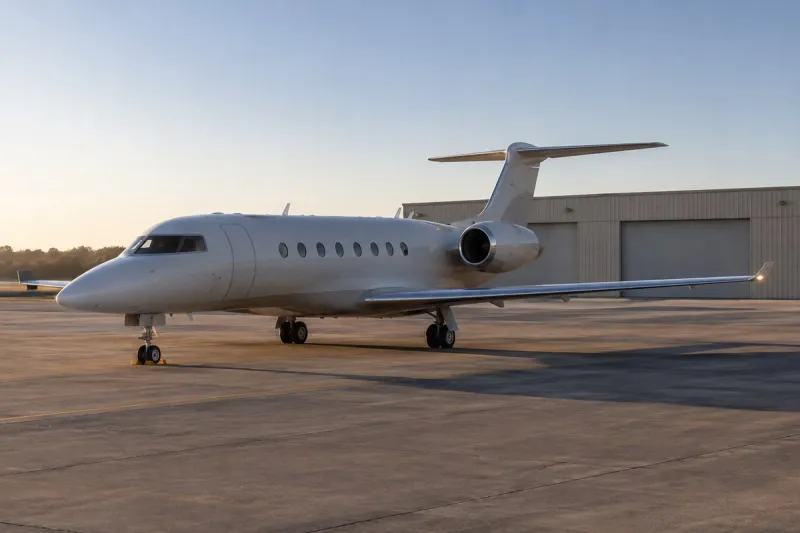
GAMA's 2025 Shipment and Billing Report, released at its State of the Industry Press Conference, puts total airplane billings at $31.0 billion, up 16.1% year-on-year. Business jet shipments rose 11.8% to 854 units over the same period, which means billings grew faster than physical deliveries.

Total general aviation airplane deliveries came to 3,230 units across all categories. Piston aircraft shipments added ten units to reach 1,782, while turboprop shipments fell 5.1% to 594 units. Piston helicopter deliveries were 206 units.
Among the manufacturers, Gulfstream delivered 158 aircraft in 2025, up from 136 in 2024, according to Forecast International (Flight Plan) and IBA Group figures. Bombardier delivered 157 aircraft, against 146 in 2024 and 138 in 2023. Textron's business jet deliveries rose from 151 in 2024 to 171 in 2025.
Gulfstream's backlog grew from $19.7 billion at end-2024 to $21.8 billion at end-2025. Bombardier's backlog grew from $14.4 billion to $17.5 billion over the same period, with a full-year book-to-bill of 1.4x, meaning more aircraft were ordered than delivered.
Forecasts for 2026
IBA, on its own delivery-tracking basis, counts 830 business jet deliveries in 2025 and forecasts 884 in 2026, up 6.5%. Honeywell's outlook expects new business jet deliveries in 2026 to be about 5% higher than in 2025.
IBA notes that Gulfstream and Bombardier guidance for 2026 remains broadly flat, which it attributes to completions and supplier performance capping output rather than to weak demand.
Industry impact & what to watch
The gap between a 16.1% rise in billings and an 11.8% rise in jet shipments is consistent with a mix shift toward higher-priced, large-cabin aircraft, although the report does not break out billings by segment. The two leading large-cabin builders both added to their backlogs while delivering more aircraft, so order intake is running ahead of what factories can hand over.
That shapes how the segment behaves in a supply-limited year. When completions and suppliers set the pace, delivery slots rather than customer appetite determine who gets an aircraft, and growth in revenue comes more from price and mix than from volume. The turboprop decline of 5.1% alongside jet growth shows the strength is concentrated in one part of the fleet rather than spread across general aviation.
The 2026 figures to compare are the manufacturers' own delivery totals against the 884 IBA projects and the roughly 5% growth Honeywell expects, since Gulfstream and Bombardier guidance sits flat.