Boeing Has Not Built an Ultra-Long-Range 787 as Customer Demand and MTOW Limits Weigh Against It
Why It MattersUltra-long-range aircraft are built only when a single carrier's route economics justify a dedicated variant, so Boeing's 787-9 and Airbus's A350 ULR split the market by demand rather than by technical ability.
What happened
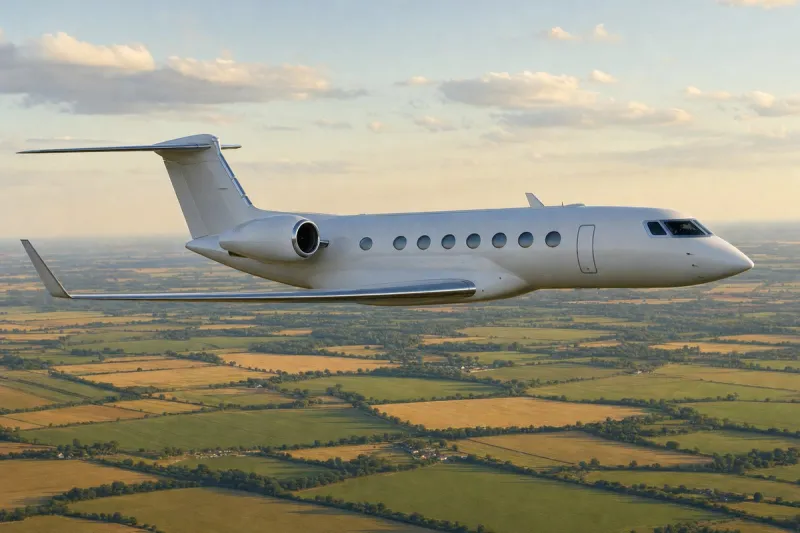
Boeing has never developed an ultra-long-range (ULR) version of the 787-9, while Airbus has built ULR variants of the A350 for single customers. The A350-900ULR, delivered since 2018, operates the world's two longest flights, from Singapore to Newark and JFK for Singapore Airlines. Airbus will begin delivering the A350-1000ULR to Qantas in 2027 for nonstop Sydney–New York JFK and Sydney–London flights; Qantas holds exclusivity until all 12 of its aircraft have arrived.
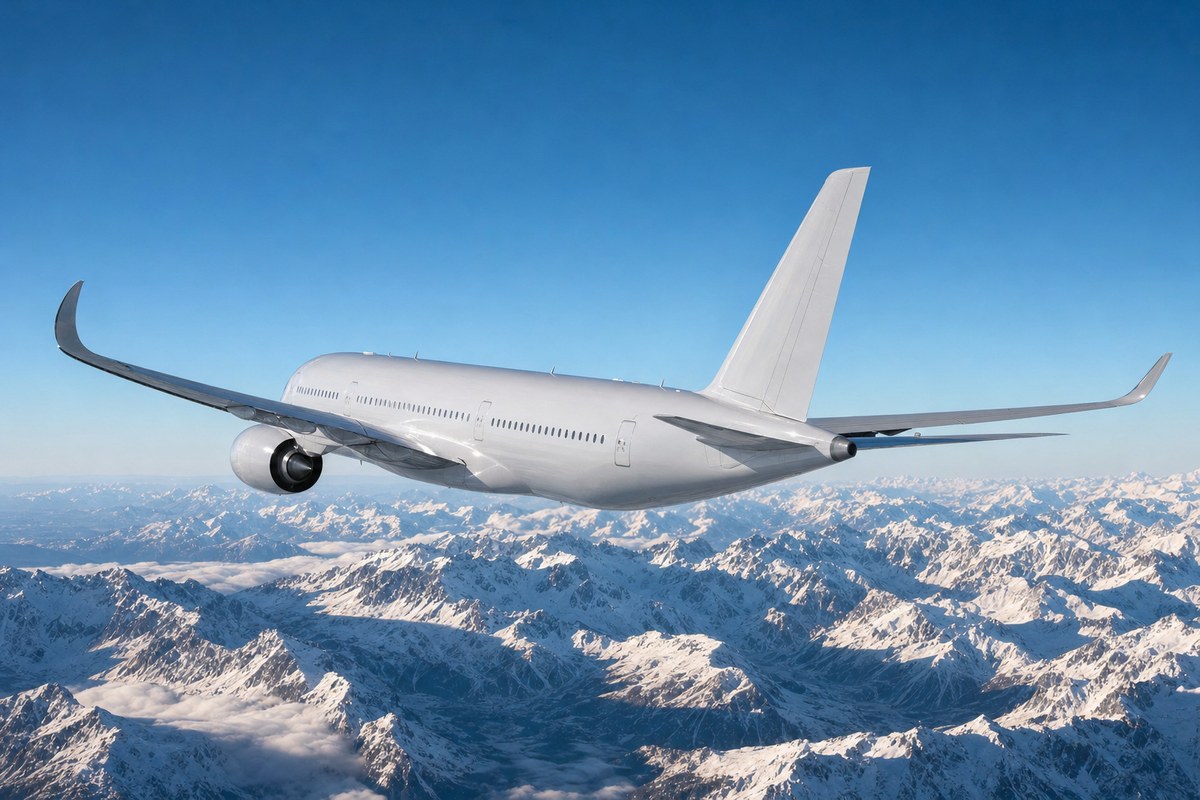
The 787-9 operates four of the world's ten longest nonstop services, including number four. The A350 also operates four, including the A350-900ULR on numbers one and two. The article attributes Boeing's position mainly to a lack of customer demand: both A350 ULR variants were built to meet extreme requirements from one airline each, and the standard 787-9 already has ample range for nearly all carriers.
The 787-9 is limited by maximum takeoff weight (MTOW) rather than fuel capacity. Qantas regularly blocks seats on its Perth–London flight because the aircraft reaches MTOW before all seats can be filled. Boeing recently raised the 787-9's MTOW from 254.7 tons to 259.2 tons, adding about 310 NM (570 km) of range and giving it a typical-payload range of 7,875 NM (14,585 km). Further increases would likely require structural strengthening and a landing-gear redesign.
For comparison, the A350-900 (283 tons MTOW) has a typical-payload range of 8,500 NM (15,750 km) and the A350-1000 (322 tons) 9,000 NM (16,700 km). The 787-10 (260.4 tons) reaches 6,760 NM (12,519 km), since its longer fuselage trades range for payload, and the 787-8 has a lower MTOW of 227.9 tons.
What the A350 ULR changes involved
The A350-900ULR raised MTOW to 280 tons, updated aerodynamics, blocked the forward cargo hold and added usable fuel volume through software changes. The wing twist and 280-ton MTOW were later carried over to the standard A350-900, now available at 283 tons.
The A350-1000ULR raises MTOW from 322 to 324 tons and adds an integrated rear centre tank of over 20,000 liters (5,280 gallons), adding over 1,000 NM (1,850 km) of range.
Industry impact & what to watch
The pattern here is that ULR variants exist because one airline, with one or two extreme routes, was willing to anchor the development. Singapore Airlines and Qantas each supplied that anchor for Airbus; no comparable launch customer has stepped forward for a 787-9 derivative. In long-haul widebody economics, a variant only pays off when committed demand covers the engineering work, so the absence of a ULR 787 reflects customer demand more than any shortfall in what the airframe could do.
The MTOW ceiling shows why the 787-9 sits where it does. Raising range on a weight-limited aircraft means structural and landing-gear work, not just extra fuel volume, which makes each increment costlier than it looks. The reported 95% of A350-900 capability at lower acquisition and operating cost explains why most carriers accept the 787-9 as it is, and why seat-blocking on the very longest sectors is a manageable compromise.
The next dated milestone is the 2027 start of A350-1000ULR deliveries to Qantas, which will show whether Sydney–New York JFK and Sydney–London can run nonstop with the added centre tank. Boeing's position would be tested only if another airline asked for a route beyond what a 259.2-ton 787-9 can fly.