Forecast International: Narrowbody ACJ/BBJ Deliveries Seen Flat at About 5 Units a Year Through 2030
Why It MattersWith neither manufacturer disclosing backlog, this segment's outlook rests on trailing deliveries, so a handful of individual orders can move the numbers and scenario assumptions matter more than demand signals.
What happened
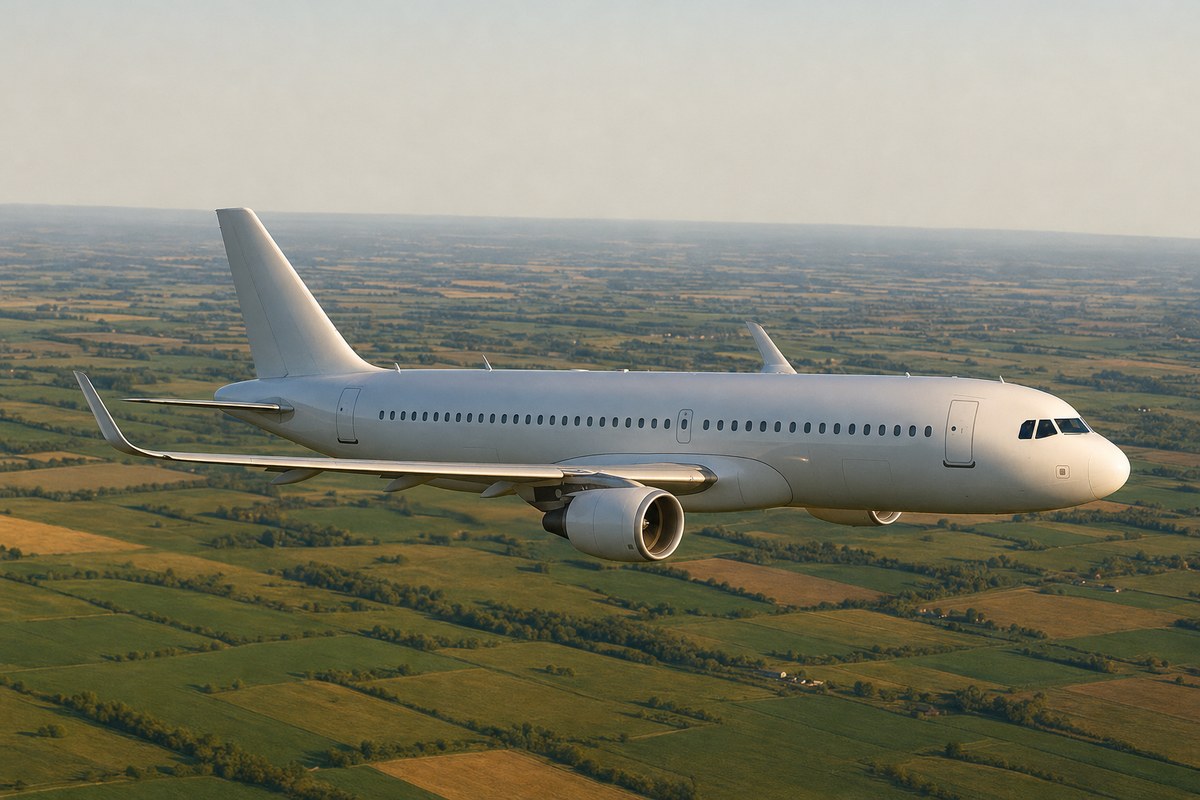
Forecast International Canada projects that combined deliveries of narrowbody Airbus Corporate Jets (ACJ) and Boeing Business Jets (BBJ) will stay flat at about 5 units a year through 2030. The segment covers ACJ models built on the A220 Two Twenty and A318/A319/A320/A321, and BBJs built on the 737NG and 737 MAX platforms. Together they delivered 5 units in 2025 (5 ACJ narrowbody, zero BBJ/MAX). The five-year average for 2021-2025 is 5.4 units a year, a period that opened with a rise to 8 units in 2021 before settling at 4 to 5 a year.
The analysis draws on publicly disclosed industry information and JETNET data as of October 13, 2026. It shows combined production of 23 units in 2006, a dip to 15 in 2008-2009 and a peak of 25 in 2010. Output fell to 17 in 2011 and has stayed thin since; since 2016 the combined total has not exceeded 8 units in a single year. In 2000-2009 Boeing led, delivering 90 narrowbody units to Airbus's 60. From 2019 to 2025 Airbus led, delivering 29 units to Boeing's 8 (78% vs. 22%).
On BCA's Q1 2026 pricing, the ACJ TwoTwenty at $82.5M sits in the same band as the Global 8000 ($85M), G800 ($80.4M) and G700 ($84.9M). The larger variants, the ACJ319neo ($107.5M), ACJ320neo ($117M) and BBJ MAX 7/8/9 ($97.5M to $124M), are priced above that large-cabin band. The Falcon 10X launch price of $75M is estimated to be more realistically $82M to $86M in its 2029 certification and delivery year.
Through the first half of 2026, 2 ACJ narrowbody units and 1 BBJ/MAX unit have been delivered. Annualized, that points to roughly 4 ACJ narrowbody and 2 BBJ/MAX for the year, close to the 2026 forecast of 4.0 and 1.4, with BBJ/MAX slightly ahead of pace. This is carried as a flagged interim data point, not yet folded into the trailing average.
How the forecast is built
The model forecasts off a rolling five-year trailing average rather than backlog-driven growth, because neither Airbus nor Boeing discloses a backlog or book-to-bill figure for ACJ or BBJ. For 2030 it applies a downturn scenario: a 20% probability of a 20% shock to combined deliveries, blended with an 80%-probability no-recession case. The 2030 figure is therefore a scenario-weighted estimate rather than a point prediction.
Two public orders are not included in the forecast. In February 2025 an Abu Dhabi-based charter operator placed a firm order for three ACJ320neo, with no delivery dates disclosed. In May 2023 Boeing announced an order from undisclosed VIP customers for one BBJ 737-7; the 737-7 received FAA certification only in August 2026, with first deliveries expected in spring 2027. If that aircraft ships in 2027, it would lift the 2027 forecast from 4.9 to 5.9 units. A one-unit adjustment in 2026 would raise the 2026 combined figure from 5.4 to 6.4.
Buyer mix and wealth indicators
A 2000 European market study found government operators held about 6% of the large and airliner-derivative fleet in Europe in 1999, with corporate flight departments at 44% and charter operators at 50%. Recent new-build orders appear to lean more toward governments, though deliveries have not been tallied by buyer type.
Knight Frank's 2025 Wealth Report projects the number of US$10m+ individuals in Africa to grow 17.8% by 2028, versus 5.8% in North America, 4.8% in Europe, 9.7% in Latin America and 8.7% in Asia.
Industry impact & what to watch
A forecast built on a trailing average says as much about the segment's opacity as about its demand. With no disclosed backlog or book-to-bill figure from either manufacturer, the five-year average of 5.4 units becomes the anchor, and a single order moving from announcement to delivery visibly shifts a year's number. The 2027 swing from 4.9 to 5.9 units on one BBJ 737-7 shows how thin this market is: individual tails, not aggregate demand curves, set the annual totals.
The contrast with large-cabin purpose-built jets is structural. The ACJ TwoTwenty prices in the same band as the Global 8000, G800 and G700, while the larger ACJ and BBJ MAX variants sit above that band. Buyers at the top of the market are choosing between a purpose-built business jet and an airliner derivative on cabin volume and price positioning, and the roughly 5-unit annual run rate suggests the airliner-derivative route stays a niche choice rather than a growing one.
The next concrete milestones are the first 737-7 deliveries expected in spring 2027 and any delivery dates for the three ACJ320neo ordered in February 2025. Those two items are what would move the forecast off its flat line.