IAI in Early Talks With Pratt & Whitney on Adding GTF Engine MRO Capability
Why It MattersThird-party shops widening from CFM56-era engines into Leap and possibly GTF work shows MRO capacity shifting toward new-generation narrowbody powerplants while older engines stay in service longer than planned.
What happened
Israel Aerospace Industries (IAI) is in early discussions with Pratt & Whitney about adding GTF engine capabilities to its maintenance, repair and overhaul (MRO) services portfolio. The talks sit inside a wider push by IAI to grow its narrowbody engine offering as the global fleet powered by new-generation engines expands.
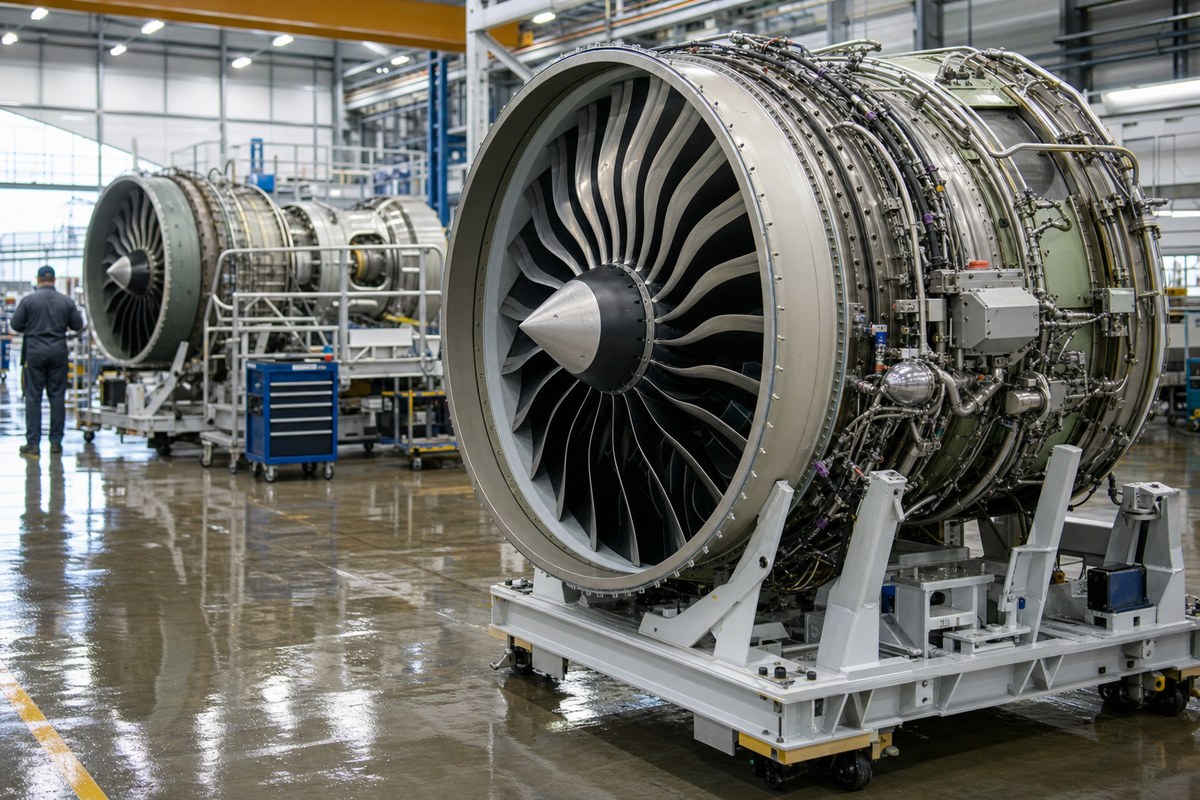
Following FAA and European Union Aviation Safety Agency (EASA) certification, IAI is fully authorized to perform maintenance on the Leap-1A, which powers the Airbus A320neo family, and the Leap-1B, which powers the Boeing 737 MAX. IAI has also introduced a quick-turn shop visit capability for Leap engines.
Yaacov Berkovitz, IAI group executive vice president and general manager, told Aviation Week that IAI has only just started with the Leap and is building its capability for full MRO. Asked whether IAI wants to add the GTF, he said it depends: talks with Pratt have only just begun, "but talking is not doing," and it will take some time. He called the GTF very interesting and said he would be happy to enter that market, and that he believes the technical issues surrounding the Leap and GTF will be rectified.
In the meantime, IAI is benefiting from the extended service lives of older engines such as the CFM56, the Pratt PW4000 and the International Aero Engines V2500. Berkovitz said some newer engines appear more susceptible to issues, forcing airlines to remove them from the wing sooner than expected, and that airlines now want to keep older engines in service rather than retire them. He said the MRO life of an aircraft has lengthened, meaning more MRO work and more engines to overhaul.
Industry impact & what to watch
IAI's position illustrates how an independent MRO provider hedges across engine generations. Demand for work on mature engines such as the CFM56, PW4000 and V2500 is being propped up by airlines holding on to older powerplants, while the provider builds authorization on the Leap and approaches the GTF. Authorization from the OEM and the regulators is the gate for each engine family, so every new type is a separate, sequential build rather than something a shop can add quickly.
The pattern also shows where engine-shop capacity is tight. When newer engines come off the wing sooner than planned and operators keep older ones flying, the same shop-visit slots are contested by both fleets. That keeps overhaul demand elevated across generations and gives independent shops a reason to seek access to engines that were once largely the preserve of the OEM network.
The next milestone is whether the Pratt & Whitney discussions progress beyond Berkovitz's own caution that talking is not doing, and on what timetable. Until Pratt & Whitney responds, the GTF remains an aspiration on IAI's side rather than a service on offer.