Canada Low-Altitude Economy Survey Logs 32 Entities, 21 Active, With C$93.3 Million in Counted Funding
Why It MattersCanada's low-altitude sector shows operating drone work and public money well ahead of any built vertiport or flying passenger eVTOL, with the largest funded program being a hybrid-electric regional aircraft instead.
What happened
A survey of Canada's low-altitude economy and drone ecosystem lists 32 entities: regulators, public bodies, airports, police and paramedic services, companies, universities and associations. Each carries a status and a last-checked date. Twenty-one are active, five are planning, two have only announced and four are unverified. Canada is the twelfth country in the series to be surveyed as a single unit. Entries sit in four clusters, Greater Montreal, Southern Ontario, Calgary to Edmonton and Greater Vancouver, with nine national or outlying rows outside them.
On regulation, the Supreme Court of Canada held on October 15, 2010, that the federal aeronautics power covers the operation of aircraft and airports and where aerodromes go. Since November 4, 2025, Part IX of the Canadian Aviation Regulations has let certified pilots of a certified operator fly drones beyond visual line of sight in uncontrolled airspace without a special flight operations certificate. The limits are up to 25 kg over sparsely populated areas and up to 150 kg at least 1 km from populated areas. Transport Canada says it will set the certification basis for advanced air mobility aircraft.
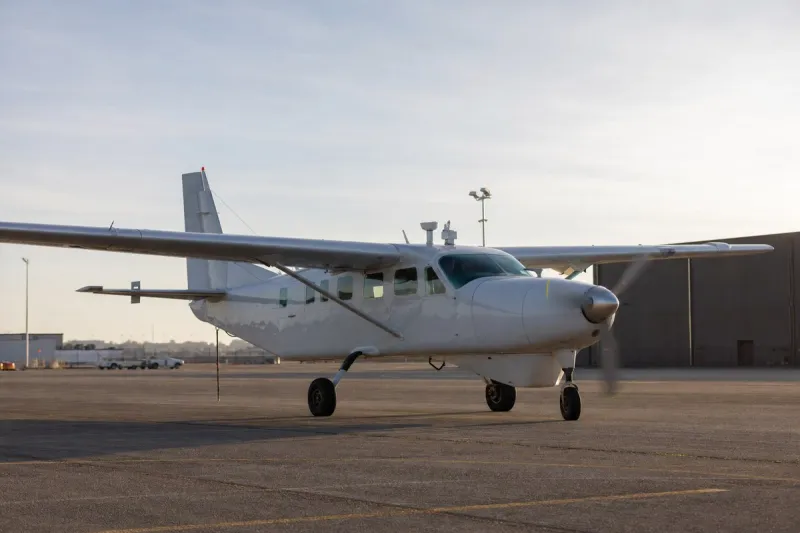
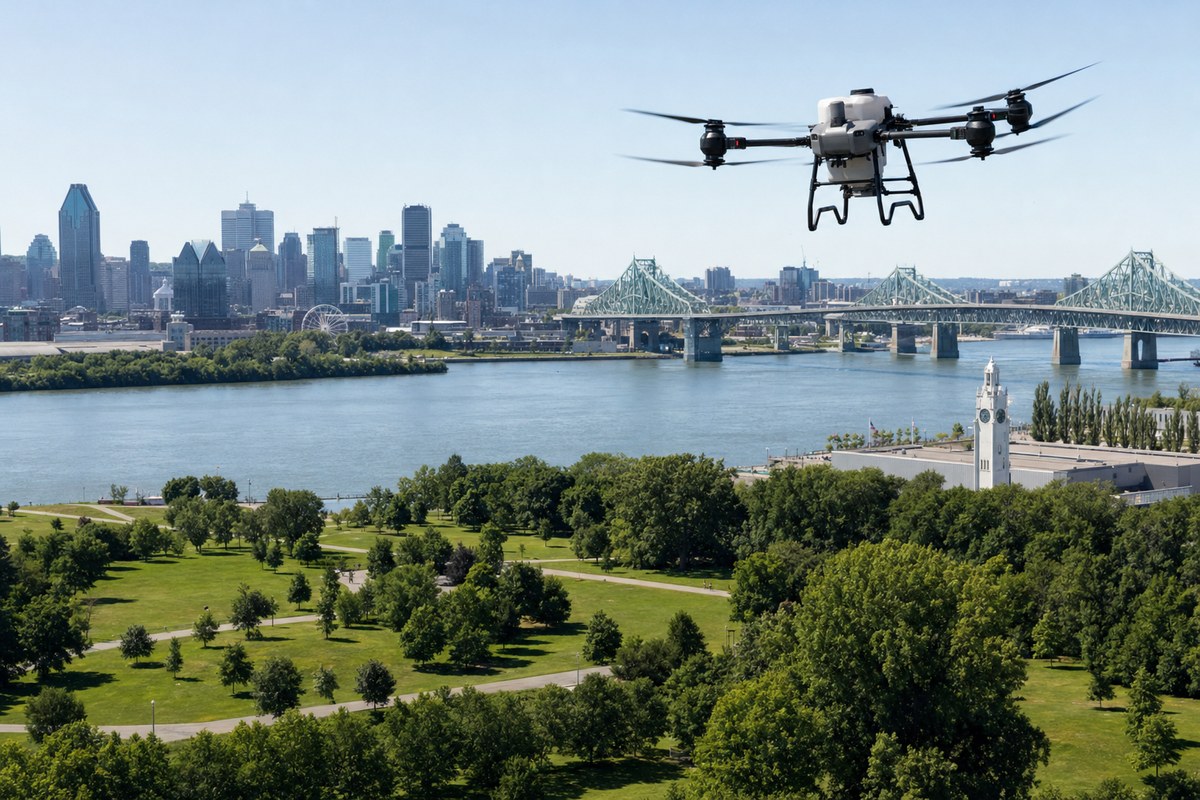
The flying on record is one airport delivery route, police drones and aircraft in test. Drone Delivery Canada, now Volatus Aerospace, began commercial drone deliveries at Edmonton International Airport in May 2022, and the airport counts more than 3,000 commercial flights. Volatus reports medical supply flights in 2025, but no flight count newer than September 2024 was found. The Red Deer RCMP and the Calgary Police Service fly drones as first responders. Three Greater Toronto public safety services have announced drone pilots with no flights on record yet.
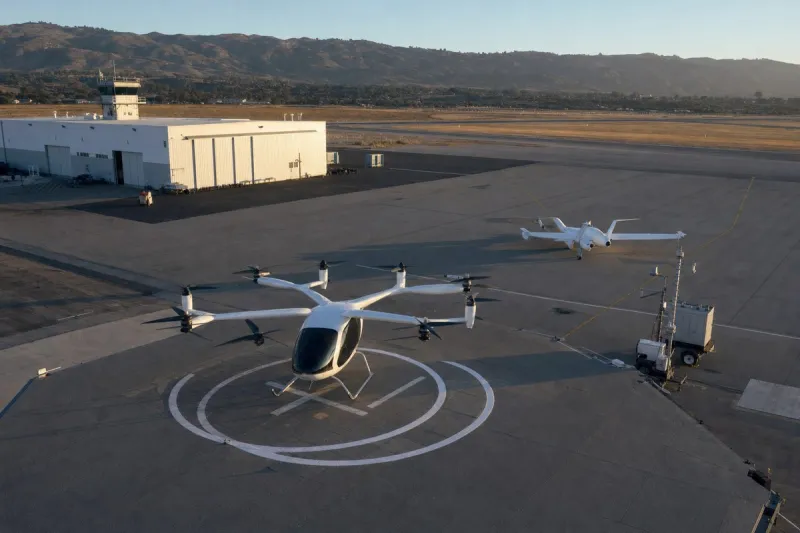
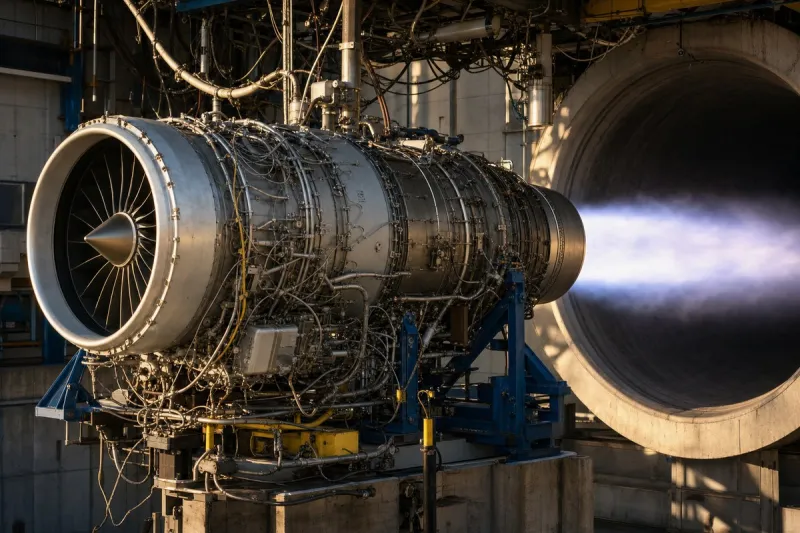
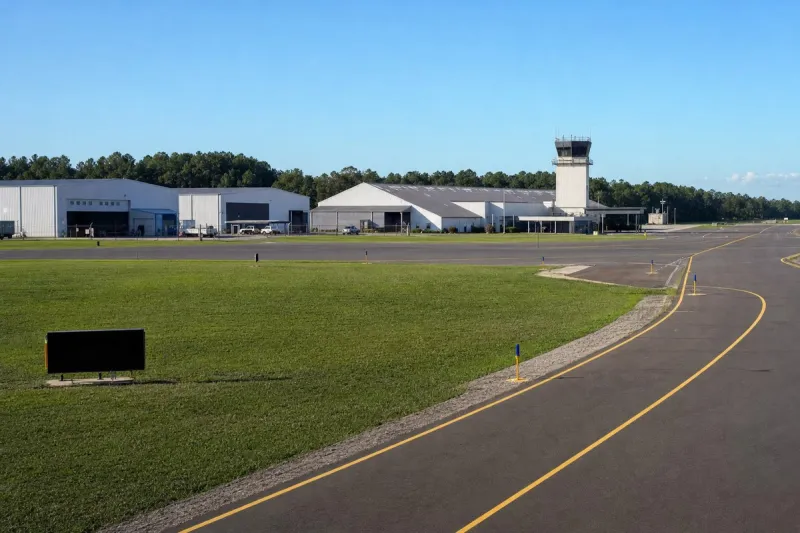
Horizon Aircraft in Lindsay, Ontario, says its half-scale hybrid-electric prototype has hovered and transitioned to forward flight, and it expects the full-scale aircraft early in 2027. RTX said on July 21, 2026, that ground tests of Pratt & Whitney Canada's hybrid-electric propulsion system had begun at Longueuil. At Mirabel, Aéroports de Montréal signed an advanced air mobility memorandum and two vertiport companies have offices, but no vertiport was found built anywhere in Canada.
Where the money went
The funding the survey counts totals C$93.3 million across 34 rows, drawn mostly from the federal government's disclosure of grants and contributions and from Quebec government releases. Each federal row is an agreement, not a record of payment.
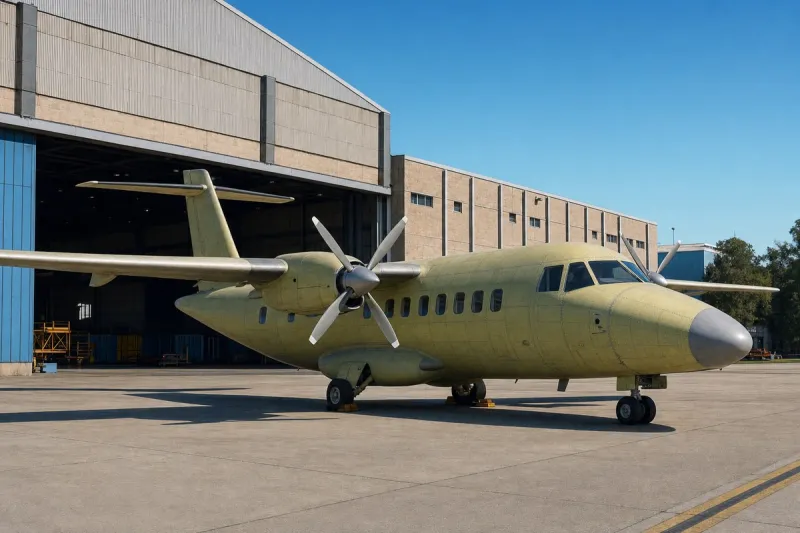
Pratt & Whitney Canada's hybrid-electric regional aircraft demonstrator accounts for 61 million of the total as a repayable contribution, and it is not an eVTOL. Without it the total is 32.3 million. The largest share of that remainder, about 12.1 million, went to the drone test center at Alma, Quebec, and its airport.
Sourcing
Every entry links to its source, and primary documents were read wherever they exist. These include the Supreme Court of Canada, the Canada Gazette, Transport Canada, NAV CANADA, airport authorities, the federal grants and contributions disclosure, Quebec government releases, SEC filings, and police, city and company pages.
Quebec sources are cited in the French original. Each status carries its own verification date.
Industry impact & what to watch
The picture is a sector where regulation and public money have moved faster than infrastructure. The beyond-visual-line-of-sight rule in force since November 4, 2025, gives certified operators a defined route to scale drone work in uncontrolled airspace, and the entries that are actually flying, airport delivery and police first response, sit inside that drone category. Passenger-carrying aircraft are still at prototype or ground-test stage, and no vertiport is built.
The funding split is also instructive for how the segment is financed. Of the C$93.3 million counted, 61 million backs a hybrid-electric regional aircraft demonstrator, a propulsion program with a large incumbent, and only 32.3 million is spread across everything else in the survey. Because federal rows are agreements and not payments, the amounts show intent more than spending to date, so the drone test center at Alma and the smaller grants are best read as commitments still working through the pipeline.
The next dated markers are Transport Canada's certification basis for advanced air mobility aircraft, which it says it will set, and Horizon Aircraft's full-scale aircraft, expected early in 2027. Whether the announced Greater Toronto public safety drone pilots begin flying will move entries from announced to active in the next survey update.