Airspace Consultancy Says Dynamic Management Is Key to Integrating Drones, HAPS and eVTOL as European Traffic Passes 2019 Levels
Why It MattersCapacity pressure concentrated in a few control centres, alongside new uncrewed and eVTOL entrants, shifts the integration bottleneck from airspace availability to air traffic service capacity and procedures.
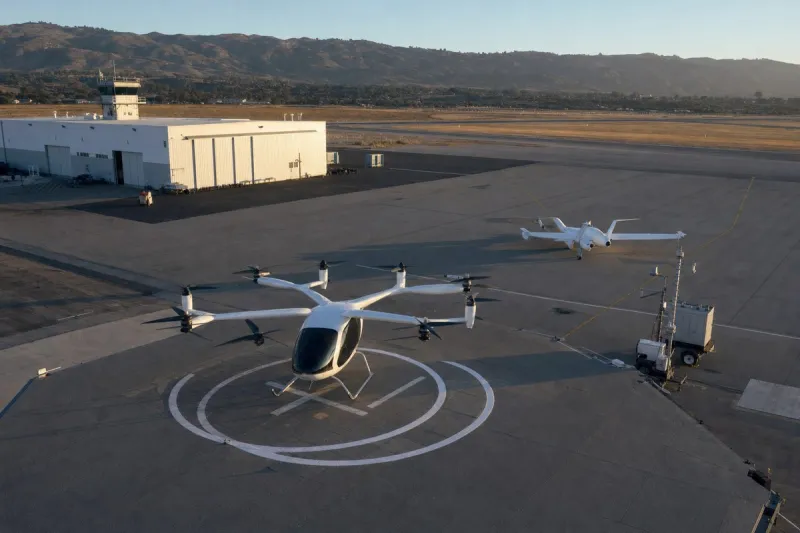
Murzilli Consulting argues that airspace design and management services are becoming a key enabler for integrating advanced aviation into airspace shared with commercial aviation, military operations and other traditional users. It says airspace built for crewed aviation, fixed procedures and static civil-military segregation is being challenged by uncrewed aircraft systems (UAS) at low and medium heights, high-altitude platform systems (HAPS) and urban air mobility, including eVTOL aircraft. The industry, it says, is moving from static structures such as Flexible Use of Airspace to Dynamic Airspace Management, in which airspace is allocated, released and reconfigured based on expected demand, safety requirements and real-time or near-real-time data.

EUROCONTROL's Performance Review Report 2025 recorded 11.1 million controlled flights in the EUROCONTROL area, 4.3% more than in 2024 and slightly above 2019 levels. Available controlled airspace remained around 6% smaller than in 2019, mainly because of the closure of Ukrainian airspace after Russia's 2022 invasion. Capacity pressure was uneven: the five most penalising area control centres generated 47.1% of total en-route air traffic flow management delay in 2025 while accounting for only 13.2% of controlled flight hours. MarketsandMarkets estimates the global air traffic management market will grow from USD 12.20 billion in 2025 to USD 15.20 billion by 2030, a compound annual growth rate of 4.5%, and names Europe as the fastest-growing region.
The article adds that airspace scarcity is not only physical: it can stem from missing operational or technological solutions or regulatory development, and is increasingly evident in terminal manoeuvring areas around major international airports. For UAS operators, the constraint is often the capacity of air traffic services to manage demand rather than airspace availability. It identifies four typical challenges: limited coordination capacity, lengthy approval times, novel operations without mature procedures, and the need for an early Concept of Operations. Murzilli Consulting says it supports air navigation service providers, aviation authorities, operators and service providers with airspace analysis, air risk management, modernisation, technology implementation, U-space consulting and certification.