US Air Traffic Control Outages in 2025 Expose Aging Infrastructure; FAA Seeks $30 Billion More for Modernization
Why It MattersRepeated failures on patched legacy systems show modernization is now an infrastructure-replacement problem, and charter and fractional operators sharing congested airspace absorb the delay cost until funding and system design catch up.
What happened
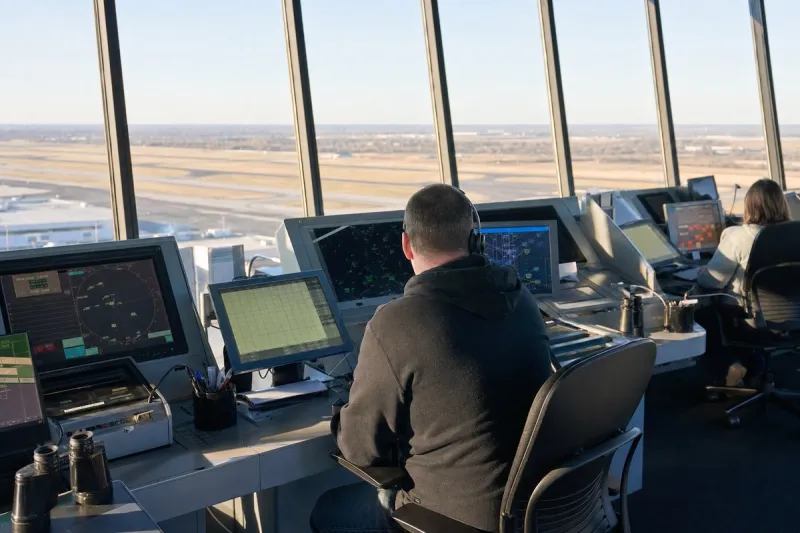
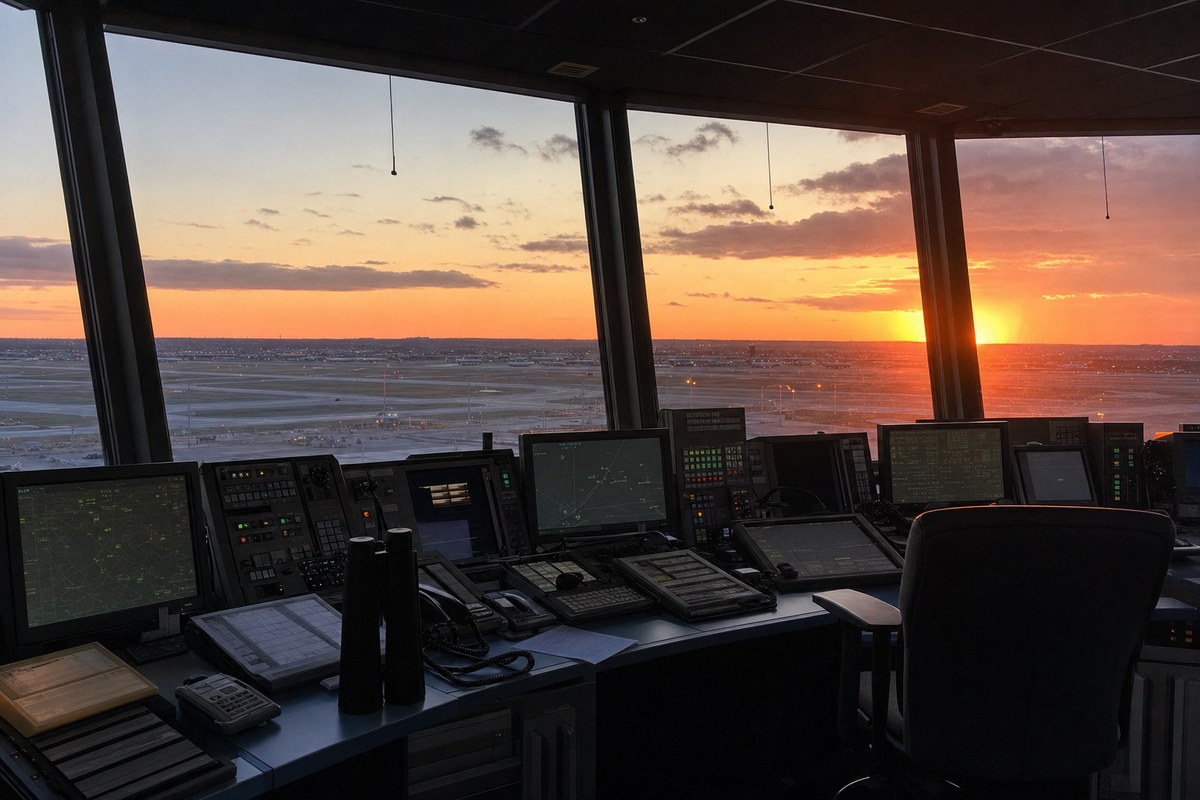
On April 28, 2025, controllers at the Philadelphia facility lost the ability to see or talk to aircraft heading into and out of Newark when a copper wire burned inside one of the telecommunications lines. The loss lasted about 90 seconds. At least five controllers took 45 days of trauma leave afterward, and Newark experienced rolling delays. By May 9, it was the third time in two weeks that radars had failed at the Philadelphia facility.
The government has tried to modernize the national airspace system since 2003, with little success. The current plan covers communications, surveillance, automation and facilities. At the end of fiscal 2024 there were 1,020 fewer certified professional controllers than at the end of fiscal 2012, a 9 percent drop. The FAA hired a record 2,235 controller trainees this fiscal year and went from 10,694 certified controllers at the start of fiscal 2026 to 11,027 at the end. The 2026-2028 workforce plan targets 12,563 certified controllers.
Congress authorized $12.5 billion for the air traffic control system in the July 2025 reconciliation law. The Department of Transportation has used the money to begin implementing digital flight strips, upgrade communications systems and deploy enhanced surveillance systems. The FAA had converted 35 percent of its copper wire to fiber, with completion targeted for the third quarter of 2027. On December 4, 2025, the FAA selected Peraton, a Virginia-based defense contractor, as prime integrator under a contract described as first of its kind.
In late September 2026, the FAA asked Congress for an additional $30 billion. The Modern Skies Act, introduced by Duffy and Senator Eric Schmitt, aims to replace aging facilities and upgrade telecommunications infrastructure. The figure compares with $4 billion in the White House's fiscal 2027 proposal. FAA Administrator Bryan Bedford said hardware alone will not solve the underlying design issue, noting that each of the 350 FAA facilities has its own computing power with no ability to see across facilities. The Modern Skies Coalition warned that partial funding risks stranded investments.
How it unfolded
Target for completing the copper-to-fiber conversion, 35 percent of which is done.
FAA asks Congress for an additional $30 billion.
FAA selects Peraton as prime integrator.
Reconciliation law authorizes $12.5 billion for the air traffic control system.
Third radar failure in two weeks at the Philadelphia facility.
Copper wire burns in a telecommunications line; Philadelphia controllers lose sight of and contact with Newark traffic for about 90 seconds.
Industry impact & what to watch
The 2025 failures show that decades of patching have left the system with single points of failure: a burned wire cut radar and voice contact for about 90 seconds, and the delays lasted far longer. For business aviation, the practical exposure is shared airspace. Charter, fractional and private operators flying into the New York area queue behind the same flow restrictions as airlines, so a facility-level outage becomes a schedule problem for everyone.
The $30 billion request sits against $4 billion in the White House's fiscal 2027 proposal, and the Modern Skies Coalition has warned that partial funding risks stranded investments. Bedford's point that the 350 facilities cannot see across one another frames the dispute: money for hardware and money for a redesigned architecture are different asks.
The next concrete markers are the fiber conversion, now 35 percent complete with a third-quarter 2027 target, and whether Congress acts on the Modern Skies Act. Delivery under the Peraton contract will show whether the performance-linked structure changes how fast the work moves.