China Builds Single-Window National Approval System for Low-Altitude Flights, Aiming to Cut Approval Times by Over Half
Why It MattersFragmented airspace rights, not aircraft supply, set the pace of low-altitude growth, so whether one national window can replace flight-by-flight temporary approvals decides if the sector scales beyond pilot projects.
What happened
In December 2025 the Civil Aviation Administration of China (CAAC) issued a document meant to consolidate the fragmented systems used to approve low-altitude flights into a single window. Until now, a drone operator seeking airspace permission, for example to carry a parcel across the Qiantang River in Hangzhou, could wait the better part of a week, as requests passed through separate systems run by different offices, each with its own form.
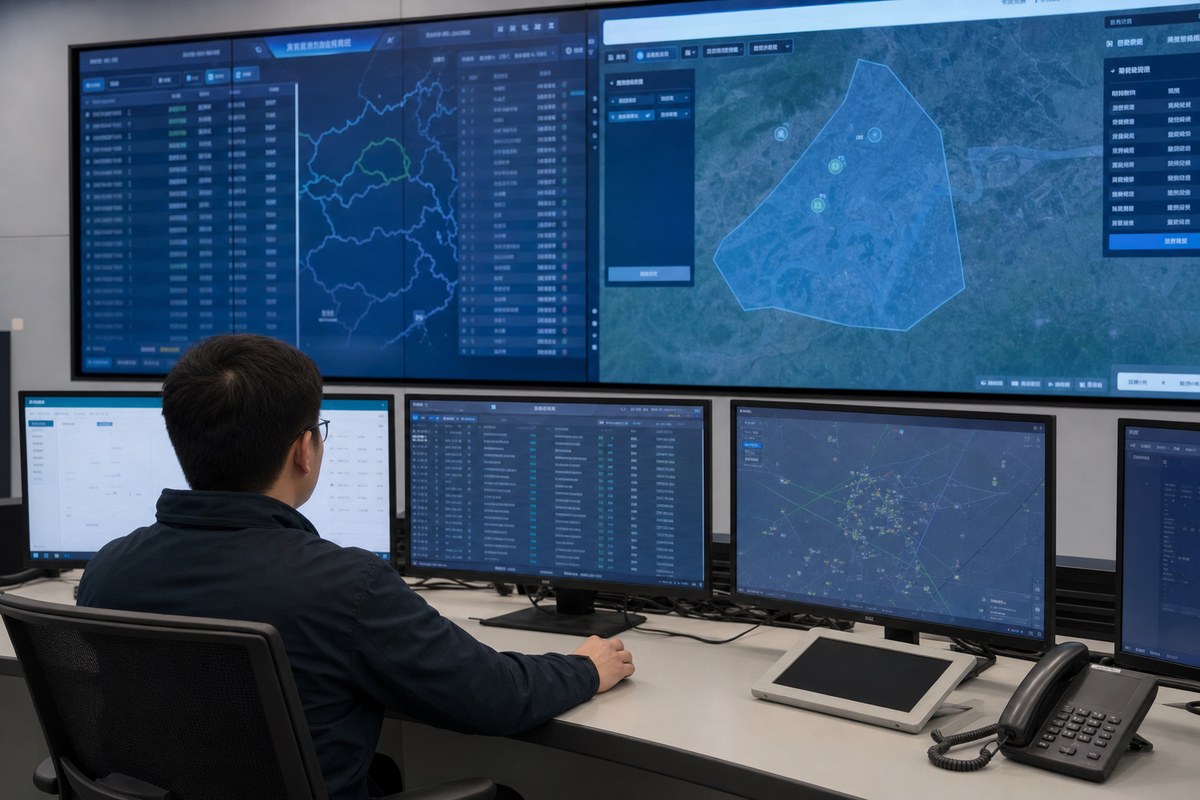
The design is a three-level portal, running from national to city level, that pulls the separate regional approval systems into one place, together with a matching information interaction standard. Its stated promise is one acceptance window and one service network, with approval times cut by more than half, from about a week to about three days. That figure is a target rather than a measured result, and version 1.0 is a specification rather than a finished network. The Central Air Traffic Control Office is still unifying software interfaces for airspace management, flight information and flight services.
China has also created new government offices. In December 2024 the National Development and Reform Commission set up a department for the low-altitude economy to write development plans, recommend policy and coordinate major issues. In May 2026 the CAAC established a low-altitude safety department responsible for low-altitude civil aviation development plans, balancing safety against growth, and building flight service dispatch platforms and flight service station systems. In September 2025 the CAAC also published 29-article interim measures for the aerial sightseeing market.
A Chinese industry study of low-altitude traffic named fragmentation as the core problem: most provinces cannot secure long-term rights to the airspace above them, so operators file for temporary approval flight by flight, with limits on altitude and time of day. By the start of 2025, by one count, China had roughly 2.2 million registered civilian drones, up about 455 percent in five years.
Scale and local ambitions
The CAAC estimates the low-altitude economy was worth about 1.5 trillion yuan (near 211 billion dollars) in 2025 and projects it to exceed 3.5 trillion yuan (about 490 billion dollars) by 2035.
Hangzhou lists the industry among five future industries it aims to lead, and Wuhan says it will build 1,000 drone hangars and an integrated management system by 2030. In 2025 the Ministry of Transport opened 21 highway inspection pilot projects. Research cited in the report describes the sector as having more pilots than wide use, and notes that takeoff and landing sites remain scarce and slow to permit.
Industry impact & what to watch
The case shows where the constraint on low-altitude operations actually sits. Aircraft and operators are multiplying, with roughly 2.2 million registered drones, but the airspace above most provinces is not held under long-term rights. Operators therefore file flight by flight, under altitude and time-of-day limits. For a commercial operation, every extra week of approval time lengthens the cycle between a customer request and a flight, which is why a single portal matters more to unit economics than any single piece of hardware.
A unified window changes the structure of the work, not only its speed. When separate offices run separate systems with separate forms, each route is effectively negotiated from scratch. A common acceptance point and a shared information standard would turn that into a repeatable filing, the precondition for scheduled services such as parcel crossings, inspection routes and sightseeing flights. The new national and safety departments point the same way, placing planning and safety balancing in dedicated bodies rather than leaving them to individual offices.
The three-day figure is a target, and version 1.0 is a specification. The Central Air Traffic Control Office is still unifying interfaces for airspace management, flight information and flight services, so the first thing to track is whether those interfaces are completed and connected to city-level systems. Measured approval times from operators using the portal would be the next evidence, and the scarcity of takeoff and landing sites is a separate bottleneck that a filing portal does not address.