India's Saras Mk2 19-Seat Civil Aircraft First Flight Slips to Early 2028
Why It MattersRepeated slips on a new-design 19-seat turboprop show how long integration, ground testing and certification take, and with only an Indian Air Force Letter of Intent behind it, commercial viability remains unproven.
What happened
The first flight of the Saras Mk2, a 19-seat indigenous civil transport aircraft being developed by CSIR-National Aerospace Laboratories (NAL), is now expected in early 2028, according to programme officials. The flight had originally been planned for 2025 and was later moved to 2027.
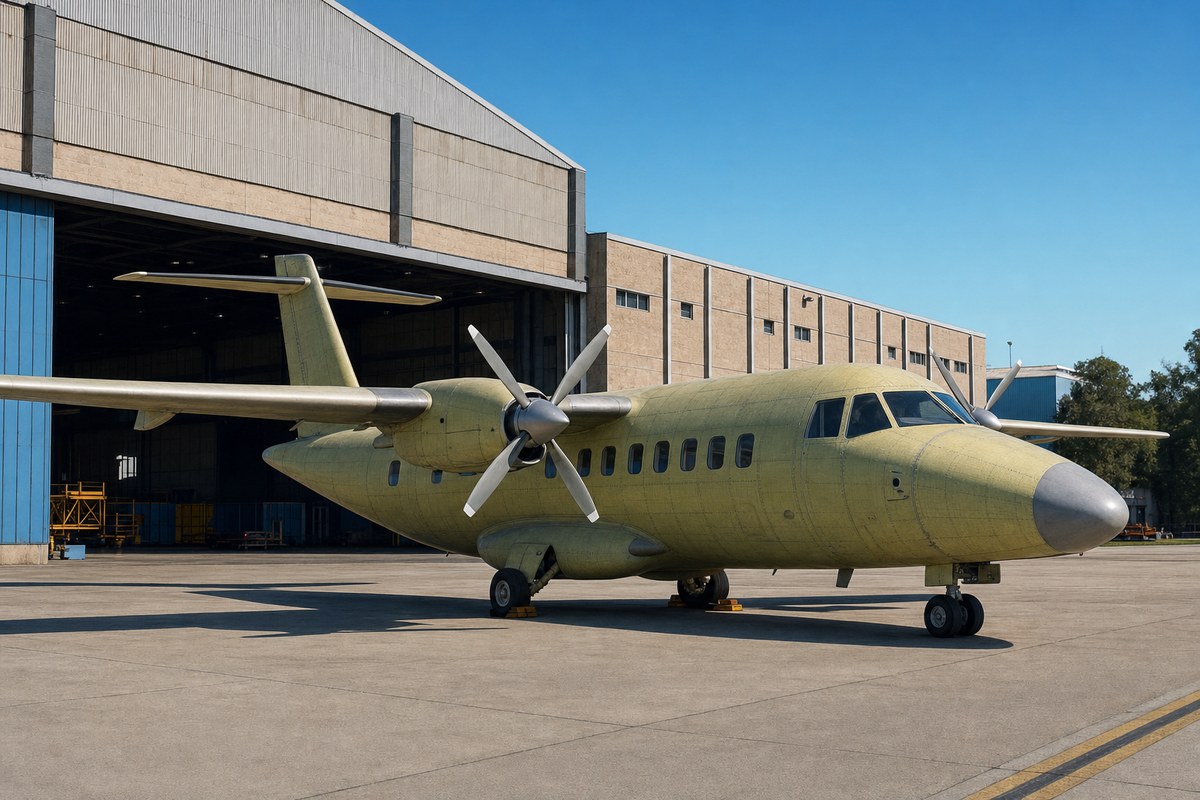
The first prototype is still due to have a ceremonial launch by the end of 2027, but systems integration, ground testing and regulatory approvals will push the first flight into the following year. A senior official said the earlier deadlines were too optimistic given the new design and its modern digital systems.
The Saras Mk2 follows the 14-seat Saras (PT1), India's first independently designed civilian aircraft, which first flew in 2004 and was grounded after a fatal accident in 2009. The Mk2 is a new design with a longer fuselage, a payload of 19 passengers or the equivalent in cargo, a pressurised cabin and a glass cockpit. It will use two Pratt & Whitney Canada PT6A-67A turboprop engines and the Garmin G3000 avionics suite.
Intended roles include regional passenger transport under the government's UDAN scheme, air ambulance, executive transport, coastal surveillance and light cargo.
An Iron Bird full-scale ground test rig, simulating flight controls, hydraulics and electrical architecture, is operating at NAL's Bengaluru site, and several subsystems have already been tested on it. The only confirmed customer is the Indian Air Force, which has issued a Letter of Intent for 15 aircraft for transport and training. No civil operators or state governments have placed firm orders. The aircraft must meet DGCA Type Certification under CAR-23, and NAL aims for eventual EASA and FAA recognition to support exports.
Industry impact & what to watch
Two schedule resets in a row, from 2025 to 2027 and now to early 2028, are typical of a clean-sheet airframe built around new digital systems. On such programmes the long pole is rarely the first prototype itself; it is integration of avionics, flight controls and electrical architecture, followed by a certification process that cannot be compressed by announcement dates.
The demand picture matters as much as the calendar. A single Letter of Intent from the Indian Air Force for 15 aircraft is not a firm order book, and with no civil operator or state government committed, the regional-transport case under UDAN rests on intent rather than contracts. Small turboprop programmes generally need launch customers to justify production tooling, so the absence of civil orders is the variable that shapes how the programme can scale.
The next verifiable milestones are the ceremonial prototype launch due by the end of 2027 and the progress of DGCA certification under CAR-23. Any conversion of the Air Force Letter of Intent into a contract, or a first civil order, would be the clearest signal that the commercial case is firming up.