JETNET to Show AI Connectors and New Ramp Monitor at NBAA-BACE 2026, Booth #3030
Why It MattersPackaging aircraft data as AI-assistant connectors and ramp-level market share tracking points to intelligence vendors competing on workflow delivery and granular supplier attribution, not on dataset access alone.
What happened
JETNET, a provider of aviation intelligence, data and workflow solutions, will exhibit at NBAA-BACE 2026 at Booth #3030, October 20 to 22, at the Las Vegas Convention Center. The company will showcase JETNET AI connectors, a new product called Ramp Monitor, and data enhancements. JETNET says it has attended every NBAA since 1988.
JETNET AI pairs modern AI with the company's aviation data, with answers traceable to their source. The company says usage has tripled over the past six months across every key aviation vertical it serves. Customers can reach JETNET intelligence in JETNET applications, in CRM platforms such as Salesforce and HubSpot, and through tools including Microsoft Teams, Microsoft Copilot, Slack, ChatGPT, Claude and WhatsApp.
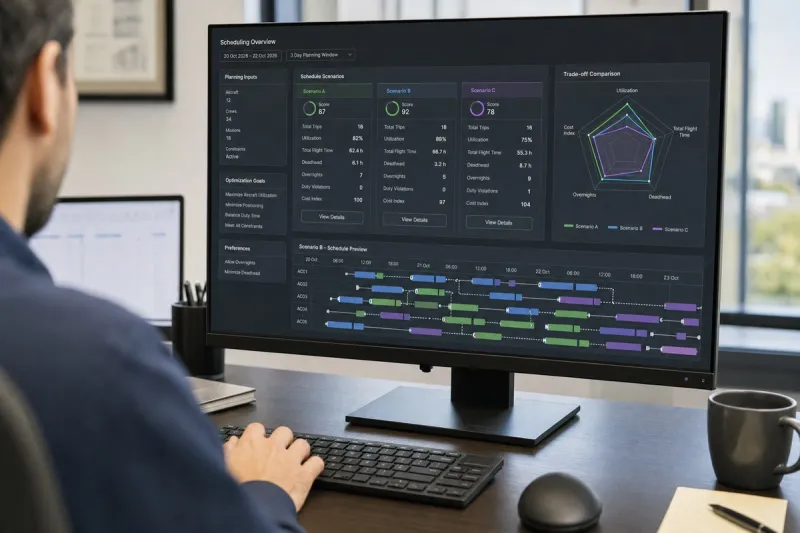
Ramp Monitor is a new application that shows airport-based suppliers their addressable market of aircraft ground movements by service ramp. It attributes each tail to each supplier and tracks hourly and daily share of business across handling, parking, fuel, maintenance and other services, with live views and history back to January 2025. Data can be exported to CSV or Excel. Customers can track their share of arriving aircraft, parked time (implied parking revenue), fuel uplift (modeled from outbound flights and the fuel demand of those sectors) and maintenance (probable events based on aircraft activity).
A press session, "Business Aviation Intelligence in AI Assistants," is scheduled for Monday, October 19, from 9:20 to 10:05 a.m. Christoph Kohler, JETNET Chief Data Scientist and Managing Director of WINGX, will demonstrate how AI agents combine JETNET aircraft and transaction intelligence with WINGX global flight activity data. JETNET CEO Derek Swaim and Chief Product Officer Greg Kimball were quoted in the announcement.
How the AI layer is built
JETNET describes its AI work as drawing on a dataset reaching back to 1988, covering more than 170,000 airframes. It says its AI operates within verified data sources, with human oversight and source attribution for each answer.
The connector approach places that data inside tools customers already use, from CRM systems to messaging and chat assistants, instead of requiring a visit to a separate JETNET application.
Industry impact & what to watch
Aviation data providers have long sold access to a database; the pitch here is that the database answers questions inside the applications where sales, operations and customer-service staff already work. Traceability of each answer to its source is the feature that determines whether a business-aviation buyer can rely on an AI assistant for pricing, market-sizing or aircraft-history questions, so attribution claims like JETNET's are the part of such products that deserves scrutiny.
Ramp Monitor reflects a second shift: ground-level supplier share used to be estimated from local knowledge or fuel-sale records, and is now being modeled from flight and movement data. Several of its metrics are modeled rather than observed. Implied parking revenue, fuel uplift inferred from outbound flights, and probable maintenance events are estimates, and FBOs and MRO shops will judge the tool on how closely those estimates match their own books.
The Monday press session with Kohler is the first scheduled point where the combination of JETNET aircraft and transaction data with WINGX flight activity data will be demonstrated live.