NASA's X-59 Undergoes Routine 'Duct Dive' Engine Inlet Inspections Between Flights at Edwards AFB
Why It MattersThe clean results from routine inlet inspections suggest the X-59's top-mounted inlet design helps keep engine upkeep simple, a design feature central to quiet supersonic flight over land.
On April 30, 2026, at Edwards Air Force Base in California, between the 11th and 12th flights of NASA's quiet supersonic X-59 aircraft, Lockheed Martin Skunk Works general flight mechanic Johnathan Reynaga performed a "duct diving" maintenance procedure, diving headfirst into the aircraft's engine inlet. Lockheed Martin Skunk Works is the X-59's lead design and build contractor, working with NASA. Paul Dees, NASA X-59 deputy propulsion lead, said the procedure is a normal part of aircraft maintenance, intended to check for potential damage and for foreign objects or debris that could affect engine performance.
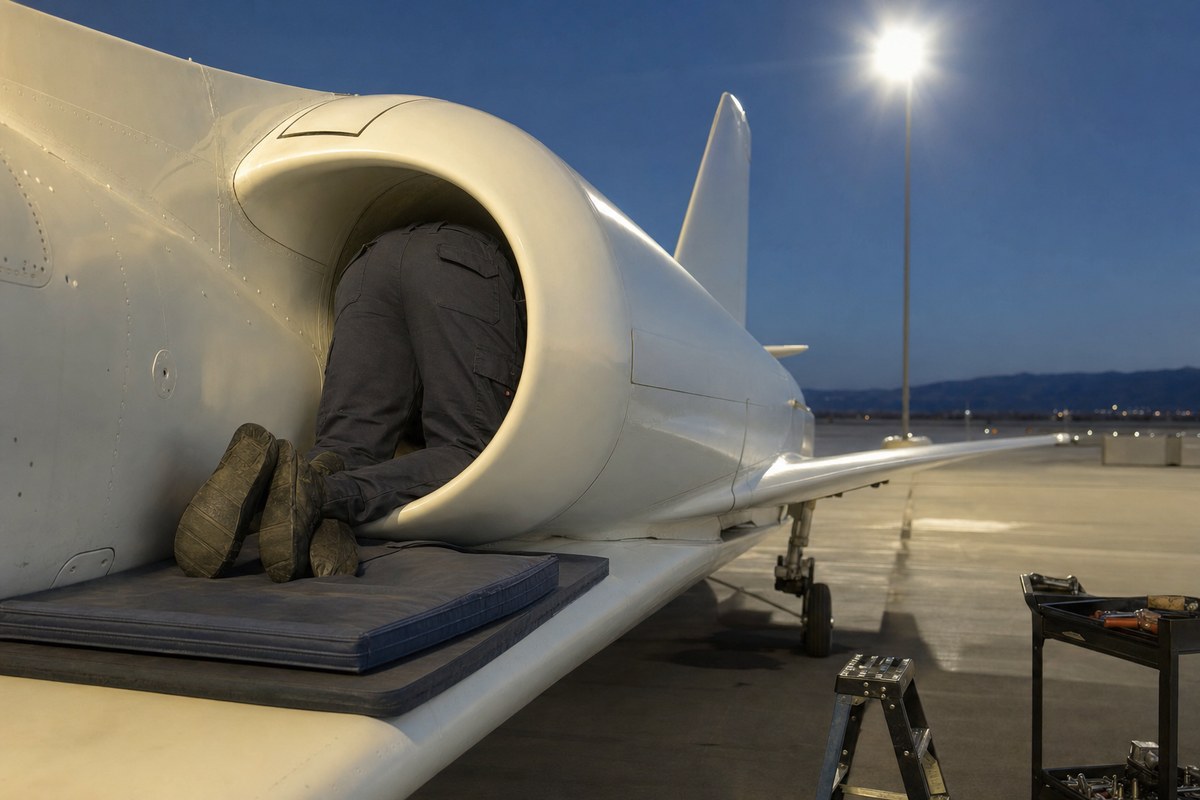
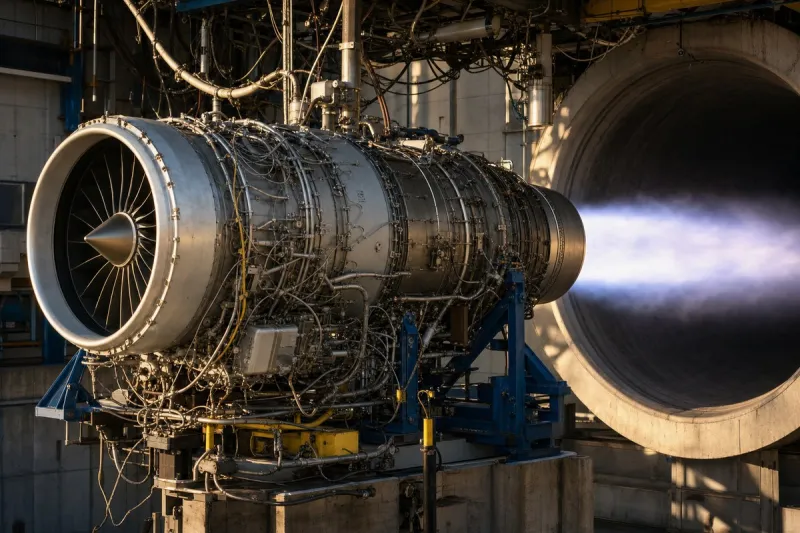
The inlet slopes down toward the aircraft's single F414-GE-100 engine, so the mechanic's head is lower than his feet. In a space not much wider than his shoulders, he inspects the fan blades and other components while moving around special sensors the research team uses to gather engine-performance data in flight. Another team member watches until he safely re-emerges. The X-59 stays in the shade during maintenance, but desert temperatures regularly exceed 100 degrees Fahrenheit and the aircraft is still cooling after flight. Although the X-59 undergoes more in-depth maintenance on a regular schedule, a duct dive paired with a visual examination of the exhaust after every flight is a quick way to assess engine health.
Technicians duct dive on NASA research jets across its centers. At Armstrong Flight Research Center, that includes the X-59's chase aircraft: an F-15, whose deep, rectangular inlets are fairly comfortable to crawl into, and an F/A-18, whose round, tight inlet curves as it travels back. Juan Salazar, crew chief for the Low Boom Flight Demonstrator project, said the X-59's inlet is similar in diameter to the F/A-18's but shallower, making for an easier dive, and that sending in a person remains the best inspection method for now.
Because of the X-59's top-mounted engine inlet, a key element of the design that allows it to fly supersonic with a quiet thump rather than a loud sonic boom, the engine also does not ingest the kind of debris that lower-mounted engines can pull in during takeoff and landing. After 38 flights, none of the X-59's duct dives has found anything but a damage-free engine.
The X-59 is part of NASA's Quesst mission, supported by the Aeronautics Research Mission Directorate, which aims to demonstrate technology for supersonic flight without loud sonic booms. NASA will survey public reaction to the quieter thumps and share the results with national and international regulators to inform data-driven acceptable noise thresholds for commercial supersonic flight over land.