True Blue Power Gen5 Lithium-Ion Aircraft Batteries Claim Up to 60% Weight Reduction
Why It MattersLithium-ion main-ship batteries move the battery from a routine-replacement line item toward a long-life, monitored component, with weight and maintenance savings resting on manufacturer claims rather than independent fleet data.
What happened
Aero-News Network's Aero-TV revisited True Blue Power's lithium-ion aircraft battery lineup on October 17, 2026. The Gen5 main-ship batteries were introduced at HAI Heli-Expo in Atlanta on March 5, 2019, and the lineup comprises the TB20 (20 amp-hours), TB30 (30 amp-hours) and TB40 (40 amp-hours). The company says these can be combined to meet specific power needs across aircraft types.
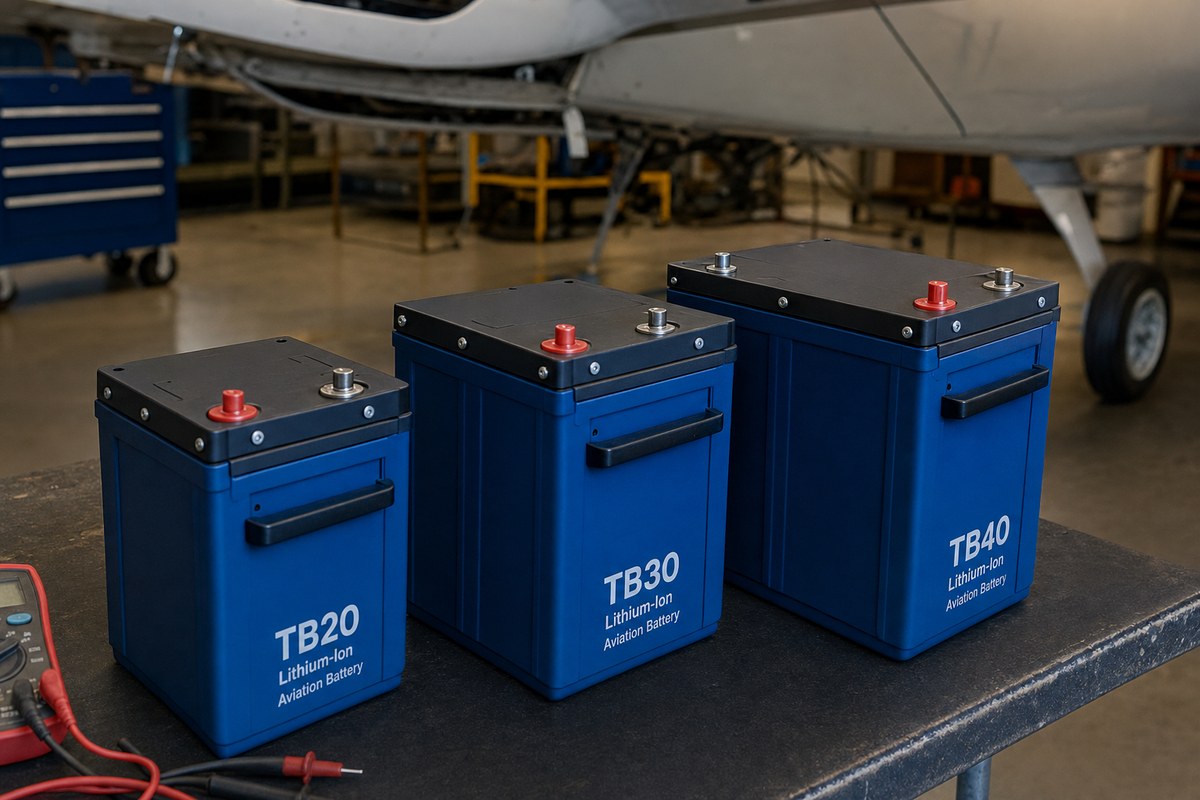
True Blue Power states that Gen5 batteries weigh up to 60% less than conventional aircraft batteries and cut battery maintenance by more than 90% versus legacy chemistries. The company says they are designed to last 8 years, up to four times longer than lead-acid and NiCad batteries, with no capacity checks required, and a stated 2-year maintenance interval for the lithium-ion line. Each battery includes monitoring that reports real-time state-of-charge and state-of-health data.
In 2023 the company introduced the TB14 (13 amp-hours) and the TB28-12V (26 amp-hours), certified lithium-ion batteries aimed at smaller fixed-wing Part 23 aircraft. The TB44 Advanced Lithium-ion Aircraft Battery is advertised as reducing battery weight by 40%. Certain models include a built-in heater, with a cold-weather specification rated down to -40°C; the company's own materials give an operating range of -40°C to +70°C.
The company describes itself as the first to engineer and TSO-certify lithium-ion main-ship batteries for aviation and says its lithium products have more than 11 million flight hours with zero in-flight failures. It also says its batteries save up to 85 pounds each, can complete 7 starts in 7 minutes, and recharge fully within 30 minutes. These are manufacturer claims.
Industry impact & what to watch
The case shows how battery economics in general aviation and rotorcraft shift when chemistry changes. A lead-acid or NiCad battery is a consumable on a fixed replacement and capacity-check cycle. A lithium-ion unit with an 8-year design life, a 2-year maintenance interval and built-in state-of-health reporting turns that consumable into a monitored component, and the cost comparison moves from purchase price toward lifetime ownership cost and downtime.
Weight is the other lever. Savings of up to 85 pounds per battery matter most where payload or range is tight, which is why the pitch spans both large main-ship batteries and the smaller TB14 and TB28-12V units for Part 23 fixed-wing aircraft. The figures cited here, from the 60% weight reduction to the 11 million flight hours with zero in-flight failures, come from the manufacturer, so a buyer weighing them against a specific airframe would want the TSO documentation and installation approvals checked against that aircraft rather than relying on headline percentages.
Cold-weather performance is the practical test for any lithium installation in operations that run in harsh climates. The -40°C specification and built-in heater on certain models address it, and checking which models carry the heater matters before specifying one for a given fleet.