CITA Energies Marks 20 Years: Aviation Fuel Firm Now Spans 17 Nigerian Airports, Valued Near $200m by Chairman
Why It MattersCITA's path from a living-room start to a multi-airport network shows how Nigerian indigenous fuel suppliers scale through inherited assets, oil-major and international supply tie-ups, and diversification that cushions air-travel shocks.
What happened
CITA Energies, a Nigerian indigenous aviation fuel company, celebrated its 20th anniversary on the night of Friday, October 16, 2026, at the Grandeur Event Centre in Oregun, Ikeja, Lagos. The company was founded in 2006 in Port Harcourt by chairman Dr. Thomas Olaleye Ogungbangbe, who said it began "inside my living room and my car."
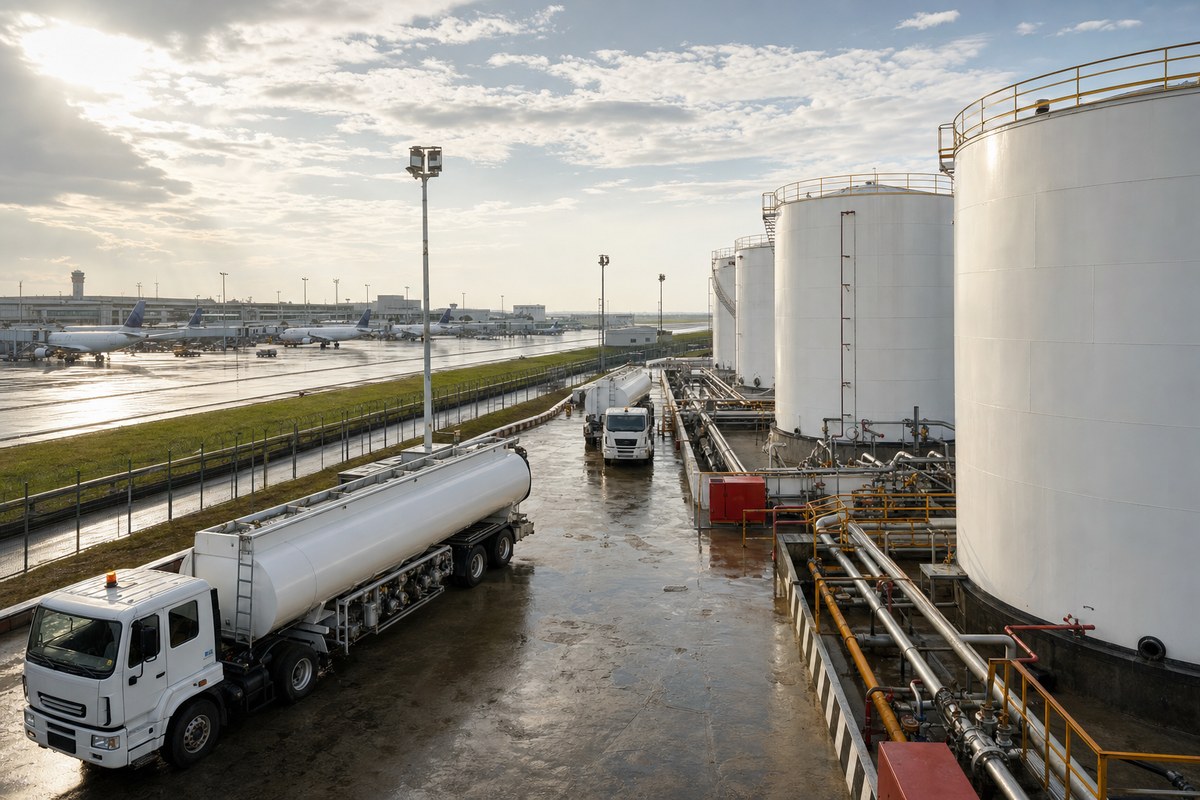
Ogungbangbe said CITA now operates aviation fuel facilities at 17 airports across Nigeria's six geopolitical zones. He described it as the largest indigenous aviation fuel company by facilities in Nigeria and West Africa, which is the company's own assessment of its position. He put the scale of its development at nearly $200 million, without a breakdown, and said the business supports thousands of direct and indirect jobs.
An anniversary documentary traced the milestones. Inadequate working capital threatened survival between 2006 and 2008. In 2007 the company took over a former Mobil Oil Nigeria aviation fuel facility at Port Harcourt International Airport, Omagwa. In 2009 it introduced mobile aircraft-refuelling equipment sourced from the British Ministry of Defence, which helped win Chevron Nigeria Limited contracts for offshore fuel system maintenance and aircraft refuelling.
In 2012 CITA entered a partnership with Valegos Aviation. By 2014 it had completed three aviation fuel storage tanks and a depot with 1.5 million litres of handling capacity, acquired 15 trailer heads and recorded sales of 40 million litres. It later expanded to Sokoto, Calabar, Enugu, Maiduguri, Yola, Owerri and Asaba, and worked with Puma Energy between 2017 and 2019. In 2020 the Asaba facility was upgraded to four jet fuel tanks with 225,000 litres of combined capacity.
After air travel collapsed during COVID-19, the company adjusted its strategy. In 2021 it diversified into additional energy infrastructure and set up a 40,000-litre aviation fuel facility in Anambra State. In 2022 it completed a Port Harcourt airport facility with four jet fuel tanks and 240,000 litres of handling capacity. A 2023 joint venture with Bono Energy strengthened its supply arrangements. Its relationship with World Fuel Services extends its international aviation fuel supply reach to airports across Europe, Africa, the Middle East, Asia, the Caribbean and South America.
How it unfolded
Forms a joint venture with Bono Energy to strengthen supply arrangements.
Completes a Port Harcourt airport facility with four jet fuel tanks and 240,000 litres of handling capacity.
Diversifies into additional energy infrastructure and sets up a 40,000-litre aviation fuel facility in Anambra State.
Asaba facility upgraded to four jet fuel tanks with 225,000 litres of combined capacity.
Works with Puma Energy as it expands to further Nigerian airports.
Completes three storage tanks and a 1.5 million-litre depot, acquires 15 trailer heads and records sales of 40 million litres.
Enters a partnership with Valegos Aviation.
Introduces mobile aircraft-refuelling equipment sourced from the British Ministry of Defence, helping win Chevron Nigeria Limited contracts.
Takes over a former Mobil Oil Nigeria aviation fuel facility at Port Harcourt International Airport, Omagwa.
CITA is founded in Port Harcourt by Thomas Ogungbangbe; working capital shortages threaten survival through 2008.
Industry impact & what to watch
CITA's history shows a familiar route for indigenous fuel suppliers in a market where the largest players were once multinational oil companies. Taking over a former Mobil facility, then layering on equipment, tanks and trailer fleets, let a small start-up build physical presence airport by airport. Fuel into-plane work is capital-heavy, and the survival squeeze the company describes for 2006 to 2008 is the typical barrier at that stage.
The partnership pattern is just as telling. Ties with an oil major such as Chevron, partners such as Valegos Aviation, Puma Energy and Bono Energy, and an international supplier such as World Fuel Services gave CITA contracts, supply security and reach beyond Nigeria. The COVID-19 turn toward broader energy infrastructure illustrates how a fuel business tied to passenger traffic hedges against demand shocks.
The claims of largest indigenous operator and nearly $200 million in scale come from the chairman and carry no independent breakdown. The company's own 2026 plans, which the anniversary coverage was beginning to describe, are the next thing that would show whether facility count translates into volumes and margins.