Middle East Carriers' Aircraft Utilization Down Over 17% Year to Date, but September Gap Narrows
Why It MattersUtilization across the region is diverging by network shape: carriers dependent on short intra-regional routes lose most when both route ends sit in conflict-affected areas, while distant, fleet-expanding operators absorb the shock.
What happened
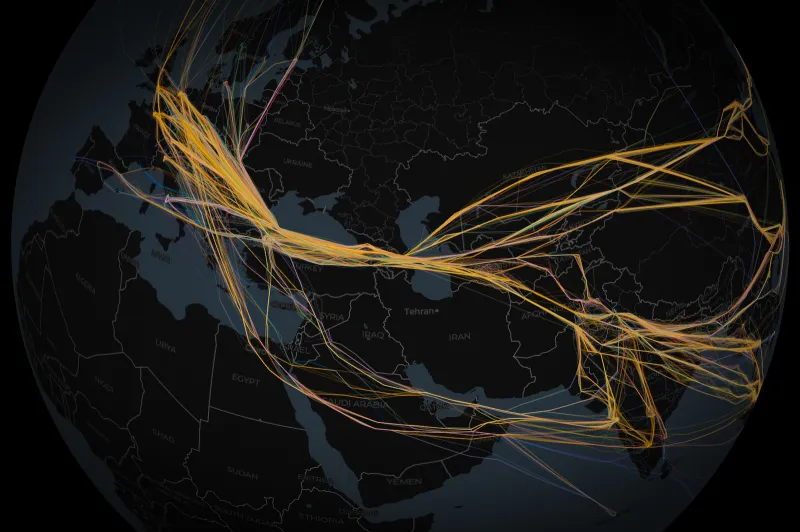
An analysis of Middle East aircraft utilization compares how regional operators flew in September 2026 with September 2025. It comes six months after the conflict in the Middle East began, and following recent escalations in Saudi Arabia that have affected air travel infrastructure.
Overall flight cycles in the Middle East for January–September 2026 are down more than 17% compared with the same period in 2025. Most of the difference occurred in the second quarter of 2026, and the gap has been narrowing when September 2026 is compared with September 2025.
Carriers that predominantly operate narrowbody aircraft, including FlyDubai, Flyadeal and Flynas, continue to show lower flight numbers in 2026 than in 2025. The "Gulf Connector" carriers appear to have recovered somewhat better: Emirates' utilization is only 2% lower in 2026 than in 2025, while Etihad is up almost 10% and Royal Jordanian Airlines is up 25%.
Part of that increase is attributed to larger in-service fleets: Etihad's fleet is up 15% and Royal Jordanian's is up 6%. Royal Jordanian's rise is also helped by greater availability of aircraft powered by Pratt & Whitney PW1000G (GTF) engines and by its geographic distance from what is considered the center of the conflict: Iran and, now, Saudi Arabia. The analysis was compiled from Aviation Week's Tracked Aircraft Utilization database.
Industry impact & what to watch
The split in results follows network geometry. Narrowbody-heavy operators fly many routes in and around the Middle East, and when both ends of a route can be considered to lie in an area heavily affected by conflict, demand falls and utilization drops with it. Long-haul connectors that feed traffic between distant regions are less exposed to that effect, which helps explain why Emirates is close to its 2025 level while the regional narrowbody carriers are not.
Fleet size and engine availability also shape the outcome. Etihad and Royal Jordanian are flying more partly because they have more aircraft in service, and Royal Jordanian also benefits from greater availability of GTF-powered aircraft. For regional aviation, utilization therefore reflects supply-side capacity as much as demand, and a rise in flight cycles at one carrier does not by itself signal a recovery in the market.
The narrowing September gap is the figure that matters next. The escalations in Saudi Arabia are recent, and the analysis places the center of the conflict in Iran and, now, Saudi Arabia, so the following months' comparisons against 2025 will show whether the narrowing holds as that geography shifts.