NTSB Preliminary Report: Plane Carrying Tom Tiffany Lost Engine Power Before Lake Wausau Crash
Why It MattersThe case illustrates how single-engine piston fuel-management errors, not mechanical failure, can drive power loss on short repositioning legs, keeping tank selection and fuel-state discipline central to light-aircraft safety.
What happened
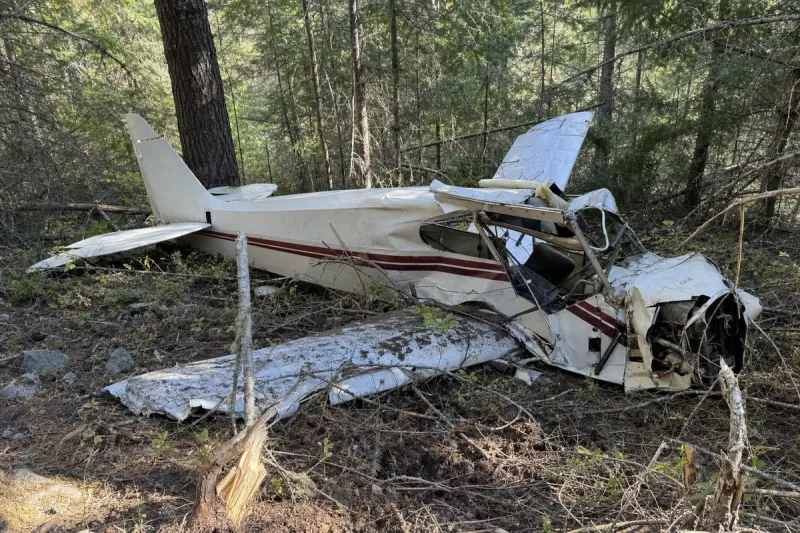
A Beech K35 lost engine power before crashing into Lake Wausau on Sept. 12, according to a preliminary report the National Transportation Safety Board filed Oct. 13. The aircraft carried Wisconsin Republican gubernatorial candidate Tom Tiffany, a U.S. congressman, and pilot Leonard Boltz, 73. The plane departed La Crosse Regional Airport and was scheduled to land at Wausau Downtown Airport. It sustained substantial damage to its fuselage, left wing, left aileron and engine mount after striking the water.

While preparing to land, Boltz noticed a higher-than-normal exhaust gas temperature after extending the landing gear, the report said. He said the reading reminded him to switch fuel tanks. He selected the right fuel tank and pushed the mixture and throttle levers fully forward, but the engine did not respond. Boltz said he did not activate the electric fuel boost pump while trying to restore power. He then maneuvered the plane toward the runway and prepared for a water landing.
A post-accident examination found the fuel tank caps secure, the right main tank and both auxiliary tanks full of fuel, and the left main tank empty. Investigators found the throttle, mixture and propeller controls in a nearly full-forward position, the electric fuel boost pump switch off, and the fuel selector valve positioned toward the right main tank.
Boltz said he had earlier flown from Langlade County Airport in Antigo to La Crosse, departing Antigo with 70 gallons of fuel: 25 gallons in each main tank and 10 gallons in each auxiliary tank. He did not refuel in La Crosse. He said he used the left main tank for both flights, except for a brief period on the auxiliary tanks during cruise. According to Boltz's aviation mechanic, who spoke with an FAA inspector after the crash, Boltz attributed the power loss to his delay in switching fuel tanks and to not activating the electric fuel boost pump.
After the landing, Tiffany and Boltz exited the sinking aircraft and swam about 150 feet to water shallow enough to stand in. The Wausau Fire Department rescued them by airboat and both were taken to Aspirus Wausau Hospital. Tiffany received 12 stitches for a cut above his eyebrow; Boltz received four stitches. Boltz is chairman of the Republican Party of Langlade County and a retired Air Force major. At a Sept. 13 news conference, Tiffany praised Boltz's handling of the emergency landing.
Industry impact & what to watch
A preliminary report records what investigators found and what the pilot said; it does not assign a probable cause. The physical findings here, an empty left main tank alongside full right main and auxiliary tanks, point the inquiry toward fuel management, though the NTSB has not stated a conclusion and the investigation is ongoing.
In single-engine piston aircraft with multiple tanks, the pilot is the fuel system's control logic: tank selection, boost pump use and fuel-state tracking all depend on procedure rather than automation. Exhaust gas temperature, mixture and fuel-pump handling during approach and landing are routine areas of emphasis in training and flight reviews for this class of aircraft. Cases where fuel remains aboard but is not reaching the engine are a recognised category within that picture, separate from true fuel exhaustion.
The next dated milestone is the NTSB's final report, which would settle the probable cause and any contributing factors. Until it is released, the preliminary findings and Boltz's own account are the established record.