Gulf Airspace Advisories, Record El Nino and Hardening War Risk Reset Charter Planning
Why It MattersCharter planning is shifting from per-trip routing to standing weekly reviews of alternates, fuel policy, war risk endorsements and passenger notification, because airspace restrictions and weather now change faster than individual trips.
What happened
Private and charter aviation planning is being shaped by two slow-moving pressures: a Middle East war and an El Nino event forecast to be the strongest on record. Both are lengthening and raising the cost of flight planning, and are pushing operators toward wider alternate selection, more conservative fuel policy and earlier passenger notification.

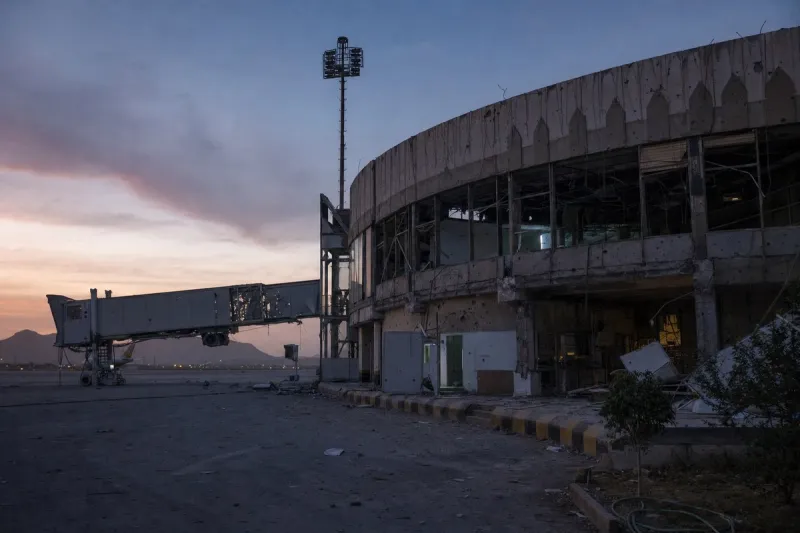
Major Middle East airports have been repeatedly targeted since the war began in February, with parked aircraft struck by missiles or by debris from interceptor systems, and crew and passengers killed. The Houthi missile strike on Riyadh's King Khalid International Airport is the clearest example, though casualty reports conflict: one account cites three civilians killed, another at least 12 killed and more than 300 injured.
European guidance advises operators to avoid, at all levels, the airspace of Iran, Iraq and Lebanon, and has been extended to Bahrain, Kuwait, Qatar, the United Arab Emirates and the Gulf of Oman west of 58 degrees East. The Baghdad flight information region carries an explicit do-not-fly-at-any-altitude advisory, extended to November 16, citing Iranian drone and ballistic missile activity, air-defence systems and armed group activity. Several states also prohibit or strongly discourage operators from entering Syrian airspace, where Israeli strikes continue periodically.
A conflict zone bulletin issued on September 30 for the Jeddah flight information region advises against flying at any altitude in a designated area near the Yemeni border and advises caution elsewhere in the region, citing missile and drone operations, air-defence interceptions, falling debris and the risk of civilian aircraft being misidentified. It also runs to mid-November. Saudi airspace has not been formally closed, Gulf airports remain operational and regional airspace is described as generally open.
Routings, fuel and war risk cover
Main Europe-Asia routings run either south via Egypt, Saudi Arabia and Oman or the UAE, or north via the Caucasus and Afghanistan. Both are longer than pre-war tracks, and the southern option runs adjacent to or through airspace covered by avoidance advice. Range-limited midsize and super-midsize aircraft should expect additional technical stops. GPS jamming and spoofing remain among the biggest day-to-day operational issues in the region and should be assumed on every sector.
Brent crude has risen to around 105 dollars a barrel, roughly a four percent increase, even though combined Gulf export volumes excluding Iran have recovered to about 18.5 million barrels a day, near pre-conflict levels. Hull war capacity is still described as plentiful, but 2026 renewals are expected to be tougher, with reported increases of 10 percent or more even for lower-risk carriers and far steeper rises for operators on Middle East routes. Charter buyers should confirm that war risk cover extends to the specific flight information regions and airports on the trip sheet.
Flooding and the El Nino outlook
In Asia, flooding in Thailand has forced Thai Airways to cut 30 percent of its flights, with an industrial park in Chonburi still flooded as of October 7 and Bangkok floodwaters receding. In Nepal, flash floods in Gorkha district swept away houses along the Budhi Gandaki River with five people missing, and relief supplies are being airlifted to isolated areas through the Kathmandu Humanitarian Staging Area.
The El Nino event has been formally declared and is forecast to peak around December, with Nino 3.4 anomalies projected near plus 3.7 degrees Celsius, the highest since observations began. Ecuador has issued a red alert, and Peru's northern and central coast is forecast to see heavy rainfall, flooding and landslides from late 2026 into April 2027. Asia faces elevated chances of both extreme wet and extreme dry conditions through December, and United States impacts typically peak in winter.
Industry impact & what to watch
The common thread is that the planning inputs for charter and private flying now move on a timescale shorter than a single trip's lead time. Airspace advisories that carry expiry dates, war risk terms that reprice at renewal and a weather pattern with a defined peak all change the cost and feasibility of a route while a quote is still open. For operators this favours wider alternate lists and more conservative fuel policy; for buyers it makes cover for the named flight information regions and airports part of the trip sheet, not an afterthought.
Range matters more than usual. Midsize and super-midsize aircraft on Europe-Asia sectors face the longer northern and southern tracks and the added technical stops, which feeds directly into pricing and passenger expectations. Earlier passenger notification becomes a practical response when the alternate or routing can shift on short notice.
The next dated milestone is mid-November, when the Iraq and Jeddah bulletins expire and will either be rolled over or widened. Beyond that, a further strike on a Gulf airport, the US political calendar, crude prices and the December El Nino peak are the variables that would change the picture, and alternate lists, war risk endorsements and passenger briefings are being reviewed weekly rather than per trip.