Sudan, Sahel and Other Airspace Closures Force Long Detours on Europe–Southern Africa Flights, Adding 1.5 to 2.5 Hours
Why It MattersA continuous barrier of closed and restricted airspace turns long-haul Africa routing from a choice into a fixed cost, reshaping fuel planning, aircraft assignment and bilateral exposure for carriers serving the continent.
What happened
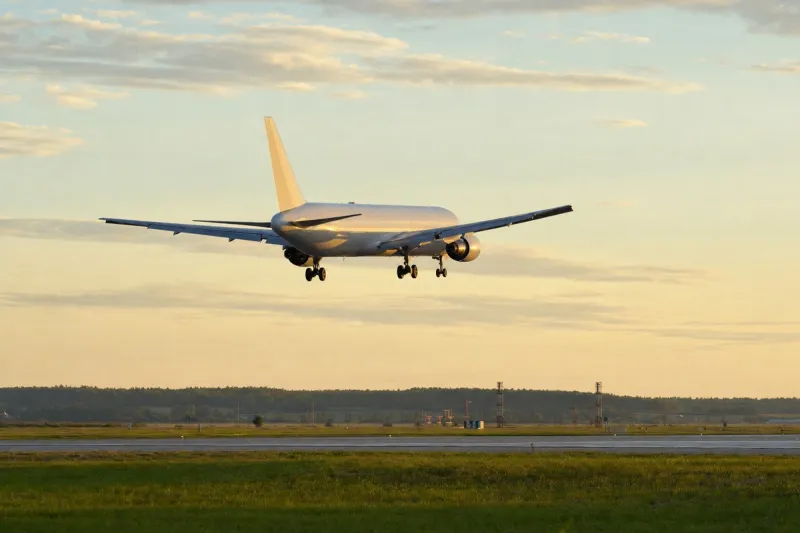
Airspace closures and restrictions across the Sahel, Sudan and the Horn of Africa have ended direct trans-equatorial routings between Europe and Southern Africa, pushing airlines onto long detours. The diversions add between 1,200 and 2,000 nautical miles to a one-way sector and 1.5 to 2.5 hours of block time. For aircraft such as the Airbus A350-900, Boeing 787-9 and Boeing 777-300ER, that means 3,000 to 5,500 additional litres of jet fuel per sector.
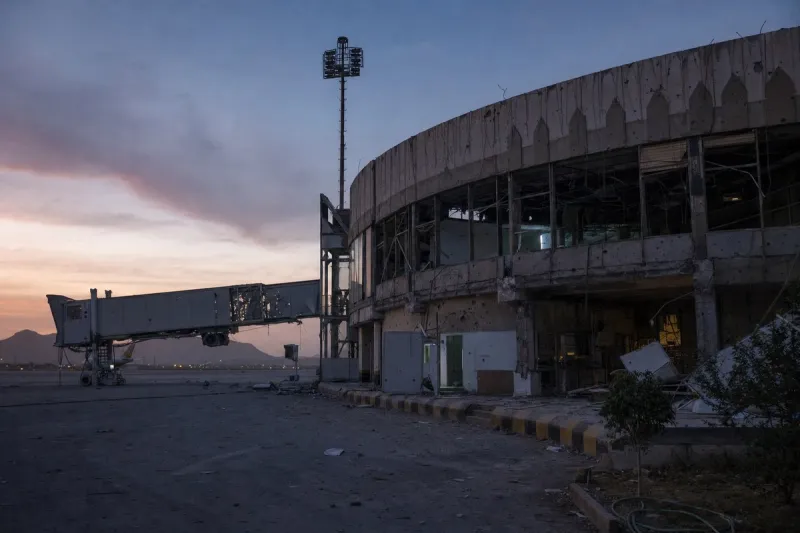
The key trigger was the collapse of air traffic services in the Khartoum Flight Information Region (HSSS FIR) after armed conflict broke out in Sudan. The Khartoum Area Control Centre suspended operations, and the Sudan Civil Aviation Authority established restricted area HSR5, closing the airspace from ground level to unlimited altitude. The International Civil Aviation Organization (ICAO) set up ICAO Contingency Route 6 via waypoint ALEBA near the Egyptian border for limited humanitarian and commercial overflights, while the NUBAR, ENABU, ATMUL and SISID waypoints stay closed to standard traffic.
Other restrictions compound the problem. Risk bulletins and closures have affected the Niamey (Niger), Bamako (Mali) and N'Djamena (Chad) FIRs. In Mali, commercial flights below Flight Level 260 are prohibited under EASA CZIB-2017-01R21 because of low-altitude surface-to-air missile threats. Together with avoidance mandates over the Tripoli FIR in Libya (CZIB-2017-02R20) and the Sana'a FIR in Yemen (CZIB-2017-07R20), the restrictions form a continuous barrier of more than 4,000 kilometres from the Red Sea to the Atlantic.
Europe–Southern Africa traffic has split into two tracks. A western Atlantic coastal route runs via Spanish, Moroccan and Senegalese (Dakar Oceanic FIR) airspace and then south-east past Angola. An eastern route runs over Egypt, the Red Sea airway system off Saudi Arabia (Jeddah FIR), and the Nairobi and Dar es Salaam FIRs.
Regional operators and bilateral bans
Regional operators face separate bilateral restrictions. The Democratic Republic of Congo imposed overflight and landing bans on aircraft registered or operated from Rwanda after heightened hostilities in North Kivu and the encirclement of Goma International Airport (GOM), barring Rwandan carriers from the Kinshasa FIR.
RwandAir, which used Congolese airspace as its main east-west corridor, suspended routes including Kigali–Brazzaville–Douala and Kigali–Abuja–Accra. On Kigali–Libreville, block time rose from 3 hours 25 minutes to 4 hours 25 minutes, and the route required a larger Boeing 737-800.
Industry impact & what to watch
The pattern across these closures is that routing between Europe and Southern Africa is no longer a matter of choosing the shortest path. With a barrier running more than 4,000 kilometres from the Red Sea to the Atlantic, every operator on the corridor is effectively picking between two long tracks, and the extra 1.5 to 2.5 hours of block time becomes a standing input to scheduling, crew duty planning and fuel uplift rather than an occasional disruption.
For long-haul widebody economics, the 3,000 to 5,500 litres of added fuel per sector sets the scale of the cost, and it falls hardest on routes already near the range or payload limits of the aircraft assigned to them. The RwandAir case shows the same logic at regional scale: a bilateral ban removed the carrier's main corridor, lengthened Kigali–Libreville by an hour, and forced an upgauge to a 737-800. Detours of this kind tend to change which aircraft fly a route, not only how long they take.
The next milestone worth tracking is any change to the status of ICAO Contingency Route 6 via ALEBA, since it is the one opening in the Sudan closure, and any revision of the EASA conflict-zone bulletins covering Mali, Libya and Yemen. Until those move, the two-track structure stays in place.