Houthi Missile Strike Appears to Hit Terminal 4 at Riyadh's King Khalid Airport a Day After Deadly Attack
Why It MattersRepeated strikes on a single hub, with air defenses struggling to stop them, show how a sustained missile campaign can shut a major airport and force airlines to withdraw from the market.
What happened
A ballistic missile strike on Sunday afternoon appears to have directly hit Terminal 4 at King Khalid International Airport (RUH) in Riyadh, Saudi Arabia. Smoke was seen rising from the building. No passengers were inside, because all flights had been cancelled after a deadly attack the previous day. Saudi Arabia's General Authority of Civil Aviation (GACA) has not yet commented on the latest strike.
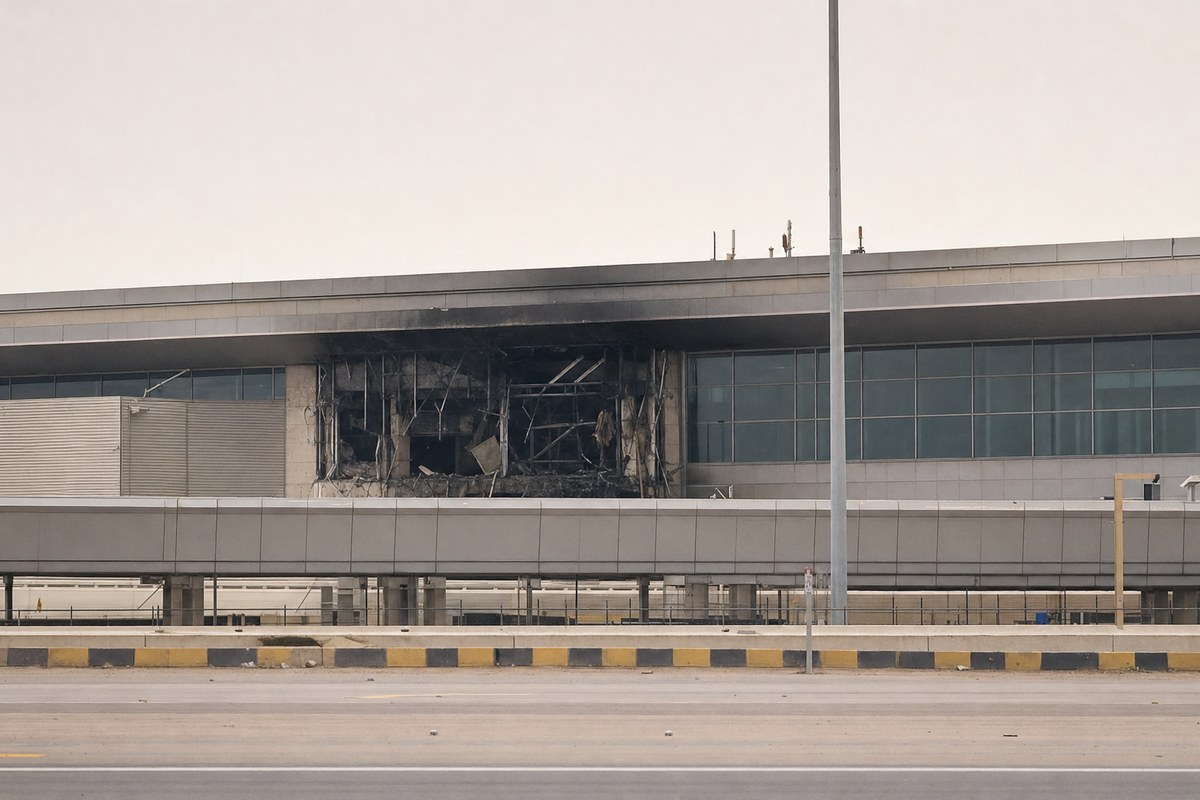
The strike came just hours after the Houthi rebels renewed their threat to target civil aviation across Saudi Arabia. On Saturday, a missile strike killed 12 people and injured 309 others, some of them in critical condition. Late that night, GACA said it had suspended operations at the airport while a damage assessment of Terminal 3 continued.
The airport had been hit by repeated ballistic missile attacks from the Houthis in neighboring Yemen over the past week, but apart from short suspensions during active threats it had remained open. On Thursday, two separate missiles struck the airport: the first damaged a building, while the second targeted a Saudia Airbus A320-series aircraft, which was destroyed. The aircraft was parked next to the terminal with no passengers on board. Three people were killed in that attack, including a Saudia captain. After that incident, many international airlines suspended operations to Riyadh.
The Houthis are an armed movement from northern Yemen that seized the capital, Sanaa, in 2014 and pushed out the government. In 2015, Saudi Arabia led a military coalition into Yemen to restore that government, and the two sides have been enemies since; a truce agreed in 2022 later broke down. The group is backed by Iran, which supplies it with missiles and drones. Since the US and Israeli military offensive on Iran earlier this year, Iran is said to have leaned on the Houthis to conduct a proxy war on its behalf.
Saudi Arabia has an extensive array of air defense systems, including US-made Patriot interceptors and the THAAD anti-ballistic missile system, yet numerous missiles appear to have struck the airport. Saudi authorities appear keen to reopen the airport as soon as possible; officials had hoped to restart operations by 9 pm local time on Sunday, October 11.
Industry impact & what to watch
A week of repeated strikes on one hub shows how quickly a sustained missile campaign can move an airport from short precautionary pauses to a full operational halt. Once a terminal is damaged and an aircraft on the ramp is destroyed, the question for airlines and insurers stops being whether individual threats can be intercepted and becomes whether the airfield can be treated as safe to operate at all. The withdrawal of many international carriers after Thursday's attack is the market's own answer to that question, and it tends to outlast the physical repairs.
The gap between layered air defenses and the damage actually sustained matters for every operator that flies into the region, scheduled or business aviation alike. When defenses are visibly struggling and the attacker has publicly named civil aviation sites as targets, crew safety, war-risk cover and diversion planning all have to be reassessed together rather than airport by airport. A hub that serves as the capital's main gateway also leaves few easy alternates, so disruption at Riyadh spills onto neighboring airports and onto routings across the Gulf.
The next dated marker is the reopening that officials had hoped for at 9 pm local time on Sunday, October 11, and the first GACA statement on the Terminal 4 strike. How quickly the damage assessment of Terminal 3 is completed will indicate whether reopening is measured in days or longer, and the pace at which international airlines resume Riyadh services will show how much confidence returns.