FAA Bans Touch-and-Goes and Restricts Parallel Departures at Centennial Airport Near Denver
Why It MattersSudden safety-driven restrictions at a major training airport can ripple across a whole regional network, pushing flight schools and traffic toward neighboring fields with little lead time.
What happened
The Federal Aviation Administration has imposed new operational restrictions at Centennial Airport (KAPA) near Denver, prohibiting touch-and-go landings and suspending simultaneous departures from the airport's parallel runways until additional safety measures can be implemented. The FAA directed controllers to halt parallel departures, citing potential conflicts between departing IFR and VFR traffic. Centennial's parallel runways are separated by approximately 700 feet, and existing FAA guidance warns pilots of the risk of drifting into adjacent departure corridors.
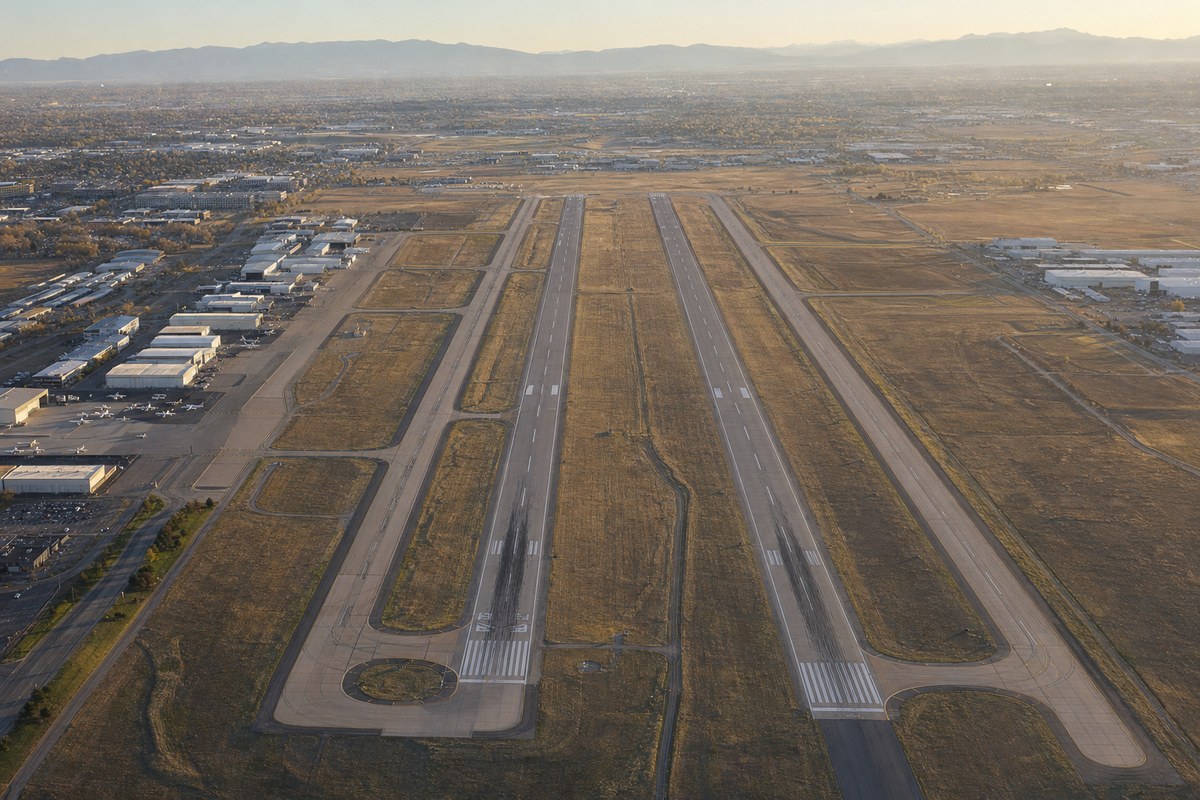
The Aircraft Owners and Pilots Association raised concerns on Thursday about the abrupt changes, particularly the absence of advance notice to pilots. AOPA Northwest Mountain Regional Manager Brad Schuster said the sudden decision appeared unprecedented. "After nearly a week, the FAA has yet to issue a NOTAM or update the airport's ATIS with this critical information at one of the nation's busiest general aviation airports," Schuster said. Centennial Airport handles more than 300,000 aircraft operations annually and hosts numerous flight schools and other general aviation businesses. AOPA warned the restrictions could displace training activity to other airports along Colorado's Front Range, potentially raising traffic and noise concerns in neighboring communities.
Centennial has a prior safety history involving its parallel runways, including a 2021 midair collision between two aircraft approaching separate runways. The Arapahoe County Public Airport Authority, which operates the airport, acknowledged the disruption in an email to tenants, stating that flight schools, instructors, pilots, and airport businesses were all affected. The authority said it was working to find a path forward while addressing the FAA's identified safety concerns.
Industry impact & what to watch
Restrictions imposed abruptly and without a NOTAM or ATIS update point to a safety concern the FAA judged urgent enough to act on before the usual notification channels caught up, a pattern that tends to surface at busy general aviation fields where parallel runway operations depend on precise lateral separation. At a 700-foot runway spacing, the margin for a drifting departure or approach is thin, which is why FAA guidance already flagged the corridor-conflict risk even before this week's directive.
General aviation airports that host high volumes of touch-and-go training are particularly exposed to this kind of disruption, because training traffic is what drives repeated close-proximity operations on parallel runways. When one airport restricts that activity, the traffic does not disappear — it moves to neighboring fields, which is exactly the displacement AOPA is warning about for Colorado's Front Range.
What happens next depends on how quickly the FAA and the Arapahoe County Public Airport Authority can agree on the additional safety measures needed to lift the restrictions, and on whether a formal NOTAM follows to give pilots the documentation AOPA says has been missing. Flight schools and operators at Centennial, and at the airports likely to absorb displaced traffic, are the parties with the most immediate stake in how fast that resolution comes.