Cessna 402C: History, Specifications, and Regional Charter Role
Why It MattersCape Air's reliance on the 402C alongside its 102-aircraft Tecnam P2012 order shows how regional carriers phase in modern twins gradually rather than retiring proven workhorses outright.
What happened
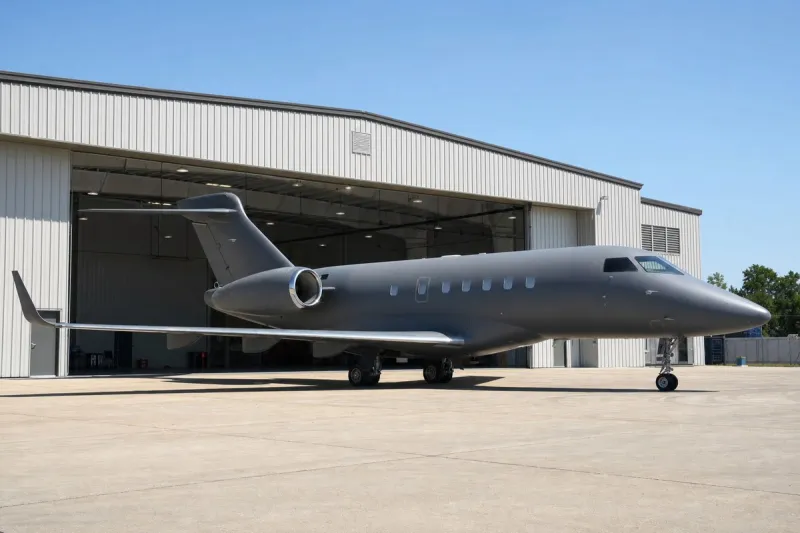
The Cessna 402 is a non-pressurized light twin-engine piston aircraft that first flew as a prototype on August 26, 1965, and entered production that ran from 1966 to 1985, during which more than 2,000 units were built. It evolved from the Cessna 411, which Cessna re-engined and redesigned for commercial and charter operators. The original 401/402 series used turbocharged Continental engines producing over 300 hp each with three-bladed fully feathering propellers; during the 1970s the line split into Businessliner (passenger) and Utiliner (cargo/utility) variants, later models added propeller synchrophasers to cut cabin noise, and wet-wing fuel storage replaced tip tanks in September 1978. The Cessna 402C arrived in the early 1980s with higher gross weight limits.
The 402C is powered by two Continental TSIO-520 engines, each producing 325 hp, with a combined cruise fuel burn of approximately 46 gallons per hour. Cruise speed runs approximately 210–215 knots, maximum speed 231 knots, typical range around 1,200 nautical miles, service ceiling approximately 26,900 ft, and rate of climb 1,400–1,500 ft/min. Standard maximum takeoff weight is 6,850 lb, rising to 7,210 lb with vortex generators installed; empty weight is approximately 4,069 lb and maximum landing weight approximately 6,500 lb. The cabin accommodates up to 10 occupants — pilot plus nine passengers — in commuter configuration, with removable interiors allowing rapid conversion between passenger and cargo layouts, and many 402C aircraft operate single-pilot under commuter regulations.
Cape Air, founded in 1989 in New England, built its network around the Cessna 402C, connecting smaller communities to regional hubs across the Northeast United States, the Caribbean, Micronesia, and the Midwest. According to Cape Air's own fleet information, the 9-passenger 402C remains the workhorse of its fleet, serving the majority of destinations in its route network. Cape Air also operates the Tecnam P2012 Traveller, an 11-seat twin powered by two 375 hp Lycoming piston engines with Garmin G1000 Nxi avionics, after ordering 102 of the aircraft in September.
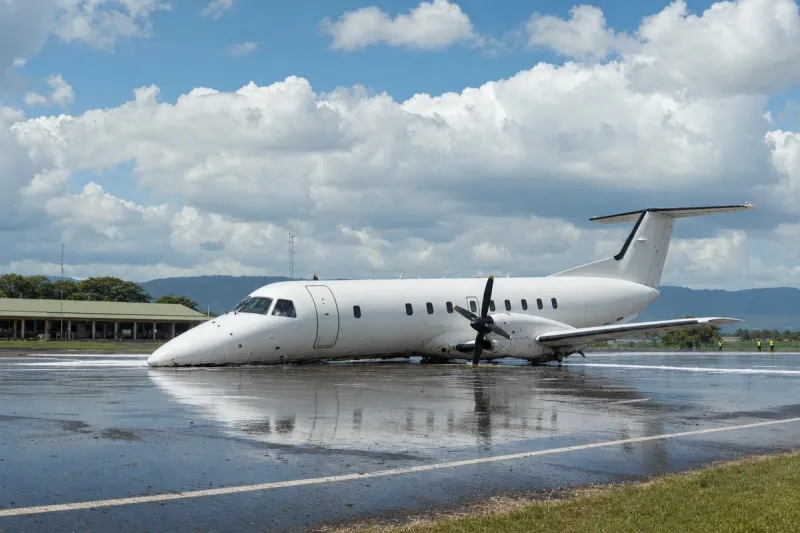
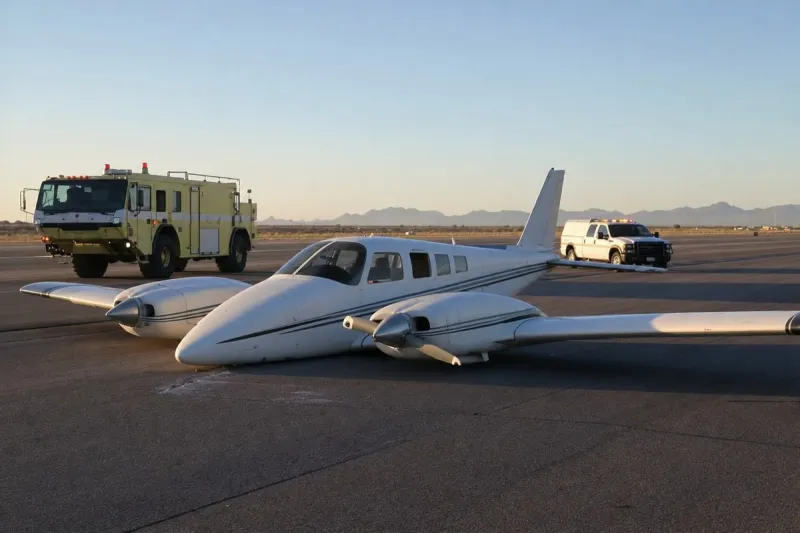
The 401/402 series has a fatal accident rate of approximately 0.70 per 100,000 flight hours, according to PlanePHD data, compared with a twin-piston peer benchmark of roughly 1.75. The August 25, 2001 crash near Marsh Harbour, Bahamas, killed singer Aaliyah; the FAA and NTSB cited overloading of nearly 1,000 lb over limits, aft center-of-gravity issues, and pilot qualification concerns. A Cessna 402C crashed on September 9, 2021, with no casualties. A Cessna 402C crash in Colombia on January 8, 2025, killed all ten people on board. Aftermarket modifications include vortex generator kits that improve low-speed handling and raise maximum allowable takeoff weight, and turboprop conversion concepts such as the Turbo Star 402, intended to improve payload and climb performance.
Industry impact & what to watch
The 402C's decades-long run illustrates how a thin-route regional network depends on an aircraft built for short-field, low-density routes rather than raw speed or range — nine seats, a 1,200 nm range, and single-pilot commuter operation fit a business model built on frequency across many small city pairs rather than volume on a few. Operators that scaled on this airframe now face the same question every aging-fleet carrier faces: when parts, support, and pilot pipelines for a type that stopped production in 1985 justify continued investment versus phased replacement.
Cape Air's parallel order for 102 Tecnam P2012 aircraft shows the industry's typical answer is gradual substitution rather than wholesale fleet replacement, letting a proven workhorse keep serving the bulk of a route network while a newer twin is phased into select missions. Aftermarket paths such as vortex generator kits and turboprop conversion concepts extend an airframe's economic life without a full type change, a common strategy for operators facing capital constraints on legacy piston twins.
What remains to be watched is how accident history factors into that transition: the PlanePHD fatal accident rate of 0.70 per 100,000 hours against a 1.75 twin-piston benchmark, alongside the 2025 Colombia crash that killed all ten aboard, will likely shape how regulators and operators weigh continued 402C utilization against newer-type adoption timelines.