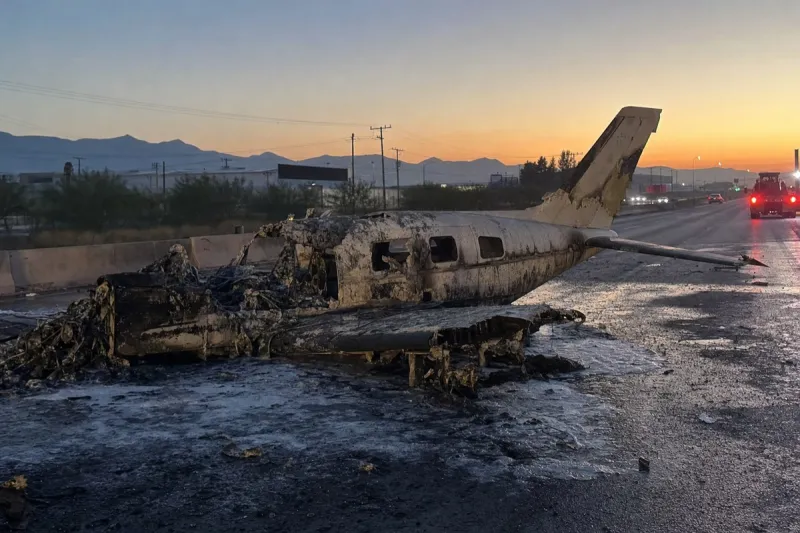
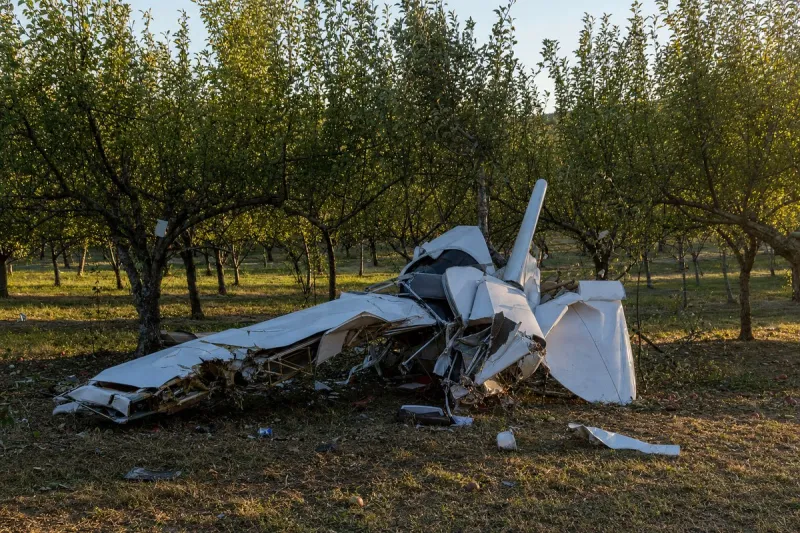
Learjet 60 Crash Near Greenacres, Florida: NTSB Recovers Cockpit Voice Recorder as Excavation Work Concludes
Why It MattersCharter crash inquiries run on a fixed sequence of recorder analysis, wreckage mapping and a facts-only preliminary report, so cause findings arrive long after the aircraft and operator are first publicly named.
What happened
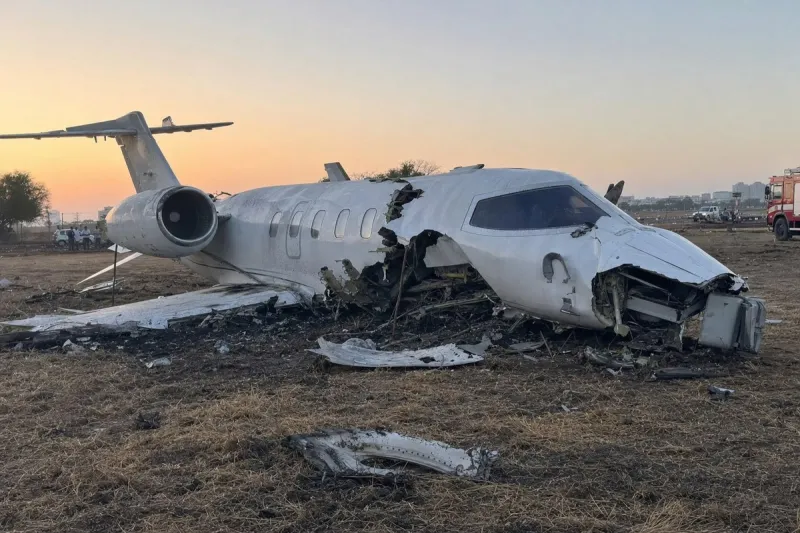
The U.S. National Transportation Safety Board (NTSB) is investigating the Nov. 1 crash of a Learjet 60 near Greenacres, Florida. The aircraft was operated by Aurora Aviation, doing business as Upper Jet, and was lost from radar and radio contact while en route from Austin-Bergstrom International Airport (AUS) in Austin, Texas, to North Eleuthera Airport (MYEH) in the Bahamas.
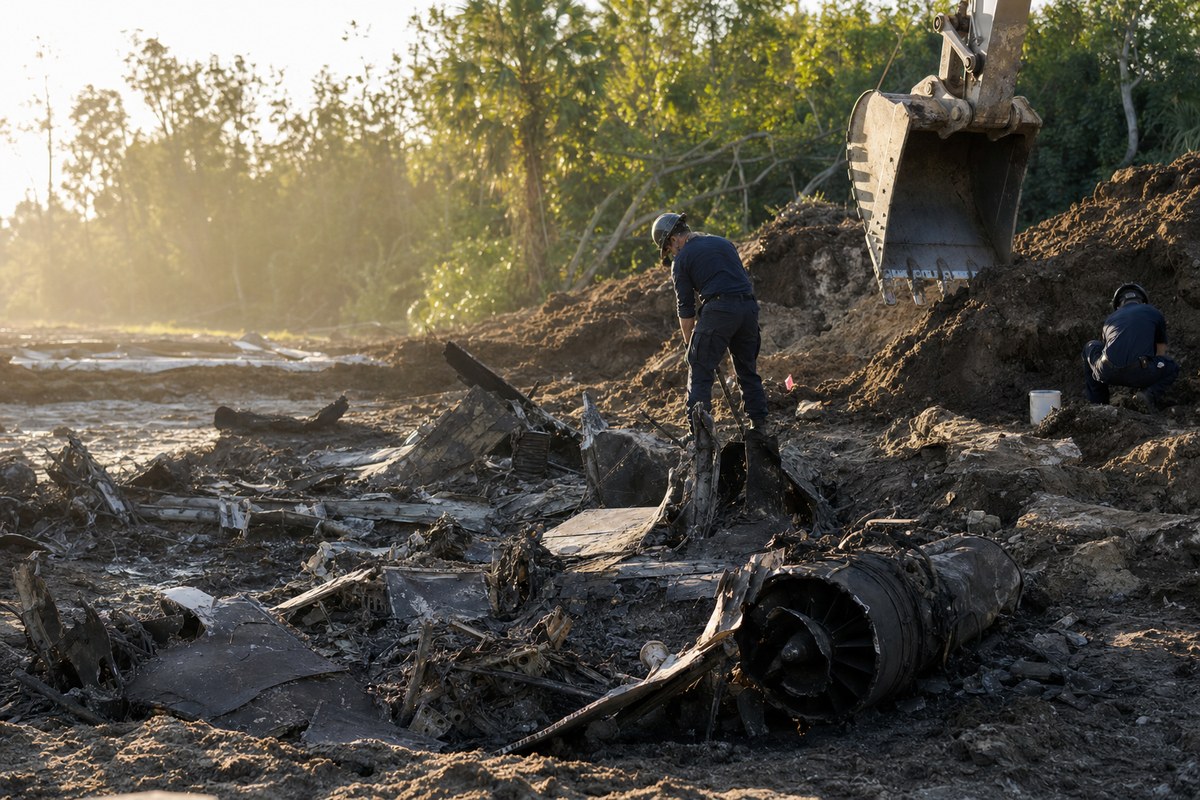
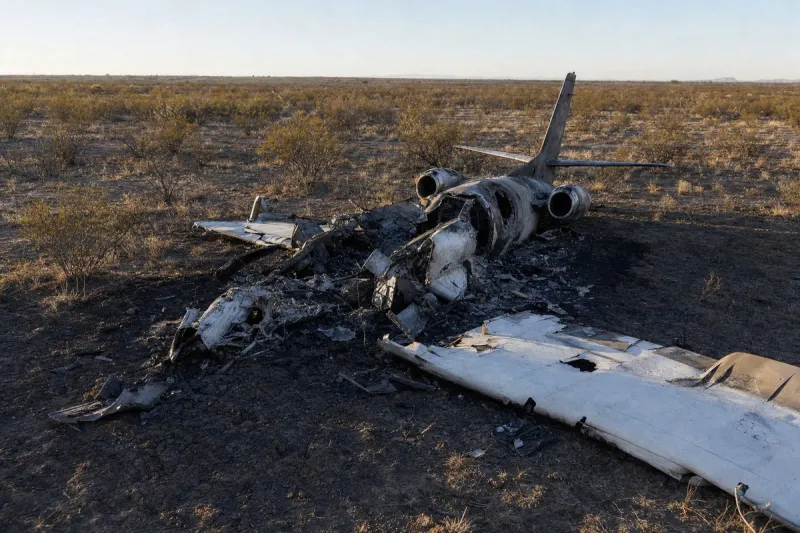
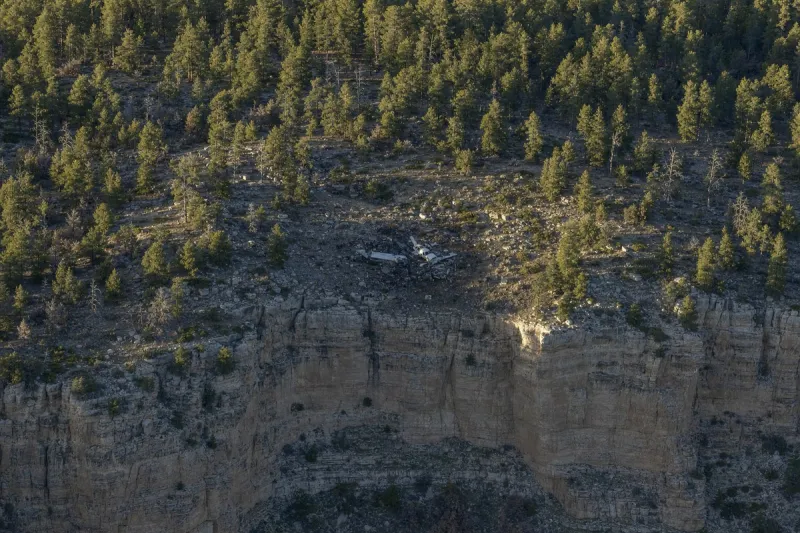
Investigators recovered the cockpit voice recorder at the site of initial impact. It is being evaluated at the NTSB Vehicle Recorders Laboratory in Washington, D.C. The NTSB's Nov. 9 update states that excavation work at the impact site has been completed. An earlier update, dated Nov. 8, had said on-scene investigative activities were complete except for the excavation, and that several nearby sites had been cleared: a mobile home community, a commercial plaza, a self-storage facility and John I. Leonard High School.
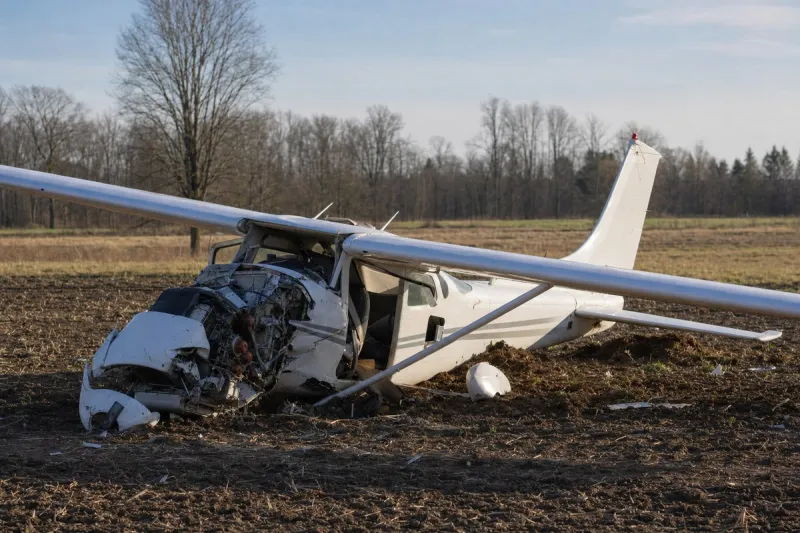
Investigators have recovered and identified portions of the aircraft, including components from both wings, both engines, the flight deck, the vertical and horizontal stabilizers, the left elevator, aileron sections and multiple flap track assemblies. Some of the parts were sent to NTSB laboratories in Washington for closer inspection.
Debris was also found away from the impact location, including on the roofs of homes and buildings near the crash site. The NTSB asks anyone who has found or collected debris not to keep, move, alter or dispose of it, and to contact the agency to arrange recovery.
Industry impact & what to watch
A case like this follows a well-worn investigative path. Recorders go to the laboratory, wreckage is mapped and sorted by system, and a preliminary report follows. The NTSB says that report contains factual information without analysis or a probable-cause finding, and that determining a cause may take one to two years. For charter and fractional operators, that gap matters: the aircraft type and the operator's name enter public view on day one, while the cause stays open for a long time afterward.
The breadth of recovered structure, spanning both wings, both engines, the flight deck and the tail surfaces, gives investigators material to examine across several systems. No finding has been announced, and the cause is under investigation. Anyone reasoning about the Learjet 60 or Part 135 operations in general should treat the recovery inventory as evidence being gathered, not as an indication of fault.
One practical point for anyone tracking this event: a search phrase such as "plane crash recently" is not an event identifier. Date, location, aircraft, route and investigation record should all be matched to the same event before relying on casualty figures or suspected causes. This crash is a separate record from the March 22, 2026, NTSB case involving Air Canada flight 8646, a CRJ-900, at LaGuardia.
The next milestone to look for is the NTSB's preliminary report, along with any update on what the cockpit voice recorder analysis in Washington yields.