EASA Extends Middle East Conflict Bulletins to 31 January 2027 as Pakistan's Ban on Indian Aircraft and Asia-Pacific Summit Restrictions Complicate Charter Routing
Why It MattersCharter routing is being constrained by overlapping advisory bulletins, national bans and summit restrictions, so range, technical stops and crew duty limits become the binding planning variables across several regions at once.
What happened
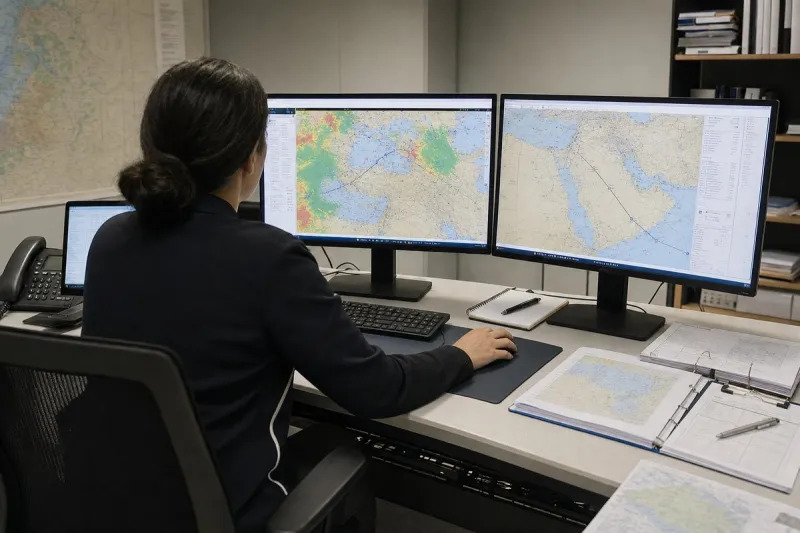
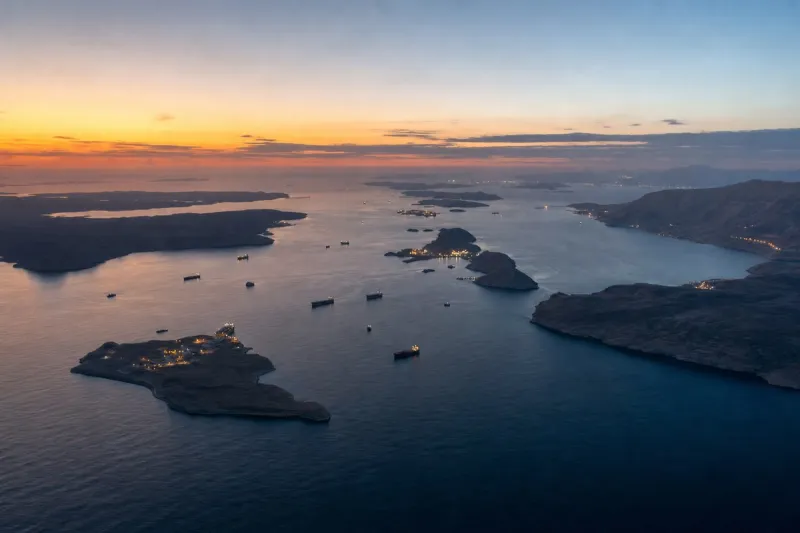
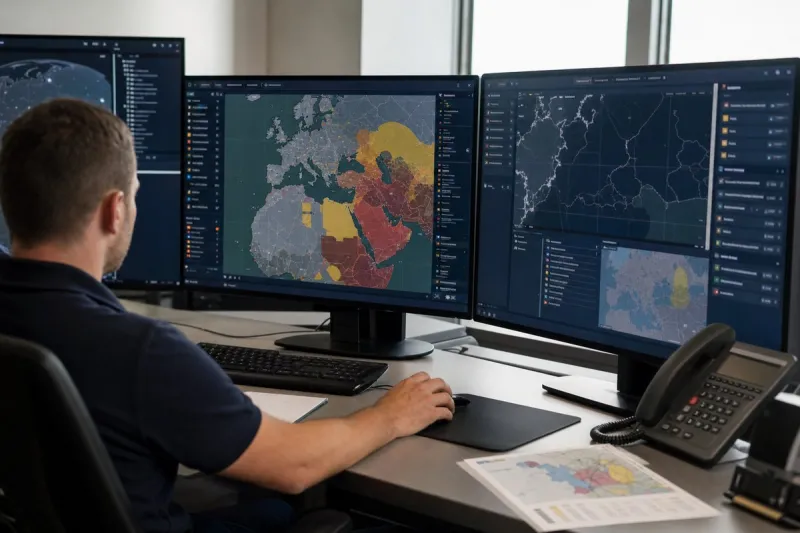
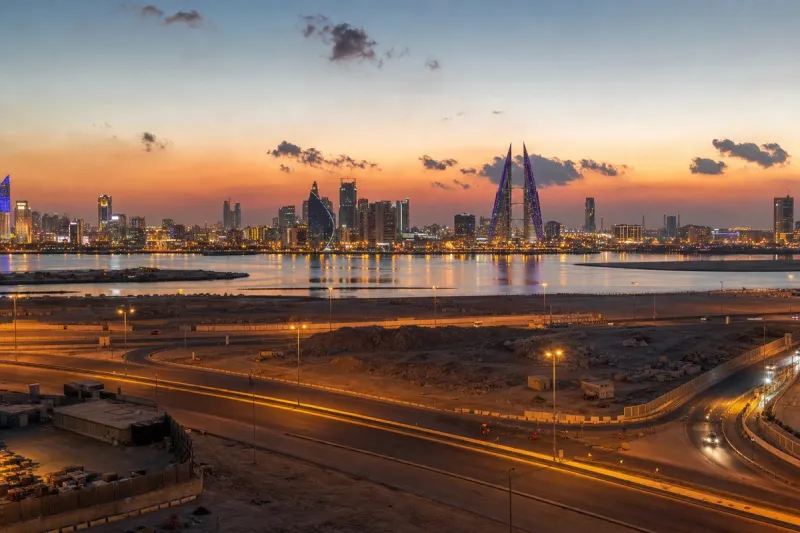
EASA revised six Conflict Zone Information Bulletins on 16 November and extended all of them to 31 January 2027. They cover the airspace of Iran, Iraq, Lebanon, Jordan and Saudi Arabia, as well as portions of the Persian Gulf and Gulf of Oman. The Persian Gulf bulletin, CZIB-2026-07R4, applies within the Bahrain, Kuwait, Qatar, UAE and Oman (Muscat) Flight Information Regions, and states that military developments create a high risk to civil flights at all altitudes and flight levels. The bulletins are advisory rather than closures, so the airspace remains usable subject to each operator's own risk assessment.
The U.S. mission in Saudi Arabia has warned of potential attacks on airports, airspace closures, flight cancellations and travel disruption, and advises extreme caution in using Saudi airports. It maintains a Level 3 "Reconsider Travel" advisory citing drone and missile targeting, armed conflict, terrorism and exit bans. U.S. government employees now need special authorisation from the Chief of Mission to use any airport in the kingdom following recent missile and UAV attacks on airports.
Air India has restored non-stop Delhi and Mumbai services to New York and Newark, beginning in the first week of November, using Iraqi airspace in its revised routings. Iraq remains covered by an extended EASA bulletin.
In South Asia, Pakistan has extended its airspace ban on Indian aircraft until 04:59 on 24 December 2026. Combined with Middle East restrictions, this has pushed affected flights farther south through alternative corridors, increasing fuel burn and, on some services, requiring intermediate refuelling.
In the Asia-Pacific, the APEC gathering in Shenzhen, attended by Xi Jinping, Vladimir Putin and Donald Trump, has produced extensive no-fly zones and airspace restrictions, including a strict no-fly zone over the city centre supported by a police drone unit able to patrol more than 600 routes. Philippine police have banned unauthorised recreational, commercial and other drone flights around Clark and Subic for the 49th ASEAN Summit, restricting low-altitude operations near Central Luzon airports.
The conflict behind the bulletins
The underlying driver is the conflict that began with U.S.-Israeli strikes on Iran and has continued, with Iran responding through drone and missile attacks. Mojtaba Khamenei has taken up the position of Supreme Leader in what is only the second transition in the post since 1979.
A fifteen-point framework for a peace deal, requiring Iran to give up its enrichment capacity, has been submitted to Tehran via Pakistani mediators. Iran has countered with its own demands, including a U.S. withdrawal from all its military positions. Israeli bombardment in Lebanon has killed more than 1,530 people.
Military activity and weather
South Korea reported several Russian military aircraft entering its air defence identification zone over the Sea of Japan on 17 November. Taiwan reported two Russian aircraft entering its ADIZ from the northeast and departing south of Taitung the same day, and two Tu-95MS bombers with two support aircraft arrived in Da Nang. The incursions preceded Putin's arrival in Shenzhen and followed suspected violations of Japanese airspace. The United States has also pressed ICAO over Taiwan flight restrictions, with Beijing alleging political manipulation.
On weather, El Niño is strengthening rapidly, with Niño 3.4 anomalies around +2.5°C and roughly a 60 percent chance of reaching a historic strength threshold during the October–December and November–January periods. Observed patterns include abnormally high precipitation in parts of East Asia, drier conditions in Southeast Asia and Central America, and wetter conditions in eastern Africa and southern South America. Record rainfall has driven landslides in Afghanistan that killed at least 30 people, and Hong Kong has absorbed twice its usual monthly rainfall.
Industry impact & what to watch
Advisory bulletins differ from closures in an important way for charter economics: airspace stays legally available, so the decision shifts to each operator's own risk assessment. Air India's return to Iraqi airspace under an extended EASA bulletin shows that two carriers can read the same formal status differently. For charter buyers and brokers, that means routing is no longer a single regulatory fact but a negotiated judgement that varies by operator, insurer and aircraft.
The cumulative effect is on range and time. Pakistan's ban on Indian aircraft, Middle East restrictions and summit-related closures push flights onto longer corridors, adding fuel burn, technical stops and longer sector times. Operators with India-registered aircraft or Indian-linked flight planning should treat westbound range as the binding constraint through late December, build technical stops into quotes, and check crew duty limits against the longer sectors. Saudi fields should not be carried as routine technical-stop alternates without a current check of conditions.
Two dates are decision points rather than guaranteed reopenings: the Pakistani ban expires on 24 December and the EASA bulletins on 31 January 2027. Developments to watch include whether the fifteen-point framework advances or collapses, further Houthi strikes on Saudi airports and energy infrastructure, whether more operators follow Air India back into Iraqi airspace, and whether post-summit restrictions around Shenzhen and Central Luzon lift cleanly. With El Niño approaching historic strength, conservative alternate fuel and earlier client notification are advised across East and Southeast Asia.