AAIB: Fatigue Crack Behind G-WPDA EC135 Tail Rotor Blade Failure; FAA AD 2026-22-10 Mandates Blade Checks
Why It MattersThe case shows how a single in-service blade failure can redirect a fleet-wide inspection regime, with approved inspection methods tightened across regulators and compliance cost falling on small rotorcraft operators.
What happened
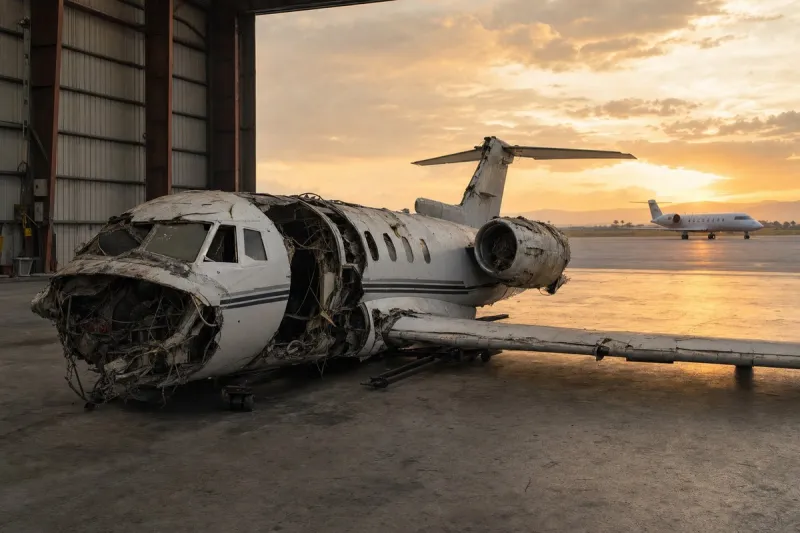
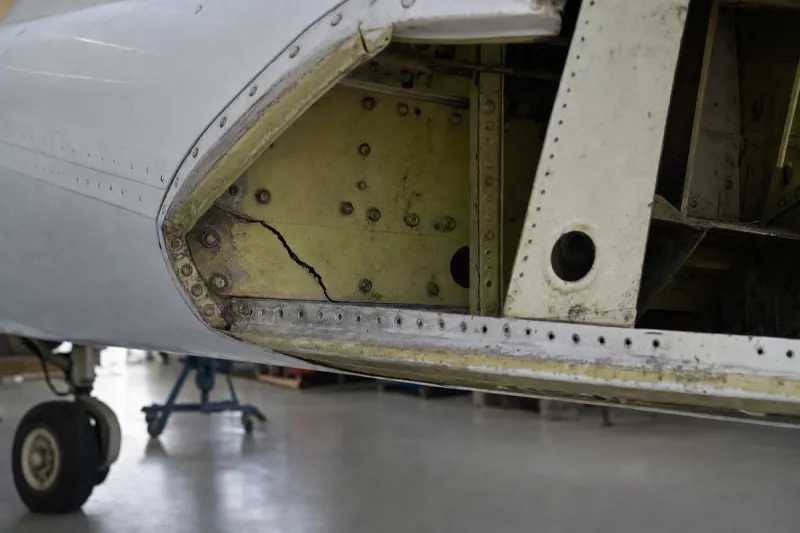
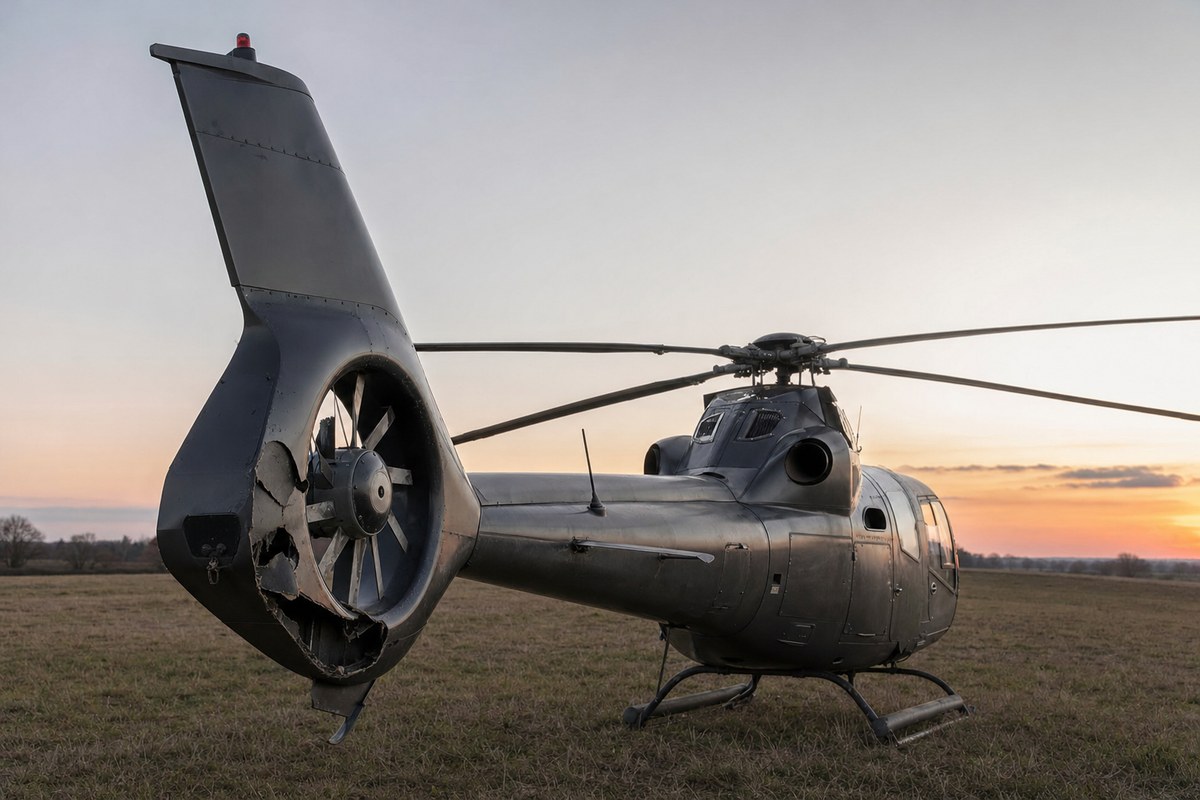
The tail rotor blade that separated from EC135 P1 helicopter G-WPDA over Monmouthshire, Wales, on November 16, 2025, failed through a fatigue crack, and dye-penetrant was found on the crack surfaces, the UK Air Accidents Investigation Branch (AAIB) said in a statement published on November 16, 2026. The helicopter was flying a powerline inspection when one of its fenestron blades separated and passed through the fenestron shroud. The pilot kept control and landed safely in a field near Dingestow. Experts at a forensic organization and at Airbus Helicopters examined the fracture surfaces separately.
The AAIB listed three documents issued since the accident: Airbus Helicopters Emergency Alert Service Bulletin EC135-64-11-0001 Issue 3 of February 5, 2026; EASA AD 2026-0032 of February 19, 2026; and the FAA's AD 2026-22-10 of November 9, 2026. The FAA AD makes the European tail rotor blade crack inspections mandatory for 359 US-registered EC135 helicopters from December 14, 2026. It adopts EASA AD 2026-0032, which targets tail rotor blade assemblies part numbers L642A2002111 and L642A2002112.
The FAA says Airbus determined that inspection Method A, a dye-penetrant check with increased temperature, should be discontinued; EASA's AD bars it from March 5, 2026. A fluorescent penetrant inspection is allowed only on a blade that has never had a dye-penetrant check, or that has had an eddy current inspection since its last one. The AD points operators to FAA bulletin SAIB CE-18-26R1, which warns of the risks of visible-dye inspections on critical parts and stresses cleaning before and after inspection, and notes that ASTM E1417 prohibits a visible-dye check before a fluorescent one on the same part.
The FAA estimates each inspection at three work-hours and $50 in parts, up to $305, or up to $109,495 across the US fleet. A replacement blade assembly costs $4,900 in parts, and replacing all 10 on one helicopter would run up to $51,550. The FAA received no comments on its July 30 proposal. A separate EASA directive issued the same day, AD 2026-0031, covers a third blade assembly, part number L642A2002121.
Fenestron history and fleet context
A fenestron is Airbus Helicopters' enclosed tail rotor, a ring of blades spinning inside a duct in the tail that counters main rotor torque. EASA first required the inspections in January 2024, after increased tail rotor vibration on one helicopter led to the discovery of a ruptured blade assembly; investigators found the affected blades can be subject to intergranular corrosion that may lead to cracks.
The EC135, now sold as the H135, is a staple of air ambulance and police fleets; Airbus says the family has passed 1,600 deliveries to more than 325 operators.
Industry impact & what to watch
The sequence here runs from a field failure to a manufacturer alert bulletin, a European directive and, nine months after the accident, a US mandate. Airworthiness rules for a mature rotorcraft type tend to move this way: the findings of one investigation feed back into how inspections themselves are performed, not just how often. The detail that dye-penetrant was found on the crack surfaces sits alongside the decision to withdraw Method A and restrict fluorescent penetrant checks, which suggests the inspection method itself became part of the safety question.
For operators of utility, police and air ambulance EC135s, the direct cost is modest on paper, up to $305 per inspection under the FAA's own estimate. The larger exposure is scheduling: a first check due before a blade reaches 685 hours time-in-service, with a replacement-blade option, competes with mission availability on fleets that depend on high utilisation. Records of past penetrant and eddy current inspections now determine which methods a given blade may legally receive, so maintenance history becomes a gating item rather than a formality.
The mandate takes effect December 14, 2026, which is the next milestone against which US operators will be measured.