FAA Halts All US Departures for Over Four Hours as Faulty Router Installation Cascades Across Network
Why It MattersA single point of failure in the national air-traffic telecommunications network can ground all departures at once, exposing business and commercial operators alike to systemic disruption well beyond the original fault.
On the afternoon of Friday, November 13, the Federal Aviation Administration halted all flight departures in the United States. The ground stop was lifted at 8:15 p.m., more than four hours later. More than 15,000 flights were cancelled or delayed that day, hundreds of thousands of travelers were stranded, and cancellations continued through the weekend, with disruption lasting until Sunday evening. It was the second nationwide ground stop in under four years; the first, in January 2023, followed the inadvertent deletion of files in the FAA's NOTAM pilot-alert system by a contractor.
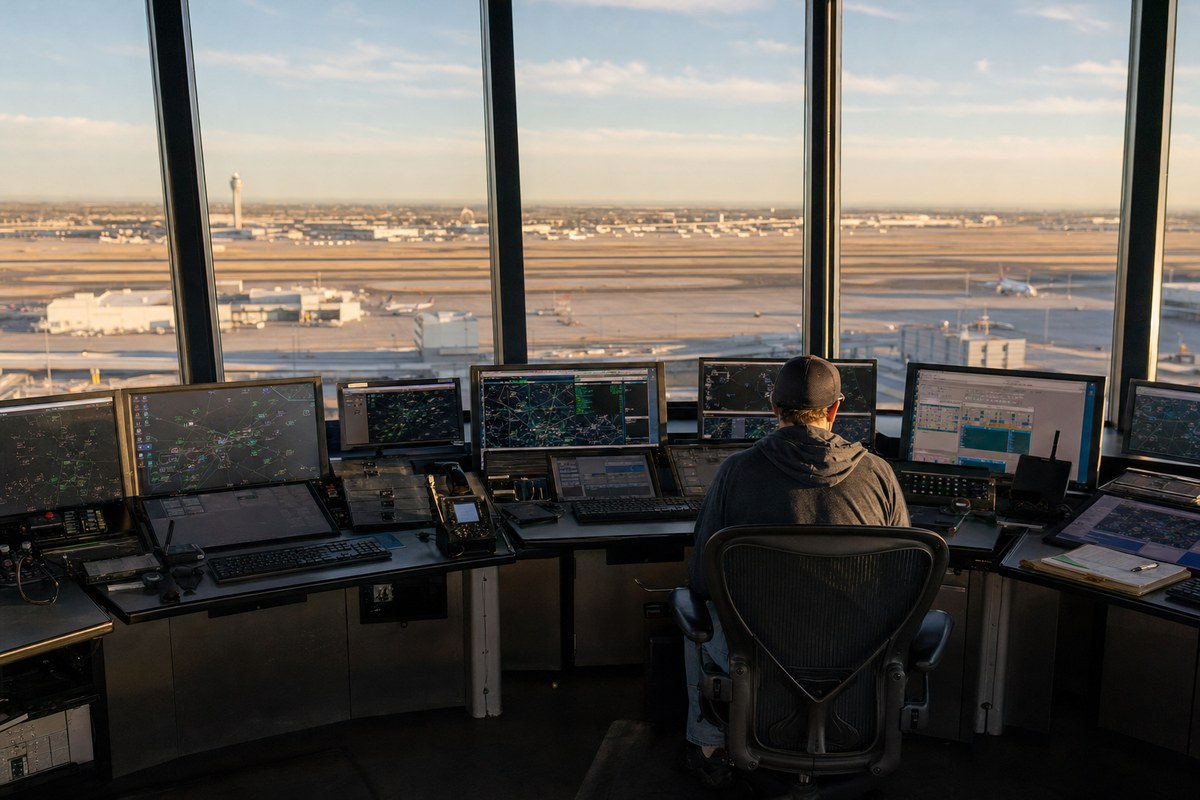
Transportation Secretary Sean Duffy and FAA Administrator Bryan Bedford said the incident began with work by a technician from L3Harris Technologies, the defense contractor that runs the FAA's telecommunications network. The technician was replacing copper lines with fiber at a remote FAA site and installing a new router. On Sunday, Duffy pointed to a router installed in El Dorado, in southern Arkansas; a second recently installed router in Amarillo, Texas, is also under examination. The new router flooded the network with about 1,000 connection attempts every four to five seconds. Officials have not explained how one router at a remote site spread instability across the national network, or why backup systems failed.
The outage came days after the FAA extended SMART, an AI-based traffic-management system developed by startup Air Space Intelligence, to all 22 of its en route control centers. SMART had been operating in the Washington, DC area only since September, with full deployment originally planned over one to two years. The company denied any link to the outage, and Homeland Security Secretary Markwayne Mullin said the investigation would determine whether the system played any role. Duffy blamed the contractor, saying L3Harris in effect owns the network the FAA uses to control airspace; the FAA entrusted that network to Harris Corporation in 2002.