How Private Jet Operators and Brokers Handle Pre-Departure Technical Failures and AOG Situations
Why It MattersThe episode underscores how MEL procedures, aircraft-commander authority and broker-led replacement sourcing shape charter reliability and client cost exposure across the industry.
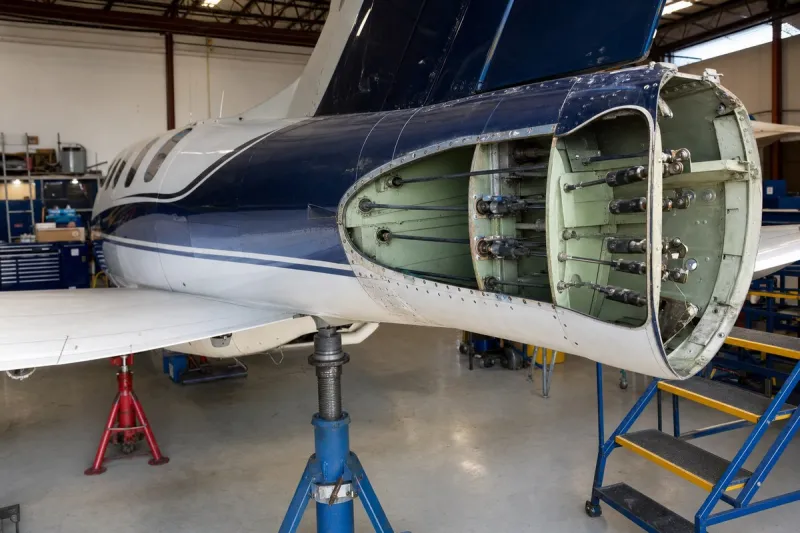
A technical failure found during pre-flight checks ranks among the most difficult situations in business aviation, and professionals follow a strict hierarchy in which flight safety always takes priority over schedule or commercial commitments, regardless of what a client has paid. When a private jet cannot operate due to a mechanical breakdown, malfunction, or missing spare part, it is classified as AOG — Aircraft On Ground, a status that can emerge days before departure, the night before, hours ahead, immediately before takeoff, or even after arrival at the airport.

Not every fault grounds an aircraft automatically. Regulators maintain a Minimum Equipment List (MEL), an approved document specifying which systems may remain inoperative under defined conditions while the aircraft still operates legally, subject to procedures and limits. If a malfunction falls outside MEL allowances, the aircraft cannot be released until the issue is resolved or an approved procedure permits continued operation, with the aircraft commander holding authority over safety decisions within applicable procedures. Modern business jets carry extensive redundancy across computers, sensors, control systems, and power sources, so a single component failure does not automatically make an aircraft unfit to fly.
When grounded, a broker begins searching for a replacement aircraft, assessing location, range, passenger capacity, baggage needs, airport compatibility, crew availability, permits, and departure timing; the substitute may be the same model, another aircraft in the same category, or a different type able to fly the route, and in many cases the client pays no extra for a suitable replacement, though outcomes depend on the charter agreement and operator terms. Repairs are not always quick, since sourcing an unavailable spare part, bringing in a specialist, or running further diagnostics can extend the AOG period; if no acceptable alternative can be arranged, a refund may be provided according to contractual terms, though charter agreements vary and no unconditional refund applies in every case.