Cyprus weighs dedicated air ambulance service after critically ill patient missed lung transplant window
Why It MattersThe case shows how reliance on contracted, foreign-based air ambulance providers can leave time-critical transfers hostage to aircraft readiness, permissions and donor-organ deadlines that domestic capacity could otherwise meet.
What happened
Cyprus's Health Insurance Organisation (HIO) is assessing whether to establish a dedicated air ambulance capability after a critically ill patient could not be transferred to Greece in time to be considered for a lung transplant earlier this year. The HIO was notified shortly after 11pm on 2 February that a donor lung was available and that the patient needed to reach the receiving hospital by 3am the following morning. It contacted all five of its contracted air ambulance providers and explored commercial flight options, but no aircraft could complete the transfer within the required three-hour window, and a request for an extension from the receiving hospital was declined.
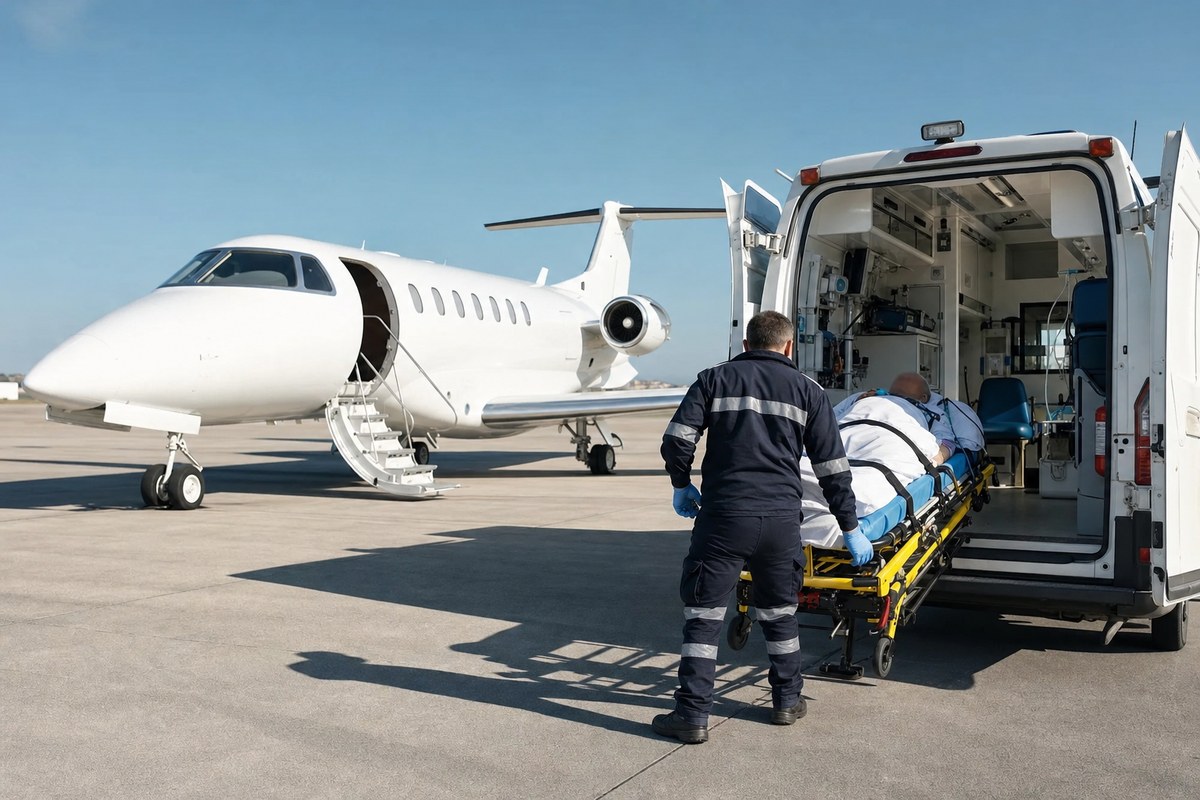
The HIO currently contracts air ambulance providers based outside Cyprus, primarily in Greece and, to a lesser extent, Israel, spending approximately €2.6 million annually on these external services. According to figures reported by the Cyprus Federation of Patients Associations (OSAK), around 100 patients required dedicated air transport during the first 10 months of the HIO's overseas referral programme, of whom 23 cases were classified as life-threatening and 25 as urgent. Under current arrangements, transfer times can run between 12 and 15 hours, including three to four hours needed to prepare an aircraft, assemble a medical team, and obtain flight permissions.
HIO Director Dr Monica Kyriakou has confirmed that options for improving the country's air ambulance capability are under assessment, though no final decision on acquiring an aircraft has been made. President Nikos Christodoulides has discussed the issue with patient representatives. One proposal under consideration would have the planned National Ambulance Service Authority operate its own aircraft, potentially funded through Cyprus's allocation under the European Union's 2028–2035 budget. The wider overseas treatment programme has handled more than 1,200 applications since the HIO assumed responsibility in October 2025, with parliamentary figures showing 889 applications approved and 657 patients having travelled or remained abroad for treatment by mid-September.
Industry impact & what to watch
This episode illustrates a structural exposure common to small states that outsource emergency medical transport rather than operate it themselves: contracted capacity can be reliable for routine cases yet still fail the narrowest, highest-stakes windows, such as organ-transplant deadlines measured in hours rather than days. Preparation time alone — three to four hours to ready an aircraft, assemble a medical crew and secure flight permissions — can consume most of a window before the aircraft even departs, regardless of how many providers are under contract.
Air ambulance provision built on cross-border contracts also depends on counterpart hospitals' willingness to extend deadlines, which this case shows is not guaranteed. A state-operated or nationally based aircraft, by contrast, removes the permissions and provider-coordination steps from the critical path, at the cost of year-round fleet and crew expense that a pay-per-use contract avoids.
What happens next will turn on whether the National Ambulance Service Authority proposal advances, and on how it would be funded against the stated €2.6 million annual spend on external providers. Dr Kyriakou's assessment of options, and any decision tied to Cyprus's EU 2028–2035 budget allocation, are the next concrete markers for whether this moves from review to acquisition.