FAA Orders IAE V2500 Compressor Blade Replacement; Lufthansa Technik Reports Shortage of Reworked Parts, Forces Use of New Blades at Seven Times the Cost
Why It MattersThe episode shows how an FAA-mandated fleet-wide fix can be bottlenecked by a single refurbishment source, pushing MRO providers toward the costlier new-parts path the directive was designed to avoid.
What happened
The FAA has issued an airworthiness directive requiring operators to replace third-stage high-pressure compressor rotor blades on IAE V2500 engines, following multiple reports of blade failures that caused engine fires, aborted takeoffs, unplanned engine removals, and in-flight engine shutdowns. The directive, issued in late August 2026, affects approximately 1,400 engines in the United States.
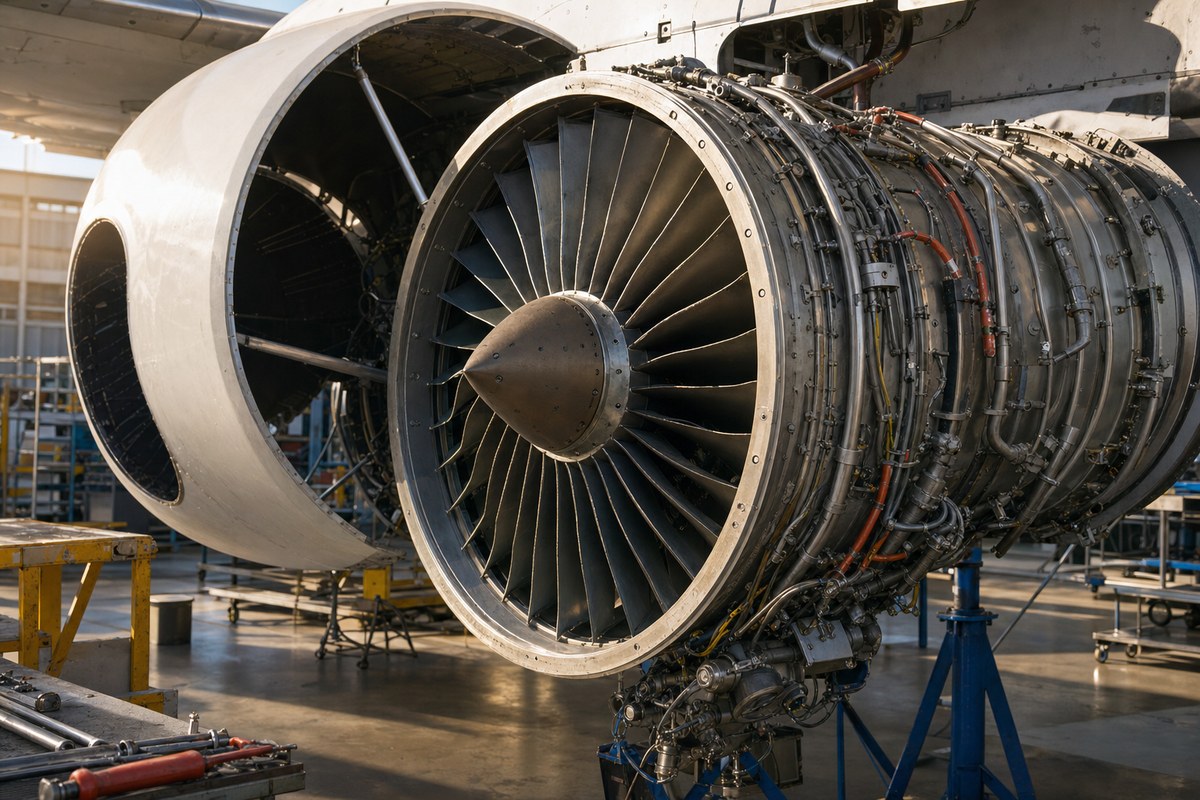
The FAA's investigation found that blades with specific part numbers are prone to coating wear at their outer tips, making them susceptible to fracture. The engine manufacturer developed an improved coating process to increase blade durability and reduce fracture risk, and the directive requires operators to replace the affected blades with either reworked blades carrying the new coating or new blades that come with the improved coating from the factory. The FAA estimates a full set of reworked blades costs approximately $30,085, compared with about $225,000 for a full set of new blades — roughly seven times more expensive — and said it expects most operators to choose reworked blades as the more cost-effective option.
Lufthansa Technik, which commented on the FAA's proposed rule in November 2025, had warned of a shortage of reworked blades due to limited refurbishment capacity and asked that recurring inspections be allowed as an alternative compliance method. The FAA rejected that proposal, citing assurances from the original equipment manufacturer that no parts shortage was expected and that new-parts production had already been ramped up to meet demand. In a response to aeroTELEGRAPH, a Lufthansa Technik spokesperson confirmed the shortage has materialized, saying the company continues to see the supply constraint it had flagged, that there is only a single source for reworked blades whose output it considers insufficient, and that a promised second source is still not available. Pratt & Whitney, the majority shareholder of IAE, had not responded to a request for comment at the time of publication.
Industry impact & what to watch
This case illustrates a recurring tension in fleet-wide airworthiness directives: the regulator's cost estimate assumes a repair-parts supply chain that can scale on schedule, and when that assumption fails, operators and MRO providers absorb the gap rather than the manufacturer that gave the assurances. The FAA leaned on the engine maker's assurance that new-parts production had already ramped up, and rejected an alternative compliance path that would have reduced near-term reliance on reworked-blade capacity.
In engine MRO economics, a directive that prices the compliant fix at roughly $30,085 per set versus $225,000 for the alternative only holds its cost advantage if the cheaper option is actually available when operators need it. A single qualified source for reworked blades, with a second source still pending, leaves little buffer if demand concentrates around the directive's compliance window.
What happens next depends on whether the promised second source for reworked blades comes online, and on how Pratt & Whitney, as IAE's majority shareholder, responds to the supply gap Lufthansa Technik has now confirmed in practice.