Appeals Court Division Six Overturns Nearly $19 Million Judgment Against Starr Indemnity in Avenatti Jet Case
Why It MattersThe ruling shows aviation insurers can rescind coverage over undisclosed fund sourcing even without having asked about it at underwriting, reinforcing concealment as a standalone basis for rescission in asset-finance disputes.
What happened
Division Six of this district's Court of Appeal has reversed a nearly $19 million judgment against Starr Indemnity & Liability Company, ruling that the insurer was entitled to rescind its policy covering a jet partially purchased with funds embezzled by disbarred attorney Michael Avenatti. The opinion, authored by Justice Kenneth R. Yegan, held that the failure to disclose that approximately $2 million of the aircraft's purchase price came from embezzled funds constituted concealment of a material fact, giving Starr Indemnity the right to rescind the policy regardless of whether the insurer had made inquiries about the source of funds during underwriting.

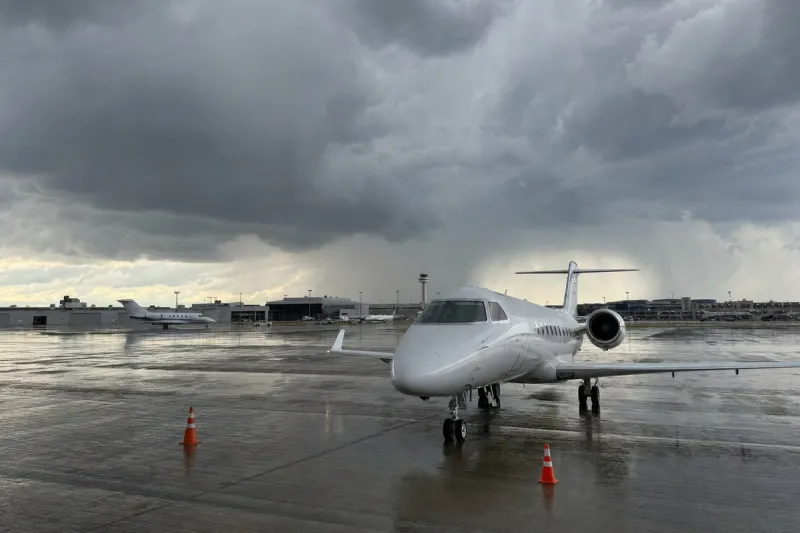
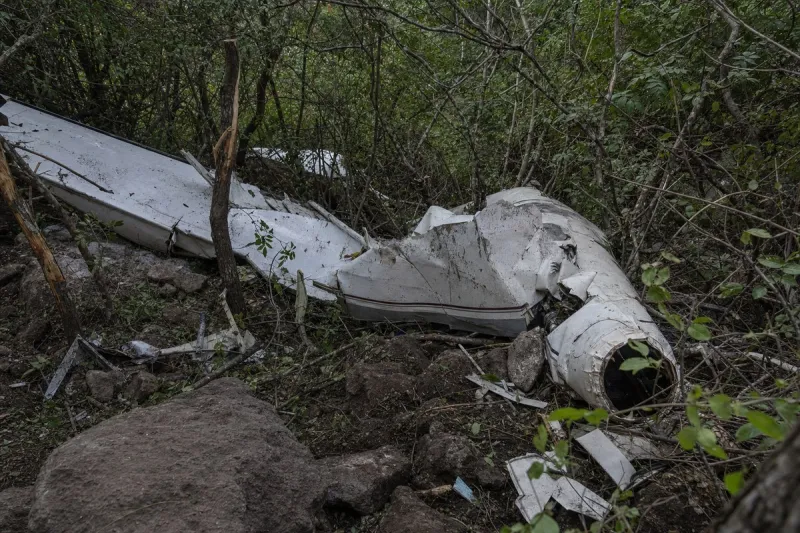
The aircraft was owned by Passport 420 LLC, whose two members were the now-defunct law firm Avenatti & Associates APC and Spring Creek Research LLC, controlled by tech entrepreneur William Parrish. The two parties agreed to purchase the jet in 2016 for approximately $4 million, with Spring Creek contributing 52.7% of the purchase price. Starr Indemnity issued the policy in January 2017, with Avenatti serving as the company's manager. On April 10, 2019, the federal government seized the aircraft and Avenatti was indicted for wire and bank fraud relating to allegations that he embezzled money from a client. Parrish subsequently submitted a Sworn Statement in Proof of Loss to Starr seeking $3,990,000 — the insured value of the aircraft less the $10,000 deductible. Starr declined to pay, citing concealment of material facts during underwriting, specifically that the aircraft had been purchased with stolen funds.
Passport 420, Spring Creek, and Parrish filed suit against Starr in July 2019. Following a jury trial, a verdict was returned in May 2024 awarding the plaintiffs $3.99 million for breach of contract and $15 million in punitive damages — a total of nearly $19 million. The appellate court reversed that verdict, finding that the trial court had erred in denying Starr's motion for judgment. Justice Yegan wrote that Avenatti's knowledge of his own embezzlement was imputed to Passport 420 under general agency principles, and that no malevolent agent exception applied because Avenatti was acting in Passport's interest both when he applied the embezzled funds to the aircraft purchase and when the policy was obtained. Yegan noted in a footnote that Passport 420 was itself a victim of Avenatti's fraud, as were Starr Indemnity and multiple other clients, but concluded this did not alter the legal outcome.
Avenatti's parallel legal record
Avenatti was ordered stricken from the roll of attorneys by the California Supreme Court as of February of last year. His disbarment stemmed from a 2020 conviction in the U.S. District Court for the Southern District of New York for attempting to extort more than $20 million from Nike. He pleaded guilty in 2022 to four counts of wire fraud in the Central District of California relating to the criminal matter that led to the jet's seizure, and was sentenced to an aggregate of approximately 11 years in federal prison across multiple cases.
Industry impact & what to watch
This case sits in the broader category of insurance disputes where a policyholder's agent concealed how acquisition funds were sourced, and an appellate court had to decide who bears the loss once that concealment surfaces after a claim is filed. The court's reasoning turned on agency law rather than underwriting diligence: because Avenatti's knowledge was imputed to Passport 420, the entity could not claim innocence even though Yegan acknowledged it was itself defrauded.
For aviation insurers, the ruling reinforces that concealment of a material fact can support rescission independent of whether underwriting specifically asked about the source of purchase funds — a standard that shifts risk toward buyers and their counsel to self-disclose financing details rather than wait to be asked. That matters in asset classes like jets, where ownership structures often involve LLCs with multiple members and financing can be layered or opaque.
What remains to be seen is whether Passport 420, Spring Creek, or Parrish will seek further review of the reversal, and whether other insurers facing similar fraud-tainted purchase disputes will cite Yegan's agency-imputation reasoning as precedent.