FAA Convenes Review Board Over Boeing 737 MAX Software Glitch Affecting Flight Guidance; MAX 10 Certification Halted
Why It MattersThe episode shows how a software fault confined to specific FMC versions can stall a single aircraft variant's certification without automatically triggering fleet-wide grounding action.
What happened
The FAA is convening a Continued Airworthiness Review Board to assess a software defect in the Boeing 737 MAX that can prevent pilots from accessing automated vertical flight guidance during certain missed-approach scenarios. The problem is confined to versions 14 and 14.1 of the 737 MAX flight management computer software, developed by GE Aerospace, and is triggered when a crew flying an automated precision approach executes a go-around and then modifies the route programmed into the flight management computer. In that sequence, the aircraft's vertical navigation function can disengage unexpectedly, reverting to a simpler automation mode and increasing pilot workload at a critical phase of flight close to the ground.
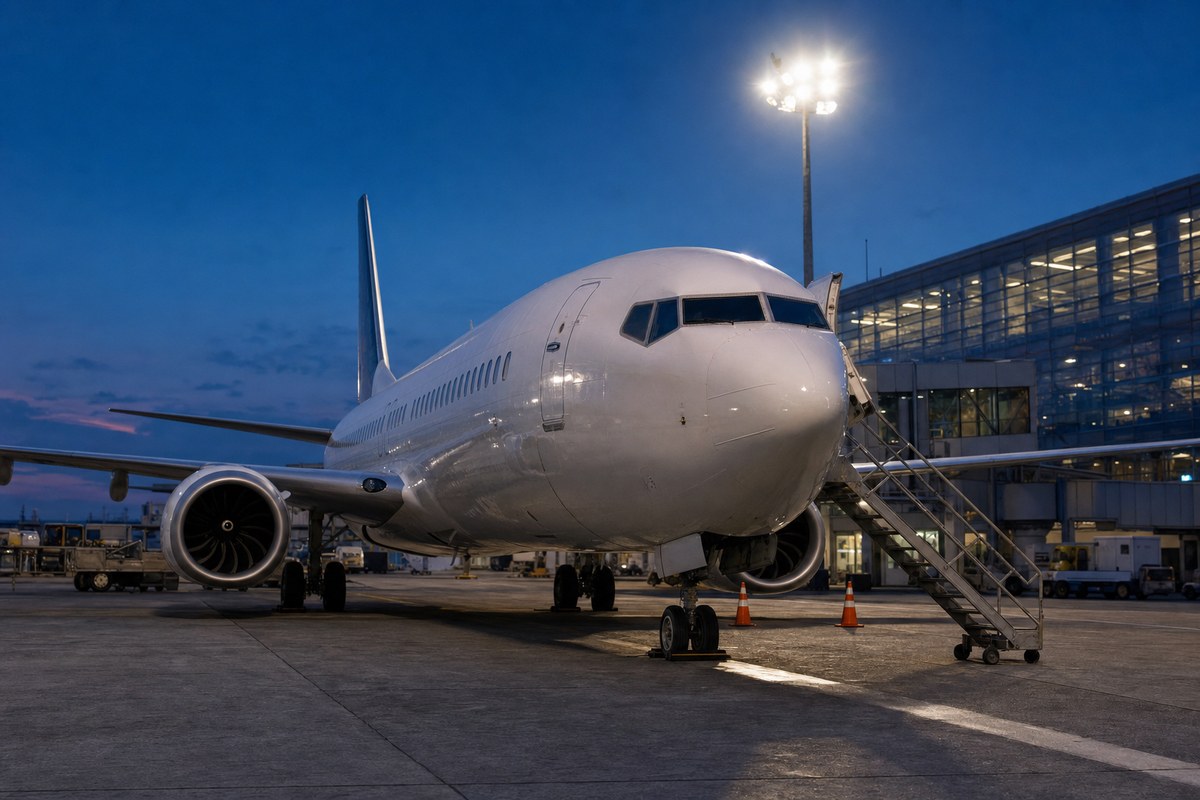
Boeing was first notified of the issue by an airline in November 2024, reviewed it, and concluded in February 2025 that it did not constitute a safety issue. Additional operator reports received later in 2025 prompted a more formal safety review, after which Boeing forwarded its findings to the FAA. Boeing has informed all 737 MAX operators that existing procedures allow crews to handle the condition safely and that engineers are developing a software update; the company had initially indicated a permanent fix could arrive in 2028 but is now working to accelerate the timeline.
The FAA has put certification of the 737 MAX 10 on hold pending completion of the review. FAA Administrator Bryan Bedford said: "We haven't concluded whether this is a safety of flight issue or not, but we will be delaying the 10 until we're satisfied we don't have an issue here." The MAX 10 had completed certification flight testing in July. The FAA certified the 737 MAX 7 on August 3 using version 14 of the affected software, while the MAX 10 used version 14.1 during its certification process. Transportation Secretary Sean Duffy said Wednesday that the software issue had not been flagged as a serious safety risk, while the FAA has characterized it as one that can increase pilot workload in rare cases.
Alaska Airlines, American Airlines, Southwest Airlines, and United Airlines have stated their in-service aircraft do not use the affected software versions. Southwest and United have further told Boeing they will not accept newly delivered aircraft equipped with the affected software, preferring an earlier version while the issue is resolved. Canadian carrier WestJet uses the software but says it has experienced no related in-service events. Alaska Airlines has commitments for 105 MAX 10s plus 35 options and had expected its first delivery next spring, while United Airlines has commitments for more than 160 MAX 10s.
Industry impact & what to watch
A Continued Airworthiness Review Board sits early in the FAA's standard process for assessing in-service findings; convening one does not by itself mean an aircraft has been deemed unsafe, but it can escalate toward an Airworthiness Directive if the board finds an unsafe condition that must be corrected. The current case shows how that process can bite one variant and not others: the same manufacturer, the same baseline airframe, but a certification hold that falls only on the MAX 10 because of which FMC software version its test program used.
For airlines, the episode illustrates how fleet composition decisions ripple into commercial risk. Carriers that already operate unaffected software versions face no disruption, while those awaiting new deliveries, like Alaska and United, now carry schedule uncertainty tied to a software release rather than an airframe problem. Southwest's and United's refusal to accept jets built with the flagged software underscores how operators can manage exposure contractually even before regulators resolve the underlying question.
What happens next depends on how quickly Boeing and GE Aerospace can validate a fix and how the CARB characterizes the underlying risk. The government's current position is that there is no basis to ground the in-service MAX fleet, and the open question is whether the review concludes the issue warrants an Airworthiness Directive or is resolved through the software update Boeing has already begun accelerating.