Aerospace industry integrates AI into aircraft design, cutting development cycles but facing regulatory gaps
Why It MattersAI is compressing the early design phase of engines and airframes that normally cost billions and take years, but safety-critical certification still hinges on engineers explaining exactly how each part was designed.
What happened
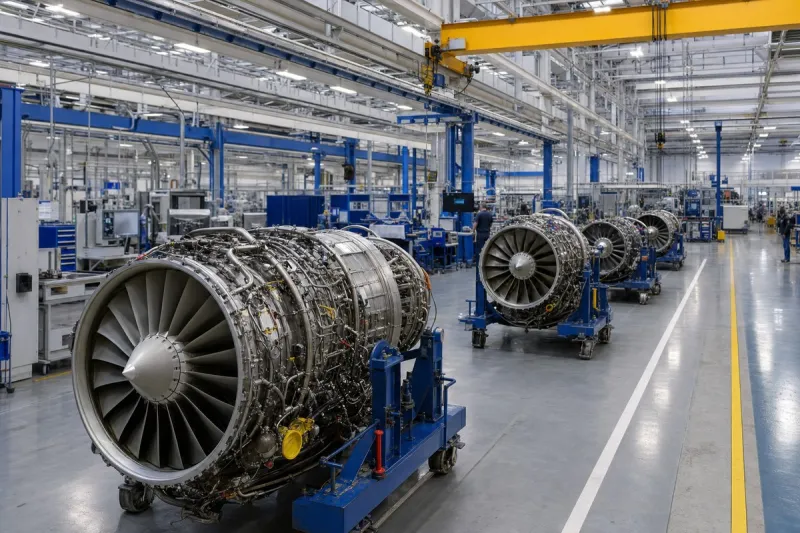
At GE Aerospace's research center in Niskayuna, New York, a generative AI dashboard produced a preliminary design for a hypersonic ramjet engine within seconds, a task Joe Vinciquerra, general manager and senior executive director of GE Aerospace Research, said traditionally requires months of work by a team of engineers. GE announced the demonstration in May. Vinciquerra said the technology is poised to "dramatically shorten the design cycles" of products, allowing engineers to reduce digital iterations and reach physical testing faster, though he noted GE is currently using AI only in early-stage design — "It's really more like a quicker pace to the starting line," he said.
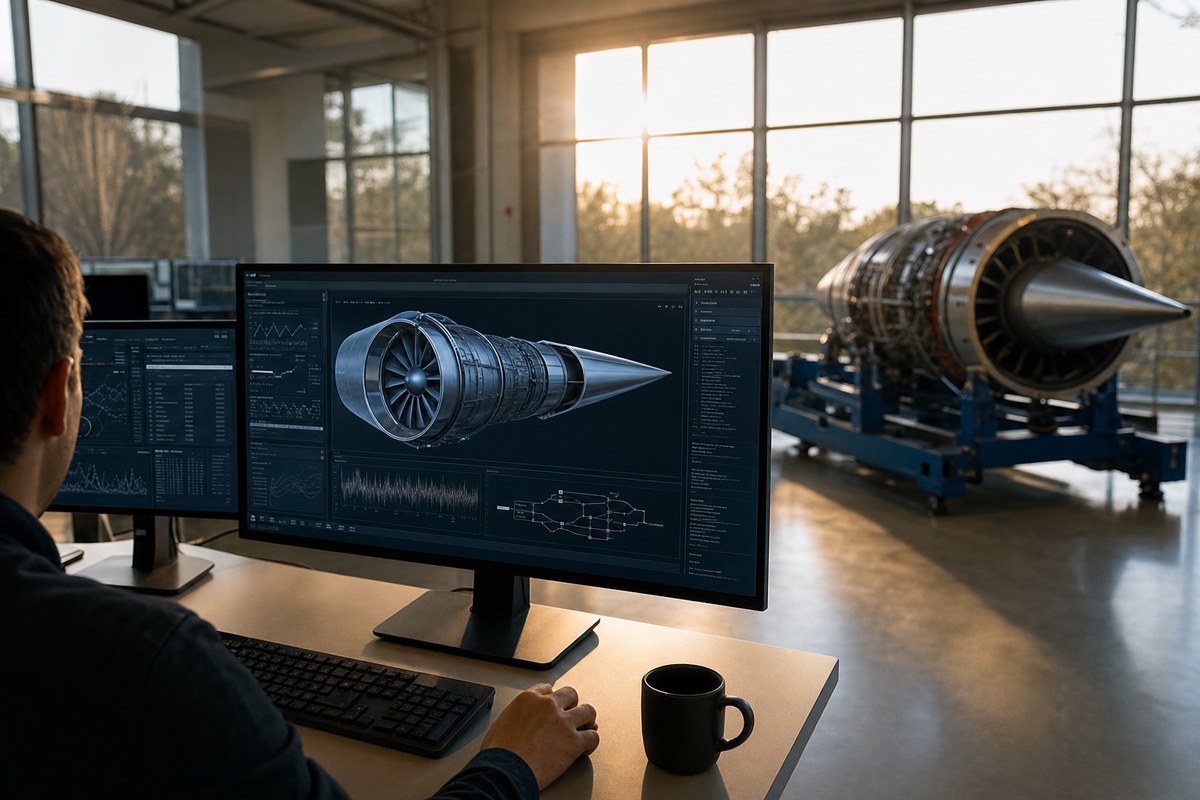
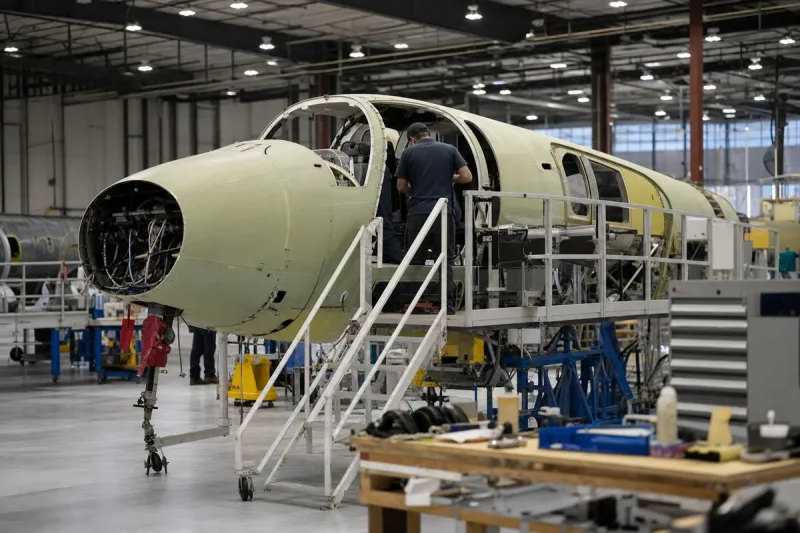
According to consultancy Leeham, developing a new engine typically costs $5 billion to $7 billion, while a clean-sheet airframe costs $10 billion to $20 billion, with each taking several years to complete. Jonas Zinn, an analyst and AI expert at consultancy Roland Berger, said large language models could narrow down part specifications, generate hundreds of candidate designs, and accelerate simulation stages, reducing a wait of up to three days between physical test cycles to near-instant evaluation of design tweaks. Rolls-Royce, Airbus and RTX's Collins Aerospace told Aerospace America they are incorporating AI into their work, while executives said a gap exists between future AI applications under consideration and what current regulations permit, since regulators including the FAA typically require engineers to explain exactly how every part is designed.
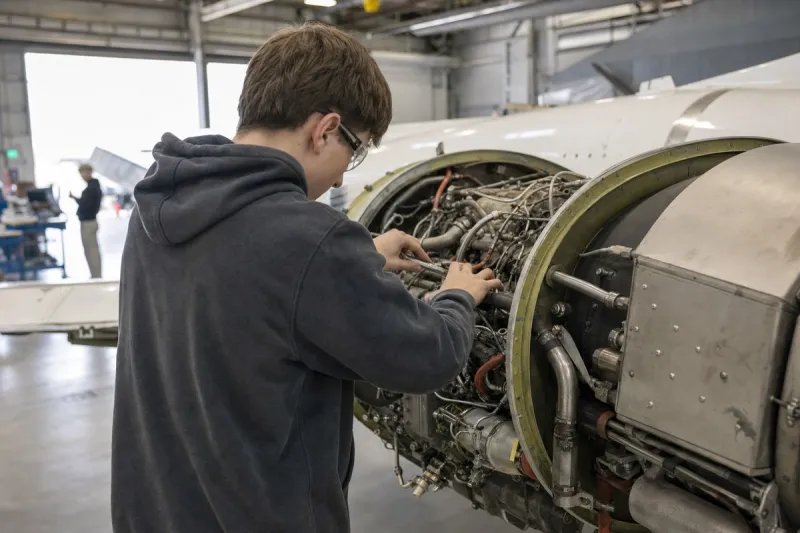
EASA, guided by its AI Roadmap and the EU AI Act enacted in 2024, requires human oversight of AI systems and prohibits fully AI-driven double verification in design processes. EASA AI project manager Guillaume Soudain said the agency is now in a "consolidation phase," moving from exploring AI use cases to formalizing rules, with a "pushing barriers" phase planned for 2028 and beyond. The FAA's Roadmap for Artificial Intelligence Safety Assurance takes a more flexible approach, allowing companies to propose their own compliance methods provided they can demonstrate safety equivalence; FAA spokeswoman Crystal Essiaw said applicants may reference existing standards from SAE International or propose adapted methods from other industries, subject to FAA acceptance, and that the agency aims to align consensus standards with other regulators to support global harmonization, an effort backed by the International Civil Aviation Organization. Both regulators advocate starting AI adoption with non-safety-critical ground applications, such as predictive maintenance analytics in maintenance, repair and overhaul facilities, before advancing to safety-critical flight systems. Nicole White, vice president of Collins Aerospace's Connected Aviation business, said the company is already using AI for predictive maintenance, continuously analyzing operational and component health data to identify early signs of system degradation before failures occur.
Industry impact & what to watch
This case belongs to a broader shift in how capital-intensive engineering programs are front-loaded: generative tools are being pointed first at the cheapest, most iterative part of the cycle — concept generation and simulation — while the expensive, liability-bearing parts of the process stay untouched. That split explains why GE frames its own use as reaching the starting line faster rather than replacing engineers, and why Collins Aerospace's live deployment sits in predictive maintenance rather than flight-critical design.
The segment's economics explain the caution. Engine and airframe programs costing billions and running years are built around a certification record that regulators can trace part by part; an AI system that cannot explain its own design logic cannot yet produce that record, regardless of how fast it generates candidates. EASA's prohibition on fully AI-driven double verification and the FAA's equivalence-based pathway are two different answers to the same constraint — one fixes the rule first, the other lets companies argue their case — and that divergence is itself a cost for manufacturers building a single aircraft for both markets.
What happens next depends on EASA's own calendar: the agency has named 2028 as the point it plans to start "pushing barriers" beyond ground applications, and ICAO's push for harmonized consensus standards will determine whether companies need separate compliance packages for FAA and EASA approval or can rely on one. Until a regulator formally accepts an AI-adapted design method as equivalent to current practice, the industry's use of these tools will stay concentrated in early design and non-safety-critical ground systems.