Flying Private to F1's 2026 Americas Races: What Operators and Clients Need to Know for Austin, Mexico City, São Paulo and Las Vegas
Why It MattersMulti-stop charter routing across borders increasingly hinges on permit lead times, overflight exemptions, and airport-capacity limits rather than aircraft range alone, forcing itinerary planning weeks ahead of race weekends.
What happened
Formula 1's 2026 Americas calendar runs four consecutive-region race weekends: Austin on Sunday, October 25; Mexico City on Sunday, November 1; São Paulo on Sunday, November 8; and, after a free weekend, Las Vegas on the night of Saturday, November 21, with the race starting at 8 p.m.
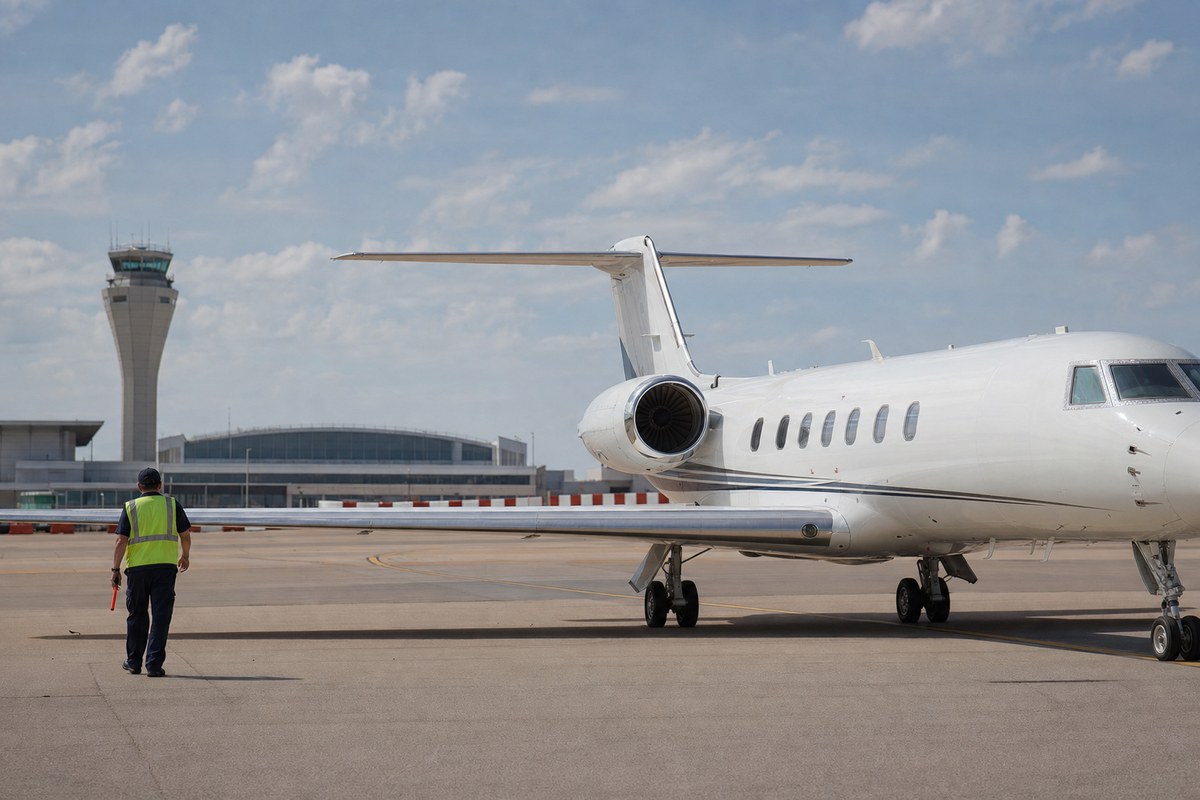
At Austin-Bergstrom International Airport, the FAA's published 2026 United States Grand Prix notice requires every arrival and departure, including drop-and-go flights, to hold a ramp reservation from Thursday, October 22, through Sunday, October 25, made through one of three FBOs: Signature, Atlantic, or Million Air. Flights without a reservation number are not accepted, diversions into Austin are not accepted, and parking may be unavailable at every airport within 50 nautical miles, leaving Austin Executive and San Marcos as alternatives only if their FBOs confirm availability. Customs is available at Austin-Bergstrom only.
In Mexico City, private jets cannot use Benito Juárez International Airport, which is closed to general aviation except official government flights; the gateway is Toluca International Airport, at 8,460 feet elevation, operating 24 hours with customs and immigration, though road time into the city can run up to two hours during race week and overnight hangar space is scarce. A charter operator flying into Mexico must hold an indefinite blanket permit from the Mexican aviation authority, which can take up to 90 business days to obtain; single-trip charter permits no longer exist; each flight needs a landing authorization at least ten business days in advance; and since May 13 of this year, every flight in Mexico requires prior approval from the authority's headquarters, with delays of more than two hours reported. US citizens need only a passport.
For São Paulo, Congonhas Airport, ten kilometers from Interlagos, is not available to arriving international private jets: it is not an airport of entry, caps general aviation at four movements per hour until works planned to end in 2028, and has no ramp parking for non-commercial flights. International private jets instead clear customs at Guarulhos, Catarina (8,104-foot runway, international status since 2021), or Viracopos. Brazil has required an e-visa of US, Canadian, and Australian citizens since April 10, 2025, valid for stays of up to 90 days and, for US passport holders, for ten years; the aircraft itself needs a Brazilian aviation authority permit valid 60 days with notification at least 48 hours before landing, and any further domestic leg inside Brazil requires a separate authorization that can take two business days and may be refused as cabotage for charter operators.
At Las Vegas's Harry Reid International Airport, the primary constraint for most US clients is parking: in 2023 more than a thousand private aircraft arrived and Henderson Executive, North Las Vegas, Boulder City, and Mesquite were full for overnight parking by November 14, while in 2024 Harry Reid FBOs were fully booked with more than 800 parking reservations across the valley. The FAA ran parking reservation and Sunday departure slot programs for the preceding three years, but its 2026 notice has not yet been published. A new customs facility for private arrivals was announced for September 17.
Crossing borders between races
Austin, Mexico City, and São Paulo fall on three consecutive weekends, so a party flying all three crosses from the United States into Mexico, then from Mexico to Brazil, then home. A private or charter aircraft returning from Brazil or Mexico must land at the designated US airport nearest its border crossing unless it holds a Border Overflight Exemption, which must be requested at least 15 days before the flight.
A nonstop from São Paulo to Las Vegas is approximately 5,280 nautical miles and more than ten hours in the air, requiring planning weeks in advance. The leg from Toluca to São Paulo runs approximately 4,000 nautical miles, and whether it is feasible nonstop with a full party and luggage is a performance calculation for the operator rather than a published range figure.
The free weekend after São Paulo offers a natural break: flying home from Brazil and returning for Las Vegas turns the fourth race into a domestic trip with a parking problem instead of the final leg of a continuous tour.
Industry impact & what to watch
This four-race stretch shows how a single touring itinerary can stack entirely different regulatory regimes back to back — FAA ramp-reservation rules in Texas, an indefinite blanket permit and headquarters pre-approval in Mexico, e-visa and aircraft-permit requirements in Brazil, and a pure parking-capacity crunch in Nevada. None of these constraints is about aircraft range or cabin size; they are about slots, permits, and customs access, which is where charter and fractional planning actually gets bottlenecked on high-demand calendar dates.
The segment's underlying mechanic is that permit and slot systems do not scale with demand spikes the way aircraft supply can. A blanket permit that takes up to 90 business days to obtain, or a landing authorization needed ten business days out, cannot be compressed for a client who decides late to add Mexico City to an itinerary; parking at Las Vegas fills up a week before the race regardless of what aircraft is available. That mismatch is what turns a four-race tour into a sequence of independent go/no-go decisions rather than one continuous plan.
What remains open is whether the FAA publishes its 2026 Las Vegas parking and slot notice before November, and whether Brazil's domestic-leg cabotage restriction is enforced or waived for operators moving between São Paulo and other legs. Operators still lacking a Mexican blanket permit will not obtain one before November 1, which settles that question for anyone not already in the pipeline.