Modern Skies Act Proposes $30 Billion for ATC Modernization and Airport Infrastructure
Why It MattersContinued ATC modernization funding depends on Congress resolving planning gaps that a watchdog report says still leave the FAA without a full cost estimate or integrated schedule.
What happened
Legislation called the Modern Skies Act was introduced Monday, proposing $30 billion in new spending on air traffic control technology and airport infrastructure. The bill formalizes an additional funding request that Transportation Secretary Sean Duffy had outlined the previous week.
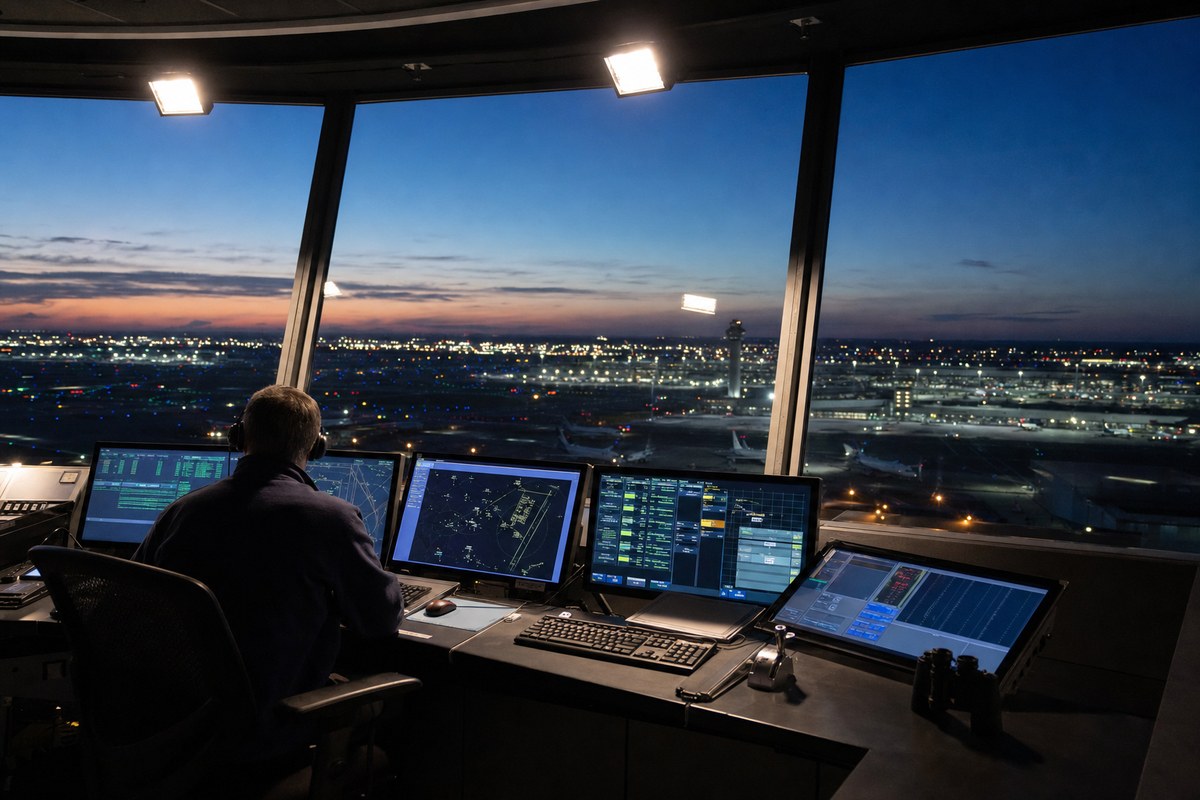
According to the Department of Transportation, the $30 billion is split into three $10 billion programs. The first would fund ATC digital architecture, covering telecommunications, traffic-flow management and the FAA's new SMART airspace-management system. The second would support airport infrastructure including control towers, facilities and runways. The third would create a grant program for airports serving between 5 million and 25 million passengers annually.
The proposal builds on $12.5 billion Congress previously approved for FAA modernization, which the agency has applied to projects including new radios, fiber-optic telecommunications and surface surveillance equipment. FAA Administrator Bryan Bedford said in a Department of Transportation statement that the earlier funding was "a critical down payment to replace outdated infrastructure" but that modernization cannot stop at simply replacing old technology.
The additional request comes as a recent Government Accountability Office report found the FAA still lacks a complete lifecycle cost estimate and an integrated master schedule for its planned replacement of the current ATC system. Recent telecommunications failures have also underscored the National Airspace System's dependence on aging communications infrastructure. The legislation has been sent to Congress for consideration.
Industry impact & what to watch
This proposal extends a funding pattern already underway: Congress approved $12.5 billion for FAA modernization before this bill, and the new $30 billion request seeks to add to that base rather than start a separate program. Splitting the new money into three equal $10 billion tranches — technology, airport facilities, and a mid-size-airport grant program — signals an attempt to spread funds across distinct constituencies in Congress, from FAA engineering programs to airports in the 5 million to 25 million passenger range that often compete for capital against larger hubs.
ATC modernization funding of this scale typically moves only as fast as the underlying program planning allows, which is why the GAO finding matters: without a complete lifecycle cost estimate or an integrated master schedule for replacing the current ATC system, appropriators have limited ability to verify how new money would be sequenced against the $12.5 billion already committed. Recent telecommunications failures cited alongside the request reinforce the case for funding but do not substitute for that missing schedule.
What happens next in Congress, and whether lawmakers condition the $30 billion on the FAA first delivering the cost estimate and schedule the GAO says are still missing, will determine how quickly any of the three programs can move from authorization to obligated funds.