Five Key Questions Help High-Net-Worth Individuals Build a Private Aviation Strategy
Why It MattersPrivate aviation options increasingly hinge on individualized fit across safety tolerance, schedule flexibility, and annual hours rather than one standard solution matching similar-looking travel profiles.
What happened
Steve Czocher, partner and director of Family Office Services at Gresham Partners, LLC, and Randy Brandoff, chief client officer of Aviation Portfolio, have outlined five questions that high-net-worth and ultra-high-net-worth individuals, families, and business owners should consider before committing to a private aviation solution. The two identify four primary categories of private aviation: on-demand charter, jet-card programs, fractional ownership, and full aircraft ownership.
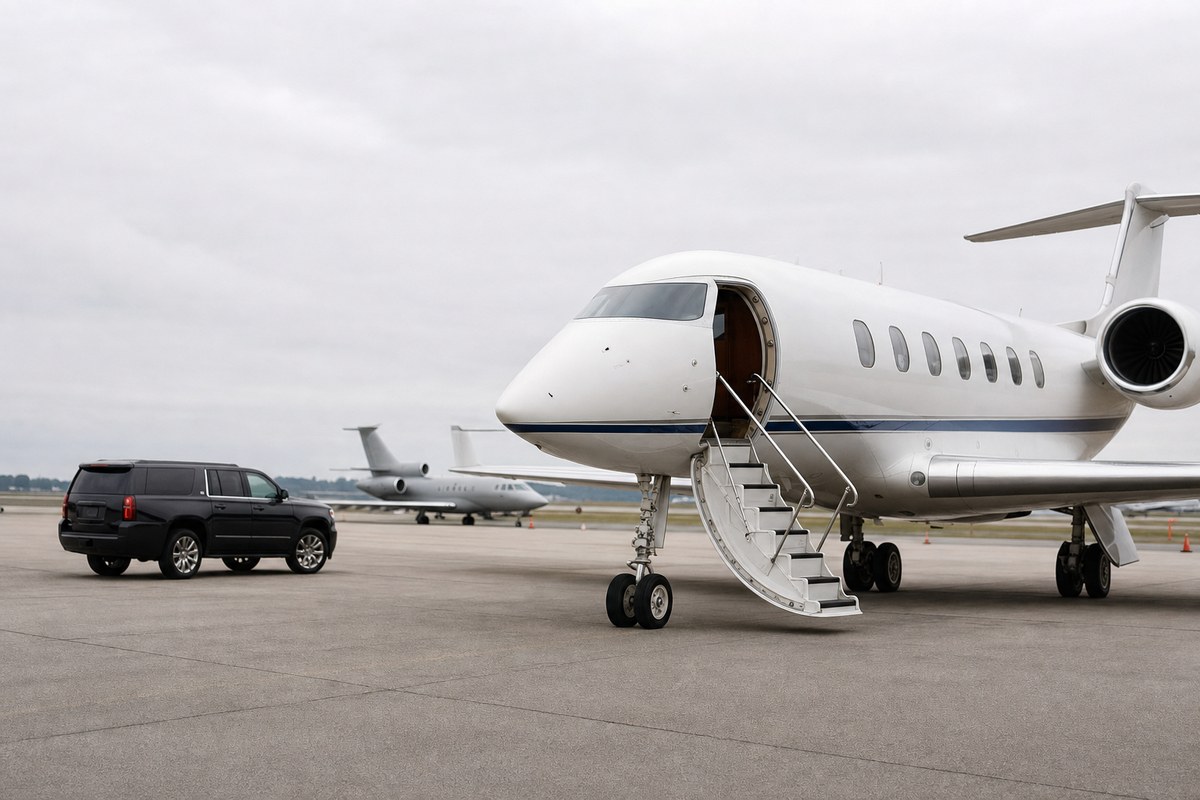
Among the figures the authors cite: the average US charter aircraft is 25 years old, and the US charter market has approximately 1,850 operators and around 16,000 brokers, with no barrier to entry. Some jet-card programs carry up to 90 restricted or no-access days per year. Fractional ownership is typically purchased in increments of 50 annual flight hours or more and involves a multi-year commitment, generally five years.
The five questions the authors recommend are: how much a client values safety, consistency, and the age and condition of aircraft; how flexible the client's schedule is and how often they fly on peak travel days; what their typical destinations are and what operational challenges those airports present; how many hours per year they realistically expect to fly and how consistent that is across years, ranging from fewer than 25–50 hours to as many as 200–300 or more; and what proportion of their flying is for business versus personal use.
On tax treatment, the authors note that the One Big Beautiful Bill Act (OBBBA) allows buyers of fractional or whole aircraft to potentially take 100 per cent accelerated depreciation of the asset in year one, rather than spreading it over a five-year schedule. They also note that clients with seemingly identical travel profiles — same city of residence, same secondary home location in Florida, similar annual trip frequency — may still require fundamentally different solutions depending on their priorities. One client focused on safety and consistency may opt for a five-year fractional program, while another prioritising minimal commitment and cost may be better suited to a jet card supplemented by on-demand charter, or charter alone.
Industry impact & what to watch
This advisory framing reflects a broader pattern in private aviation advisory work: matching a buyer to a category is treated as a structured diagnostic exercise rather than a single default recommendation, because the four categories carry genuinely different cost, commitment, and control trade-offs. A market with around 1,850 operators and roughly 16,000 brokers and no barrier to entry gives buyers many paths into the same categories, which is precisely why advisors emphasize framework questions over brand comparisons.
The tax dimension adds a policy-driven variable to that framework: OBBBA's 100 per cent year-one accelerated depreciation option changes the economics of fractional or whole ownership relative to jet cards or charter, potentially shifting where a given client lands even if their travel profile hasn't changed. Fractional programs' five-year commitment and 50-hour minimum purchase increments, against jet cards' restricted-day limits of up to 90 days annually, illustrate how flexibility and predictability sit on opposite ends of the same set of products.
What remains to be seen is how individual advisors and family offices operationalize these five questions in practice — whether they produce consistent recommendations across similar client profiles, and how the OBBBA depreciation incentive plays out as more high-net-worth buyers weigh purchase against charter or card commitments.