Heathrow Third Runway Delayed: Planning Permission Not Expected Until 2039, Opening a Decade Later
Why It MattersLarge hub-expansion projects increasingly hinge on planning and political timelines rather than construction schedules, leaving airlines and financiers to plan around decade-long uncertainty before capacity actually arrives.
What happened
London Heathrow Airport's third runway is not expected to be completed until at least 2039, four years later than the previously stated 2035 target, which insiders now consider unrealistic. Under the revised timeline, the airport aims to secure planning permission by 2039, after which the runway would open within a further decade.
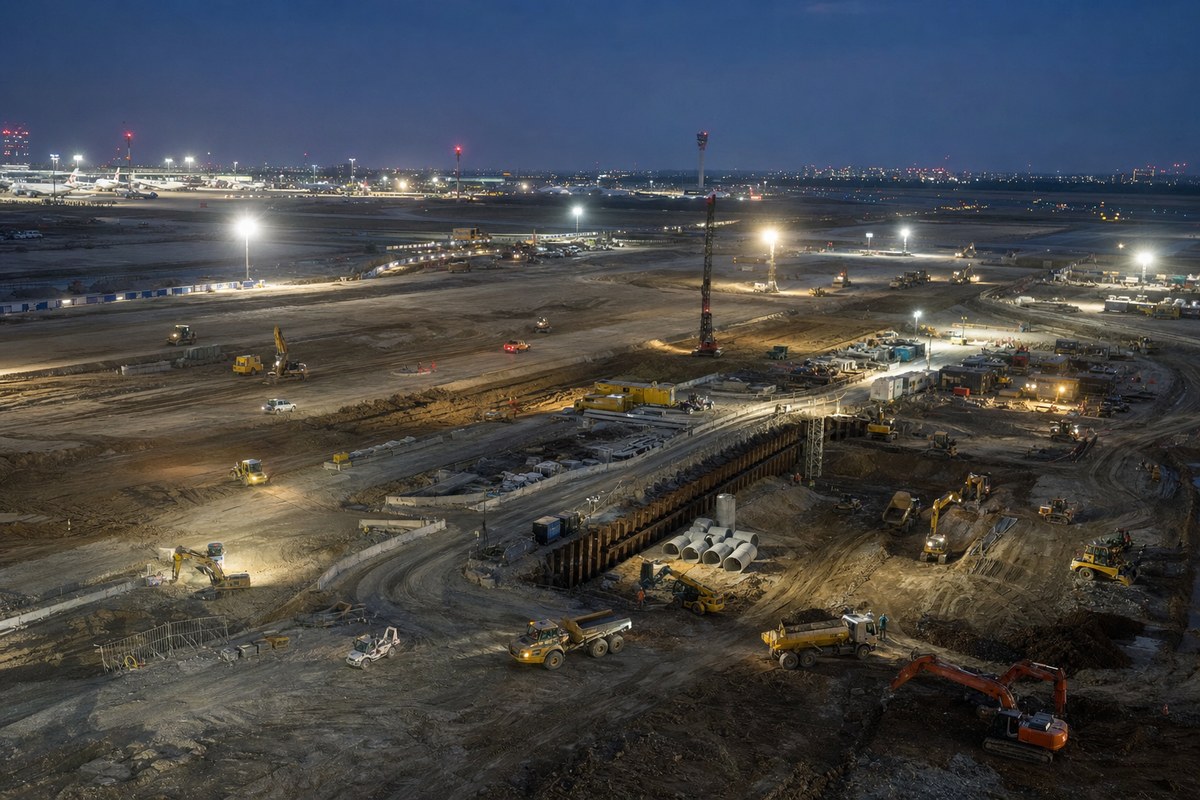
The UK government has approved a £49 billion ($64.92 billion) expansion plan for Heathrow, comprising £15 billion ($19.88 billion) for the new runway itself and £33 billion ($43.73 billion) for a new terminal and re-routing of the M25 orbital motorway. The project is to be 100% privately financed. The Department for Transport acknowledged that the 2035 deadline was ambitious and would have required stakeholders to work at an accelerated pace, along with changes to the planning process. There is currently no live planning application for the third runway; a draft planning framework was published in June this year, and once finalised it will require a parliamentary vote, which may not take place until next year.
Heathrow is currently Europe's busiest airport, with flights capped at 480,000 per year. A third runway would raise annual capacity to 720,000 flights, an increase of 240,000, or roughly 2,000 additional flights per day. By comparison, Paris Charles de Gaulle Airport handles approximately 474,000 flights annually, Amsterdam around 478,000, and Frankfurt around 460,000. Proponents say the expansion would create more than 100,000 jobs and strengthen the United Kingdom's position as a global economy. The project continues to face opposition from environmental campaigners and local residents. New Prime Minister Andy Burnham, previously a vocal critic of the third runway, has adopted a more open position since taking office. Heathrow is one of six airports serving Greater London and is the home base of British Airways and Virgin Atlantic.
Industry impact & what to watch
Heathrow's slippage from 2035 to 2039 belongs to a familiar category of hub expansion in dense, politically sensitive markets: the constraint is rarely engineering or financing once government approval and private capital are lined up, it is the planning and parliamentary process itself. A £49 billion scheme with committed private financing can still stall for years waiting on a framework document, a parliamentary vote, and a formal planning application that does not yet exist.
For airlines and the wider London aviation market, this means the capacity gap between Heathrow's current 480,000-flight cap and the 720,000-flight target persists well into the 2030s, keeping slot scarcity and pricing pressure at Europe's busiest airport in place for longer than carriers had budgeted for. Rivals such as Charles de Gaulle, Amsterdam and Frankfurt, all operating in a similar 460,000-478,000 flight range today, continue competing for connecting traffic while Heathrow's expansion remains unbuilt.
The next concrete marker is the finalisation of the draft planning framework published in June and the parliamentary vote that must follow it, expected no earlier than next year. Andy Burnham's shift toward a more open stance as prime minister, after previously opposing the runway, is worth watching as a signal of whether political resistance is softening enough to keep the 2039 planning-permission target credible.