China Builds 1,200-Plus Low-Altitude Landing Facilities in Shenzhen, Plans 500 More in Guangzhou as Standards Framework Takes Shape
Why It MattersChina's low-altitude buildout shows infrastructure and standards scaling well ahead of certified public air taxi service, leaving passenger operations dependent on separate, slower certification milestones.
What happened
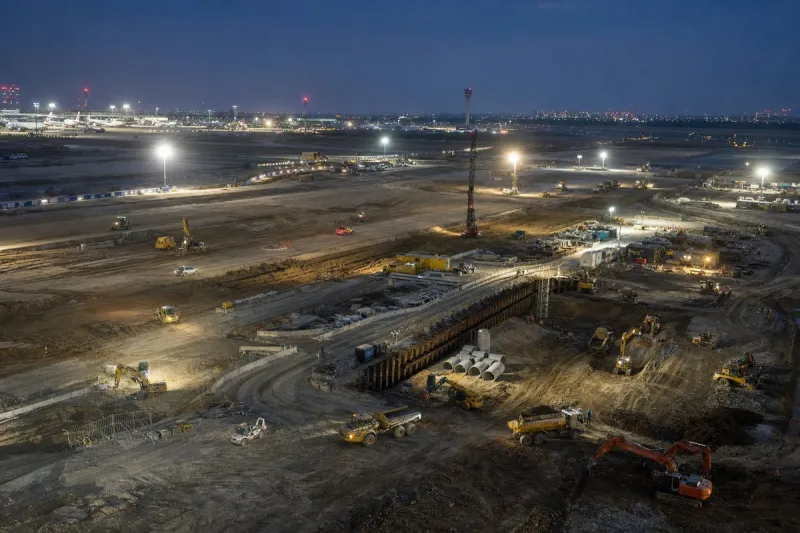
Shenzhen has built more than 1,200 low-altitude takeoff and landing facilities and opened 310 logistics routes by June 2026, according to figures on the city's buildout. Cargo drones operating in Shenzhen completed more than 1 million flights in 2025. Guangzhou separately announced plans to build 500 new takeoff-and-landing facilities in 2026 and launched an aerospace investment fund targeting 20 billion yuan (approximately US$2.95 billion) to cover components, aircraft, infrastructure, and operational applications.
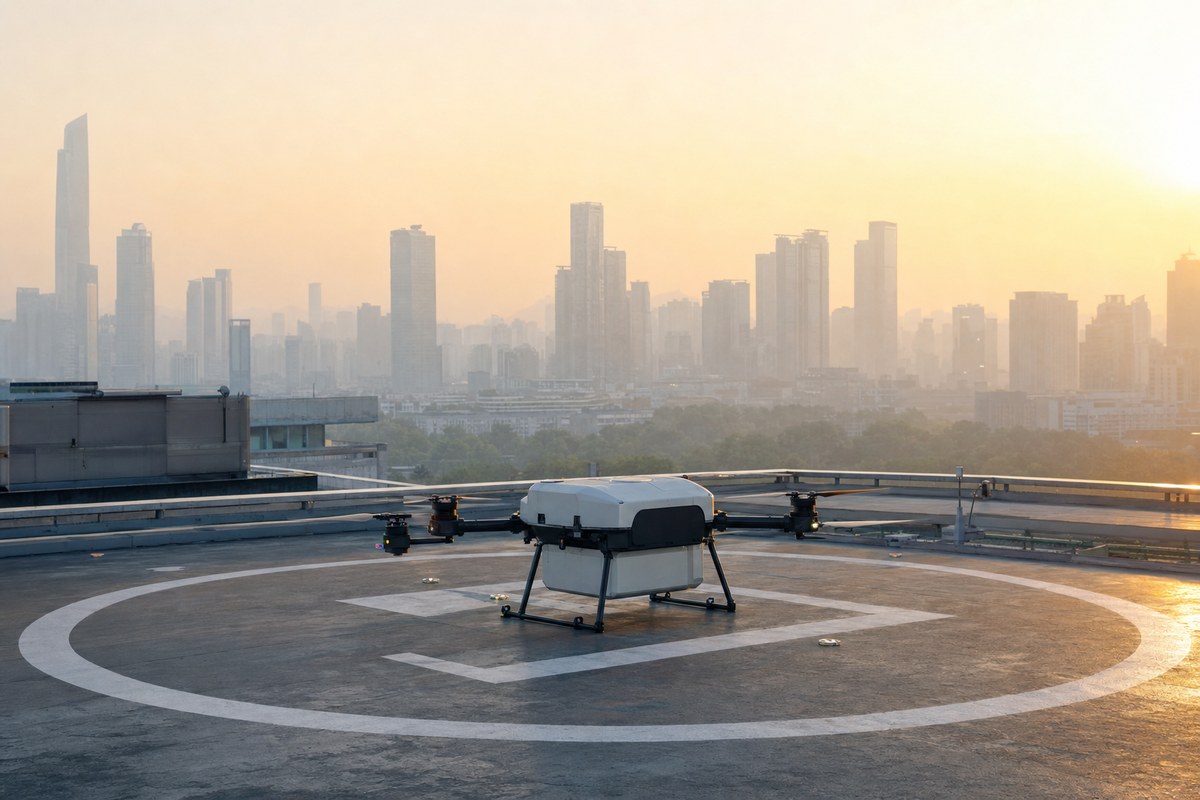
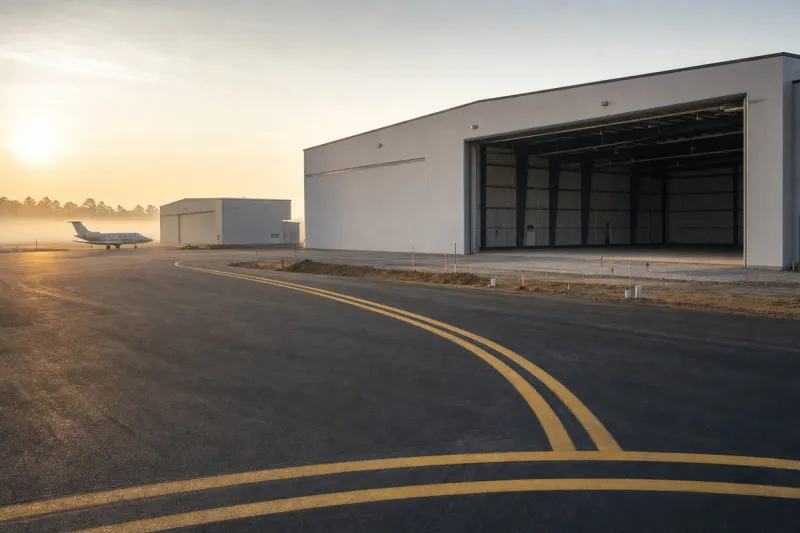
Those headline totals encompass a mixed base of logistics sites, drone pads, and passenger-oriented facilities, not an equivalent number of commercial passenger air taxi terminals. One passenger-focused facility in Shenzhen is EHang's Luohu operating center, a 753-square-meter automated site disclosed in January 2025 featuring a hangar, boarding area, vertical aircraft lift, and integrated charging. In Hefei, Luogang Park had two urban air mobility centers capable of supporting eVTOL flights as of EHang's February 2026 update, and a local EHang operator there has conducted regular trial operations since obtaining an air operator certificate in March 2025.
In November 2025, Shanghai's municipal government documented AutoFlight's water-based floating platform, which combines a landing deck, solar panels, energy storage, charging systems, dispatch technology, and passenger facilities. On July 22, 2026, AutoFlight and SF Group announced a partnership targeting low-altitude transport for offshore energy, heavy cargo, island connections, and maritime operations. Ten Chinese government departments released a national standards framework in February 2026 covering aircraft, infrastructure, air traffic management, safety supervision, and practical applications, targeting a basic standards system by 2027 and more than 300 sector standards by 2030, according to China's Ministry of Transport. China's revised Civil Aviation Law took effect on July 1, 2026, with the Civil Aviation Administration of China stating the revision strengthens oversight of civil unmanned aircraft and supports the low-altitude economy.
Chinese authorities granted operating certificates to two EH216-S operators on March 28, 2025. EHang's June 9, 2026 financial update described public ticketed flights as still forthcoming, while reporting more than 40 eVTOL operating sites established by customers and partners across China and more than 3,000 internal trial flight missions completed.
How it unfolded
Guangzhou announces plans to build 500 new takeoff-and-landing facilities and launches an aerospace investment fund targeting 20 billion yuan.
AutoFlight and SF Group announce a partnership targeting low-altitude transport for offshore energy, heavy cargo, island connections, and maritime operations.
China's revised Civil Aviation Law takes effect, strengthening oversight of civil unmanned aircraft.
Shenzhen has built more than 1,200 low-altitude takeoff and landing facilities and opened 310 logistics routes.
EHang's financial update reports more than 40 eVTOL operating sites and more than 3,000 internal trial flight missions, with public ticketed flights still forthcoming.
Ten Chinese government departments release a national standards framework covering aircraft, infrastructure, air traffic management, safety supervision, and applications; EHang reports two urban air mobility centers at Hefei's Luogang Park.
Cargo drones in Shenzhen complete more than 1 million flights.
Shanghai's municipal government documents AutoFlight's water-based floating platform combining a landing deck, solar panels, energy storage, charging systems, and dispatch technology.
Chinese authorities grant operating certificates to two EH216-S operators.
A local EHang operator in Hefei obtains an air operator certificate and begins regular trial operations at Luogang Park.
EHang discloses its 753-square-meter Luohu operating center in Shenzhen, featuring a hangar, boarding area, vertical aircraft lift, and integrated charging.
Industry impact & what to watch
This buildout illustrates a pattern common to emerging aviation segments: infrastructure and capital commitments arrive well ahead of certified commercial service. Facility counts, route announcements, and investment funds are easy to scale quickly because they involve construction and municipal planning rather than aircraft certification, pilot training, and airspace integration, which move on separate and slower timelines.
The low-altitude economy in China currently operates as two parallel tracks — cargo drone logistics, where Shenzhen's million-plus flights and 310 routes show real operational volume, and passenger eVTOL service, where certified operators are still running trial missions rather than selling public tickets. The national standards framework targeting a basic system by 2027 and more than 300 sector standards by 2030 suggests regulators expect the certification and safety-oversight track to take years to mature even as physical infrastructure multiplies.
What determines whether Guangzhou's 500 planned facilities and its 20 billion yuan fund translate into passenger service is whether EHang's or other operators' trial missions convert into licensed ticketed flights, and whether the Civil Aviation Administration of China's strengthened unmanned-aircraft oversight under the revised Civil Aviation Law produces route- or operator-specific approvals. Partnerships like AutoFlight and SF Group's maritime and offshore push point to cargo and industrial applications as a likely first commercial wedge, ahead of urban passenger air taxi rollout.