FAA Bets on AI with $875M SMART System for Air Traffic Control, Company CEO Stresses Human Oversight
Why It MattersThe rollout shows AI entering air traffic management as a decision-support layer for airspace-wide optimization rather than a replacement for controllers, leaving staffing shortfalls as the unresolved structural bottleneck.
What happened
The Federal Aviation Administration is adding artificial intelligence to its air traffic control overhaul through a new software tool called Strategic Management of Airspace, Routes and Trajectories, or SMART, unveiled by Transportation Secretary Sean Duffy at a cost of $875 million. The system was built by Boston-based Air Space Intelligence (ASI).
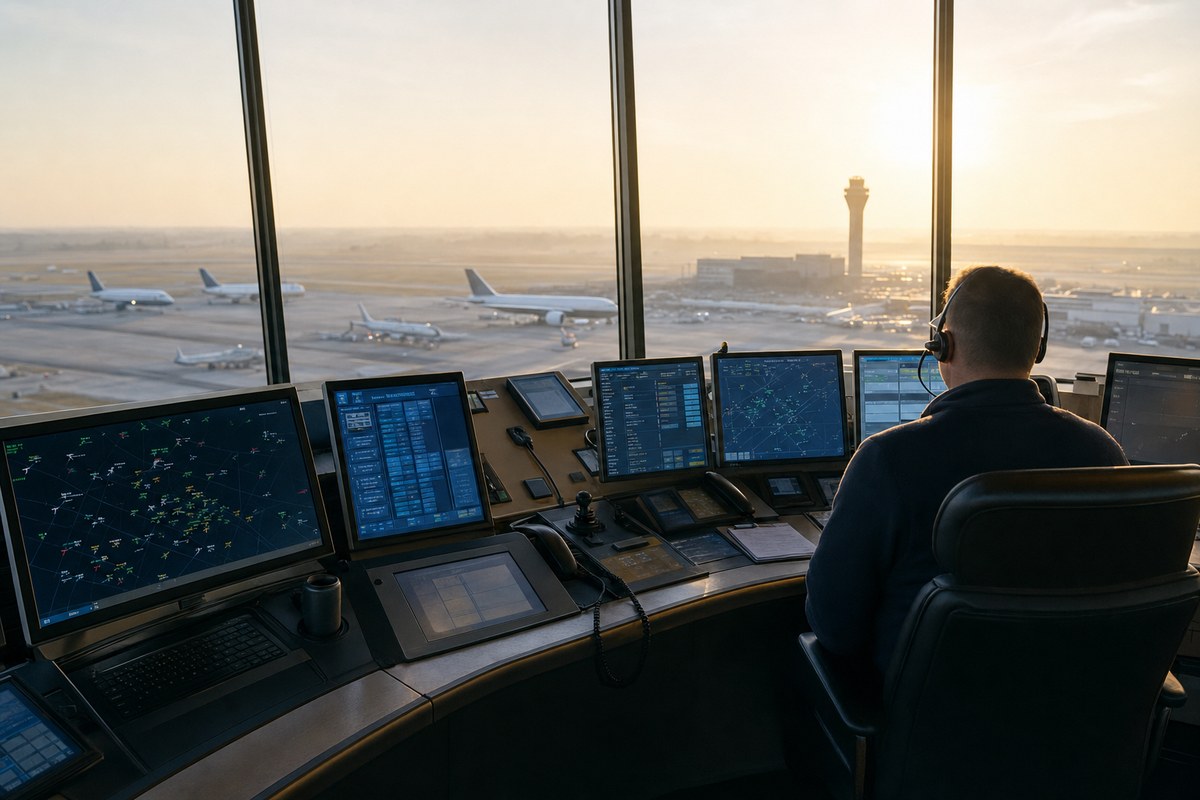
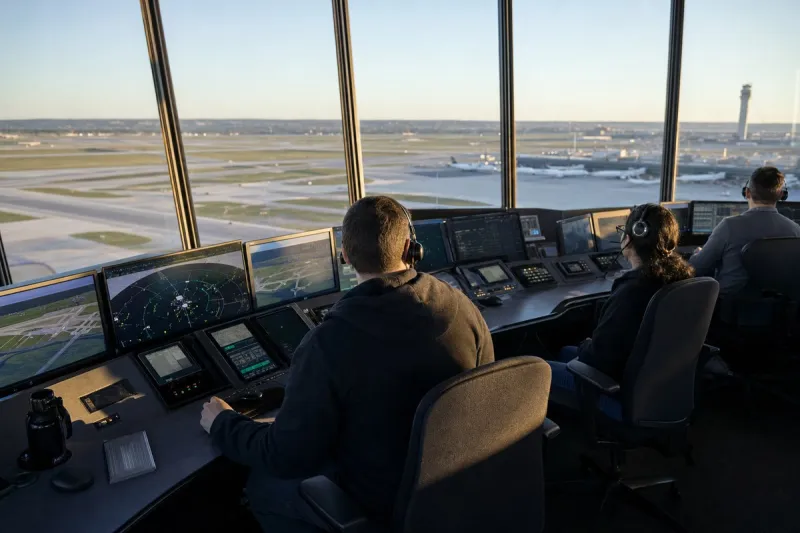
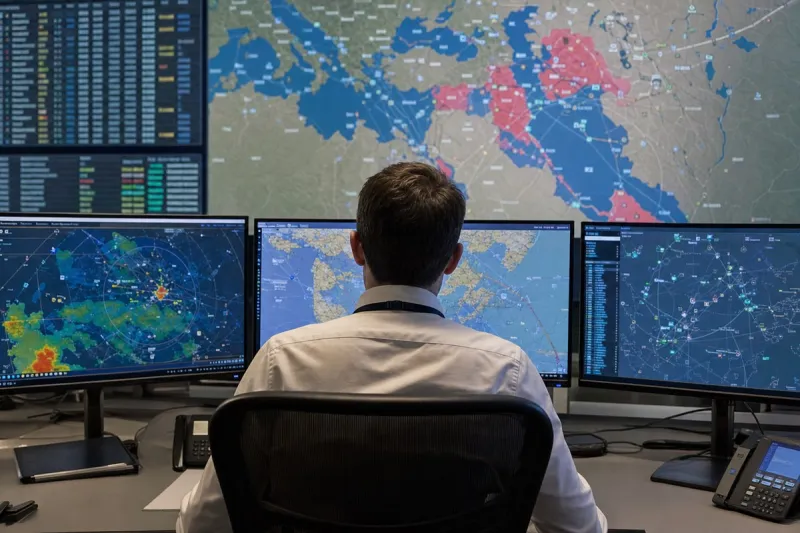
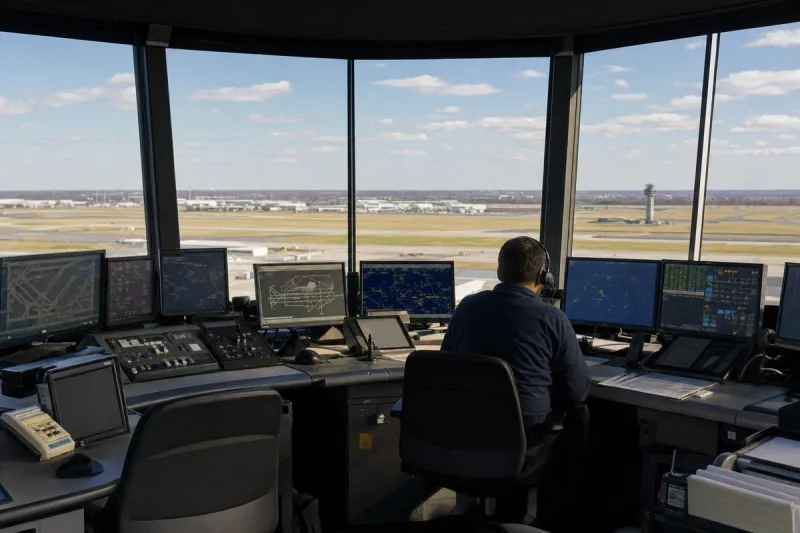
Phillip Buckendorf, co-founder and CEO of ASI, said the tool is not meant to automate air traffic control decisions. "This is not about automating air traffic control," Buckendorf said. "What we're focused on is how do we optimize the airspace in its entirety." SMART is built for air traffic managers who oversee the airspace as a whole, rather than controllers who keep individual aircraft separated. The system draws on more than 200 data sources, including weather, congestion, turbulence, wind conditions, and runway closures, to recommend flight paths across the country. Buckendorf said the AI handles "the math" and "the computation" while the human operator keeps final decision-making authority. The rollout begins with a pilot project at three major airports in the Washington, D.C., area, and the system is similar to ASI's existing Flyways AI tool already used by Alaska Airlines and other carriers for flight dispatch optimization.
Rep. Don Beyer said in a statement that the FAA "should not use my constituents as guinea pigs for an unproven AI air traffic control system." Former FAA air traffic controller Dave Riley called SMART "a step in the right direction" but said it is not a "cure all," pointing to a longstanding staffing shortage that forces many controllers into mandatory overtime as a deeper structural problem. Riley also suggested the FAA may be overstating the software's impact on the flying public. Buckendorf acknowledged public fears but argued that air traffic managers deserve modern tools, noting that smartphone navigation apps often carry more sophisticated predictive capabilities than the software currently used by air traffic professionals.
Industry impact & what to watch
SMART fits into a broader push to modernize U.S. air traffic infrastructure by layering predictive software on top of existing human decision chains rather than replacing them. Positioning the tool for air traffic managers, not controllers, reflects how airspace optimization and aircraft separation remain organizationally distinct functions within the system, even as both increasingly draw on the same data feeds.
The pilot at three Washington-area airports will be the first real test of whether the recommendations SMART generates hold up against the staffing pressures Riley flagged, since overtime-driven fatigue among controllers is a separate problem that software cannot by itself resolve. Lawmaker skepticism, voiced by Beyer, signals that deployment at additional airports will likely draw continued scrutiny over how "unproven" the system is judged to be once it runs in live conditions.
What happens at those three pilot airports, and whether the FAA or ASI publishes performance results from that trial, will determine whether SMART expands beyond the initial rollout or stalls amid the staffing debate Riley raised.