Middle East Airspace Closures, Pakistan Detours and Record El Niño Raise Charter Aviation Risk Across Multiple Regions
Why It MattersWhen several regional airspace and weather disruptions overlap, charter and business aviation risk is no longer a single-route problem but a cumulative planning burden spanning fuel, alternates and crew duty limits.
What happened
Operators are navigating several concurrent airspace disruptions: Middle East conflict, the Pakistan-India airspace closure, Asia-Pacific weather events and a forecast record-strength El Niño, a combination that is lengthening flight legs, complicating alternate-airport selection and pushing fuel costs higher.

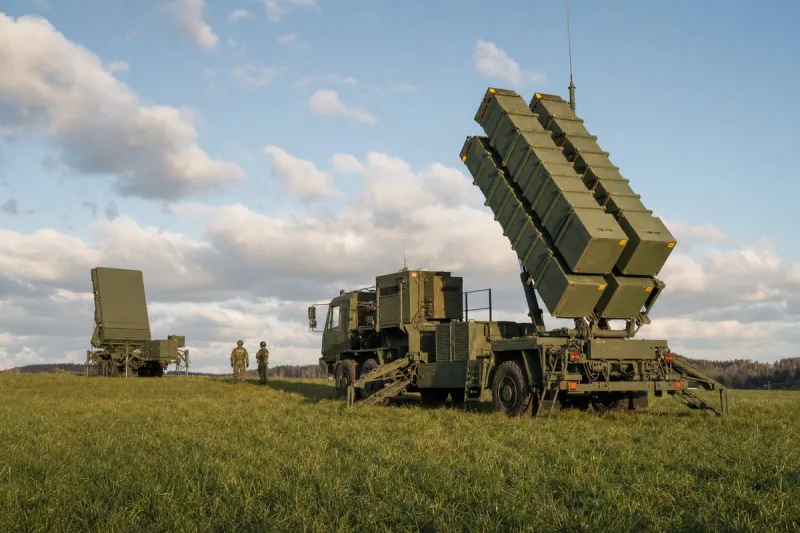
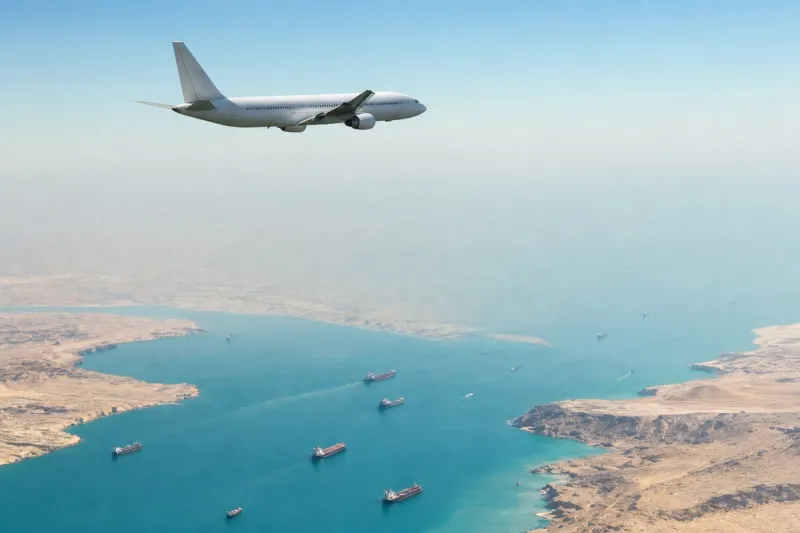
In the Middle East, Iran's Tehran FIR has repeatedly closed and partially reopened, with most foreign operators avoiding it regardless of its nominal status. Iraq's Baghdad FIR remains open, but the European Union Aviation Safety Agency (EASA) advises against its use as a documented risk assessment rather than a prohibition. EASA has separately warned against operating in Saudi airspace following increased Houthi attacks, though Saudi airspace itself is not reported closed. Erbil International Airport continues to operate but is losing US and coalition air-defence coverage, with the pullout scheduled to complete at the end of September. Iranian projectiles, whether direct or intercepted, have struck airports at Dubai, Abu Dhabi, Kuwait and Bahrain.
Iran has threatened to disrupt regional air travel if its carriers lose access to flights and airport services, and Najaf, Erbil and Sulaimaniya have restricted Iranian connections under US sanctions pressure. Turkish Airlines has no Iran flights scheduled before March 2027 with no guaranteed restart; Emirates no longer serves Tehran; Lufthansa and Austrian have suspended Iran services through October 24; Qatar Airways has tentatively pencilled November 29 for resumption, with that date explicitly uncertain. International flight capacity from Iran was already 49 percent lower in August 2026 than a year earlier. The US State Department has the United Arab Emirates at Level 3 (reconsider travel) as of August 29, Qatar at Level 3 as of August 28, and Saudi Arabia at Level 3 citing Iranian drone and missile threats, with the Yemen border area at Level 4. Brent crude for November delivery rose $1.71, or 1.6 percent, to $106.99 a barrel on supply-disruption concerns linked to the Strait of Hormuz.
In South Asia, Pakistani airspace has remained closed to Indian carriers since April 2025, forcing long westbound detours. Air India has put the annual cost at approximately $455 million in profit before tax, with fuel consumption up as much as 29 percent and as much as three hours added to some long-haul flights. India is negotiating with China for overflight access across Xinjiang as an alternative routing.
In Asia-Pacific, Typhoon Dujuan has been tracking past Japan's eastern coast with major disruption and heavy rainfall. Bangkok is under a disaster declaration following severe flooding, Nepal has seen destructive flooding including the collapse of a government building into a river, and Indonesian wildfires in West Kalimantan and Borneo are producing active smoke and visibility hazards. A Super El Niño is forecast to peak around November to December. Separately, the FAA has alleged illegal charter and aircraft management operations by a New York-based provider, which has 30 days to respond, and the US Government Accountability Office has found national airspace communications vulnerable to spoofing while reporting progress but scheduling gaps in air traffic control reform.
Industry impact & what to watch
This is not one disruption but several running at once, and the pattern shows how charter and business aviation risk compounds when conflict zones, sanctions regimes and weather systems overlap on the same trip-planning calendar. A single avoided FIR is routine; three regions doing it simultaneously changes fuel tankering assumptions, alternate selection and crew duty-time math on the same westbound or eastbound legs.
The Pakistan closure shows how the segment actually absorbs these costs: Air India's roughly $455 million profit-before-tax hit and up to 29 percent higher fuel burn on affected routes is the commercial-scale version of what smaller operators face on a per-trip basis, including technical stops and revised tankering. Business aviation from Indian bases faces the same arithmetic on a smaller scale, and the China overflight negotiation over Xinjiang is the kind of structural workaround the market watches for because it would reset routing options rather than just adding buffer time.
For the Gulf, the relevant variable is not whether Baghdad or Saudi airspace is technically open but whether underwriters and risk managers accept crews filing through advised-against zones, and whether the Erbil air-defence gap after the end-of-September coalition pullout changes that calculus. The Super El Niño forecast to peak around November to December adds a seasonal layer on top, meaning winter diversion and de-icing planning across North America, Europe and Asia needs revisiting on its own timeline.
What comes next is whether Qatar Airways' tentative November 29 Iran resumption date holds, whether the FAA's 30-day clock on the New York charter provider produces an enforcement action, and whether the GAO-flagged spoofing vulnerabilities get addressed before the northern winter season adds weather risk to an already layered picture.